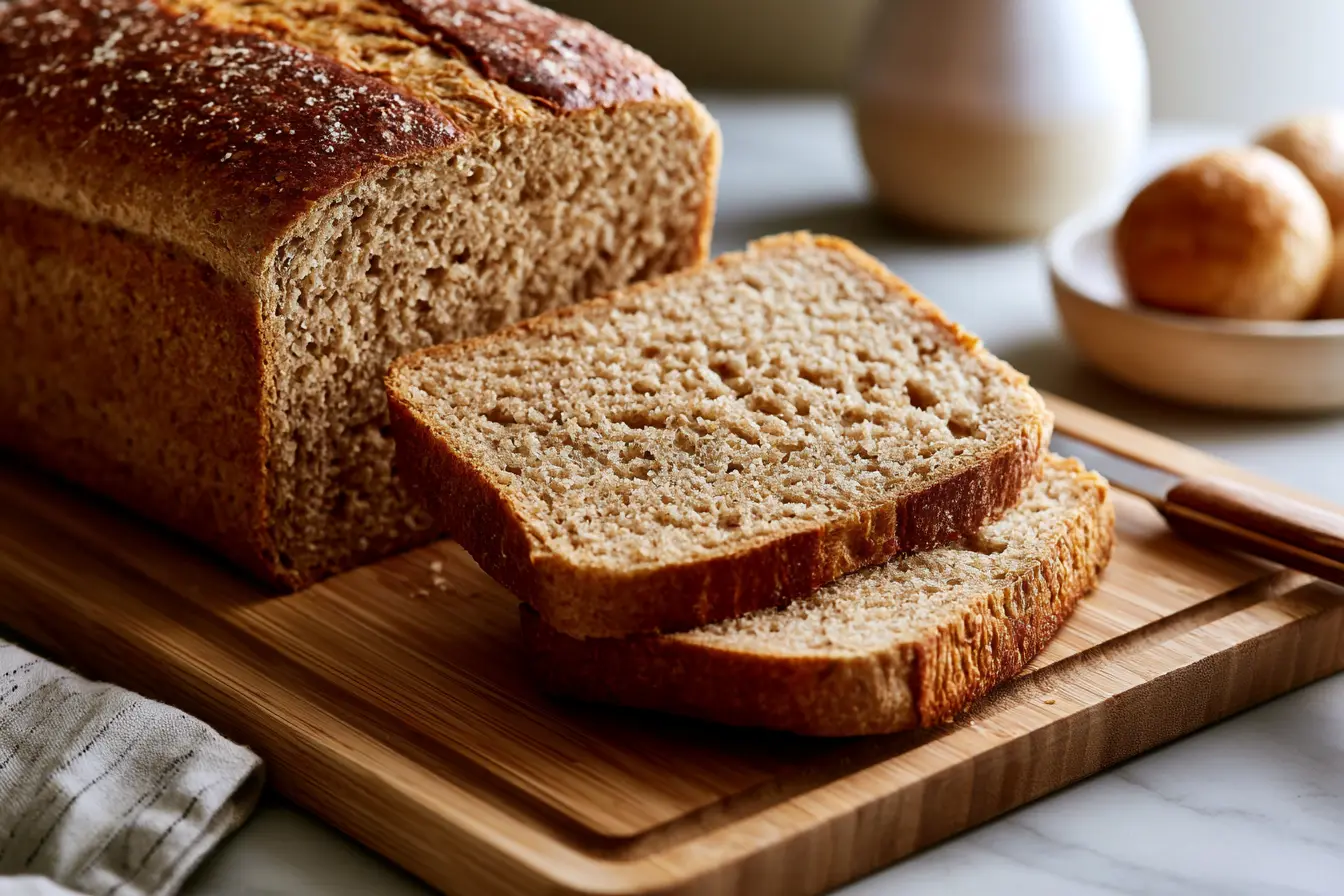
There’s something magical about homemade bread fresh from the oven. The warm aroma, golden crust, and soft slices make every kitchen feel cozy and welcoming. This sourdough whole wheat sandwich bread recipe brings together healthy ingredients, rich flavor, and easy techniques for a loaf that looks and tastes bakery-quality.
Unlike many dense whole wheat breads, this loaf stays light, fluffy, and soft enough for sandwiches, toast, or breakfast spreads. Even better, the sourdough fermentation adds depth of flavor while helping improve digestibility. If you’ve been searching for a reliable homemade loaf that works for everyday meals, this recipe is a fantastic place to start.
Table of Contents
What Makes Sourdough Whole Wheat Sandwich Bread Special
This sourdough whole wheat sandwich bread stands out because it combines health benefits with incredible taste. Traditional sandwich bread often contains preservatives and refined flour. On the other hand, homemade sourdough bread uses natural fermentation and wholesome ingredients.
Benefits of sourdough fermentation:
- Easier digestion
- Better flavor development
- Longer shelf life
- Improved texture
- Reduced phytic acid in grains
Whole wheat flour also contains fiber, vitamins, and minerals that refined white flour lacks. Together, these ingredients create a loaf that’s hearty without feeling too dense.
If you enjoy softer everyday bread recipes, try this bold and fluffy Easy Sourdough Sandwich Bread Recipe, for another beginner-friendly loaf idea.
For a slightly sweeter bakery-style version, this cozy Honey Oat Sourdough Bread Recipe, pairs beautifully with breakfast toast and sandwiches.
Ingredients You Need
Making this sourdough whole wheat sandwich bread doesn’t require fancy ingredients. Most items are probably already in your kitchen.
| Ingredient | Amount |
|---|---|
| Active sourdough starter | 1 cup |
| Warm water | 1 ¼ cups |
| Whole wheat flour | 3 cups |
| Bread flour | 1 ½ cups |
| Honey or maple syrup | 2 tbsp |
| Olive oil or melted butter | 2 tbsp |
| Salt | 2 tsp |
| Rolled oats (optional topping) | 2 tbsp |
Choosing the Right Flour
Flour makes a huge difference in texture. Whole wheat flour adds nutrition and nutty flavor, while bread flour creates softness and structure.
For best results:
- Use fresh whole wheat flour
- Choose high-protein bread flour
- Avoid old flour with a stale smell
You can also experiment with white whole wheat flour for a lighter loaf.
Best Sourdough Starter Tips
Your starter should be active and bubbly before baking. Feed it about 4–6 hours before using it.
Signs your starter is ready:
- Doubles in size
- Smells slightly tangy
- Passes the float test
- Has visible bubbles
A healthy starter is the key to successful sourdough whole wheat sandwich bread every time.
For an even softer homemade loaf, many bakers also enjoy this creamy and fluffy Sourdough Buttermilk Bread Recipe, that delivers incredible texture for sandwiches.
If you love sweeter bakery-style breads, this warm and comforting, Brown Sugar Cinnamon Swirl Sourdough Bread, makes an amazing breakfast option.
Step-by-Step Instructions
Preparing the Dough
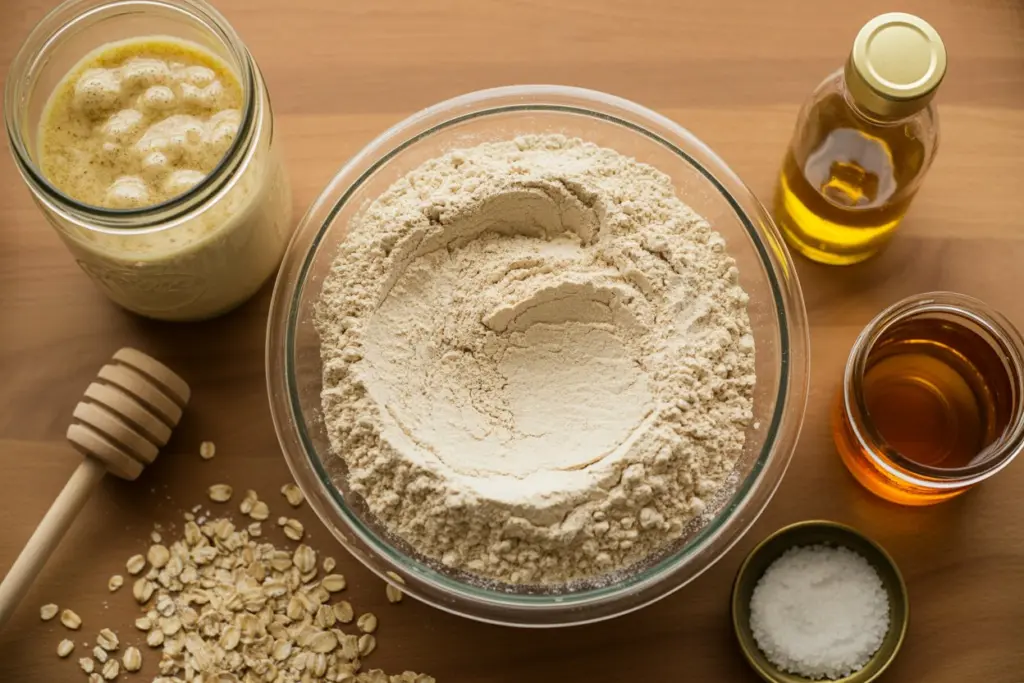
Start by mixing the warm water, active starter, honey, and oil in a large bowl. Stir until combined.
Next, add the whole wheat flour and bread flour gradually. Mix until a shaggy dough forms. Let the dough rest for about 20 minutes. This resting stage, called autolyse, helps hydrate the flour and improves texture.
After resting, sprinkle in the salt and knead the dough for 8-10 minutes until smooth and elastic.
The dough should feel soft but slightly tacky. If it’s too sticky, add a little flour one tablespoon at a time.
First Rise
Place the dough in a lightly greased bowl. Cover it with a towel or plastic wrap.
Allow it to rise at room temperature for 4-6 hours, depending on the warmth of your kitchen. During this time, the dough should expand noticeably.
For stronger dough structure, perform stretch-and-folds every 30 minutes during the first 2 hours.
Stretch-and-fold method:
- Wet your hands
- Pull one side of the dough upward
- Fold it over itself
- Rotate the bowl
- Repeat four times
This simple method strengthens gluten naturally.

Shaping the Loaf
Once the dough has risen, gently transfer it to a lightly floured surface.
Flatten the dough into a rectangle, then roll it tightly into a log shape. Pinch the seams closed and place the loaf seam-side down into a greased loaf pan.
At this stage, the dough should feel airy and smooth.
Final Proof
Cover the loaf pan loosely and allow the dough to rise again until it reaches just above the edge of the pan.
This usually takes 2-4 hours.
Don’t rush this step. Proper proofing creates a lighter texture and softer crumb.
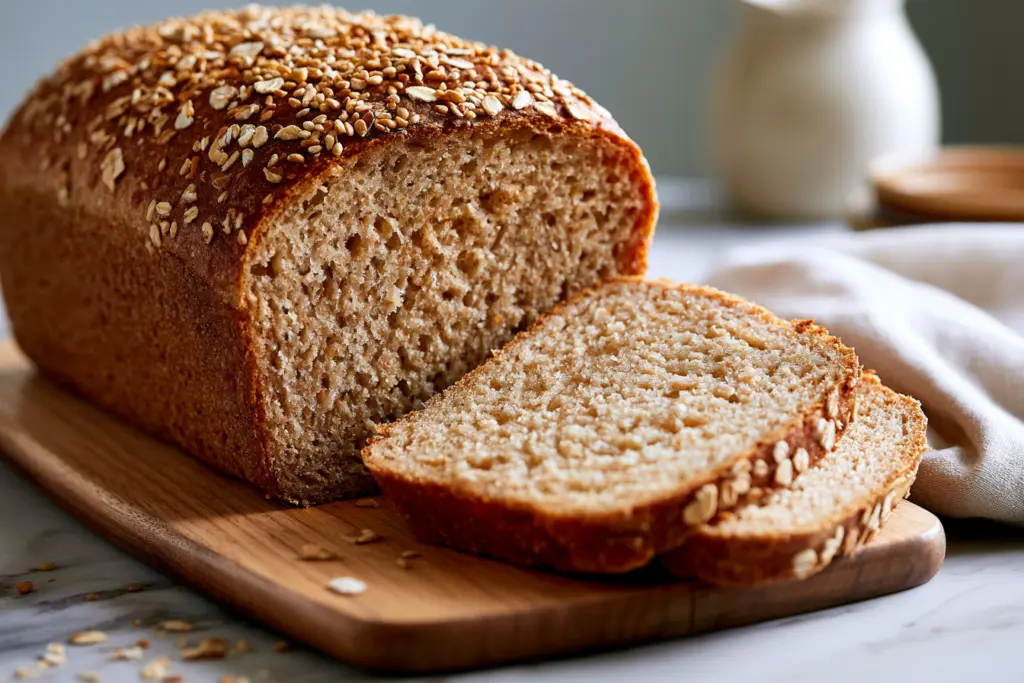
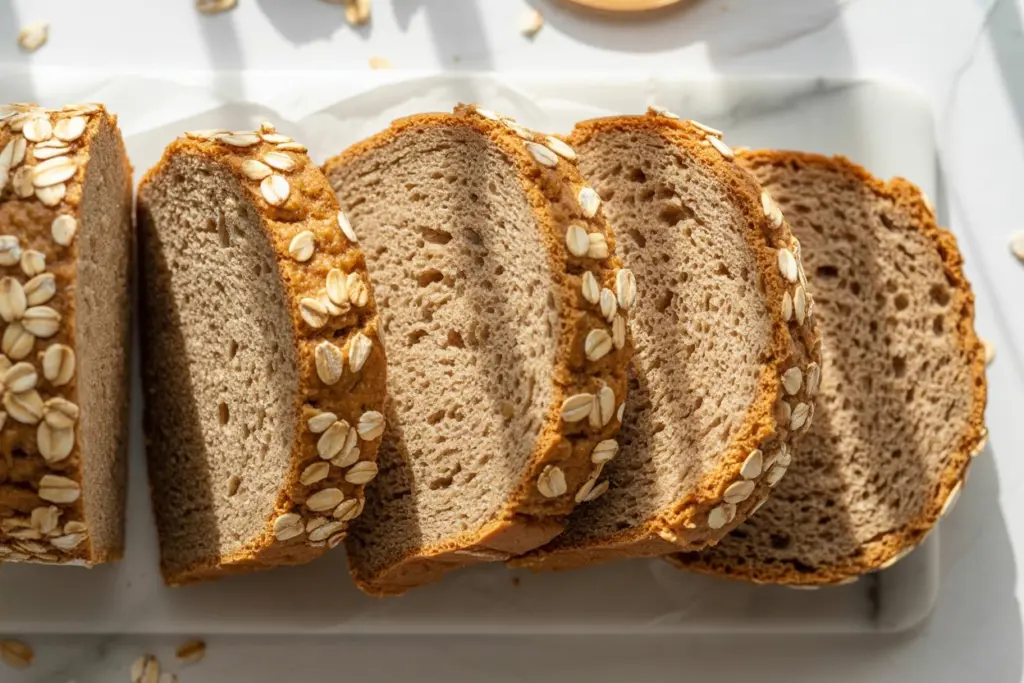
Before baking, brush the top lightly with water or milk and sprinkle oats over the loaf for a rustic bakery look like the one in the photo.

Baking the Bread
Preheat your oven to 375°F (190°C).
Bake the bread for 35-40 minutes until deep golden brown. The loaf should sound hollow when tapped.
If the top browns too quickly, loosely tent foil over it during the last 10 minutes.
After baking:
- Remove from the pan immediately
- Cool completely on a rack
- Wait before slicing
Although it’s tempting, slicing warm bread can make the crumb gummy.
Tips for Soft Sandwich Bread
Making soft bread consistently takes a few smart techniques.
Top bread-making tips
- Don’t add too much flour
- Use an active starter
- Let the dough rise fully
- Avoid overbaking
- Store properly after cooling
Adding a little oil or butter also keeps the bread soft for days.
Another great trick is covering the loaf with a clean towel while cooling. This helps maintain moisture in the crust.
Common Mistakes to Avoid
Even experienced bakers make mistakes sometimes. Thankfully, most bread problems are easy to fix.
| Mistake | Result |
|---|---|
| Weak starter | Dense loaf |
| Under-proofing | Tight crumb |
| Over-proofing | Flat bread |
| Too much flour | Dry texture |
| Cutting too early | Gummy slices |
Pay attention to dough texture instead of relying only on timing.
Best Ways to Store Homemade Bread
Fresh homemade bread contains no preservatives, so proper storage matters.
Short-term storage
- Wrap in a clean towel
- Store in a bread box
- Keep at room temperature
Long-term storage
- Slice the loaf
- Freeze in airtight bags
- Toast slices directly from frozen
Avoid storing bread in the refrigerator because it dries out faster.
Delicious Serving Ideas
This sourdough whole wheat sandwich bread works beautifully for many meals.
Breakfast Ideas
- Toast with butter and jam
- Avocado toast
- Peanut butter with banana
- French toast
Lunch Ideas
- Turkey sandwiches
- Grilled cheese
- Tuna salad sandwiches
- Veggie paninis
Dinner Pairings
- Soup and bread
- Garlic toast
- Bread pudding
- Bruschetta
Its mild tangy flavor pairs wonderfully with both savory and sweet toppings.
Health Benefits of Whole Wheat Sourdough
Many people choose whole wheat sourdough because it’s more nourishing than processed bread.
Nutritional benefits include:
- Higher fiber content
- Better digestion
- Natural fermentation
- Lower glycemic response
- Richer mineral profile
Sourdough bacteria may also help improve nutrient absorption.
According to the Harvard T.H. Chan School of Public Health, whole grains are associated with improved heart health and digestion.
Variations You Can Try
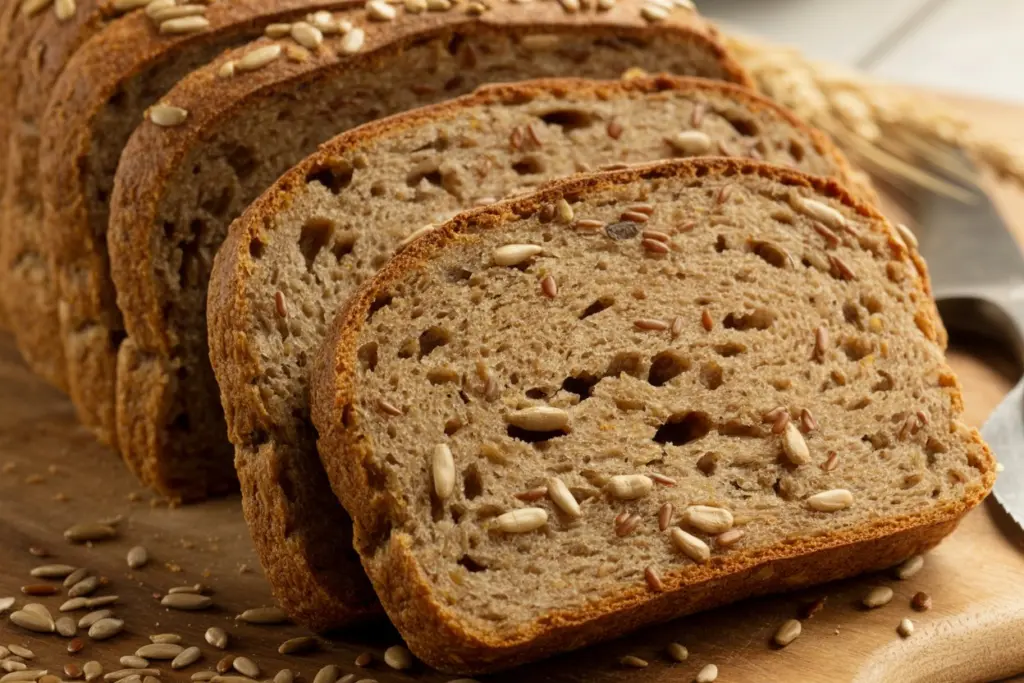
Seeded Whole Wheat Sourdough Bread
What to Add to the Base Recipe
- 2 tablespoons sunflower seeds
- 1 tablespoon flaxseeds
- 1 tablespoon sesame seeds
Add the seeds while mixing the dough ingredients.
Oatmeal Sourdough Sandwich Bread
What to Add to the Base Recipe:
- ½ cup rolled oats inside the dough
- Extra rolled oats for topping
Mix the oats into the dough before kneading.

Honey Maple Whole Wheat Bread
What to Add to the Base Recipe:
- Replace honey with 2 tablespoons maple syrup
Use maple syrup in the same step as the honey.
Cinnamon Raisin Sourdough Bread
What to Add to the Base Recipe:
- 1 teaspoon cinnamon
- ¾ cup raisins
Add the cinnamon with the flour and fold in the raisins before shaping the loaf.
Garlic Herb Sandwich Bread
What to Add to the Base Recipe:
- 1 teaspoon garlic powder
- 1 tablespoon dried Italian herbs
Mix the seasonings into the dough during the flour step.
Soft Multigrain Sourdough Bread
What to Add to the Base Recipe:
- 2 tablespoons chia seeds
- 2 tablespoons flaxseeds
- 2 tablespoons rolled oats
Add all grains and seeds while mixing the dough.
Cheesy Whole Wheat Bread
What to Add to the Base Recipe:
- 1 cup shredded cheddar cheese
Fold the cheese into the dough after kneading.
Nutty Walnut Sourdough Bread
What to Add to the Base Recipe:
- ¾ cup chopped walnuts
Fold the walnuts into the dough before the first rise.
Cranberry Walnut Bread
What to Add to the Base Recipe:
- ½ cup dried cranberries
- ½ cup chopped walnuts
Mix both into the dough before shaping.
Rustic Whole Wheat Dinner Rolls
What to Change in the Base Recipe:
- Divide the dough into 10-12 equal pieces instead of shaping one loaf.
Bake at 375°F (190°C) for 20-25 minutes.
Beginner-Friendly Troubleshooting Guide
Sometimes bread behaves differently depending on weather, flour, and starter activity.
- Dough too sticky?
- Add small amounts of flour gradually.
- Bread too dense?
- Your starter may not have been active enough.
- Loaf collapsed?
- It likely over-proofed before baking.
- Crust too hard?
- Cover the loaf with a towel while cooling.
- Bread tastes too sour?
- Reduce fermentation time slightly.
- Baking bread becomes easier with practice. Every loaf teaches you something new.
If you enjoy colorful artisan-style breads, this vibrant and creative Purple Sweet Potato Sourdough Bread, is another fun homemade loaf to try.
For cozy seasonal baking, this fruity and comforting Sourdough Cranberry Orange Quick Bread, makes a delicious holiday breakfast option.

Soft Sourdough Whole Wheat Sandwich Bread

Equipment
- Large mixing bowl
- Measuring cups and spoons
- Wooden spoon or dough whisk
- Loaf pan (9×5-inch)
- Kitchen towel or plastic wrap
- Dough scraper
- Cooling rack
- Oven
Ingredients
- 1 cup active sourdough starter
- 1 ¼ cups warm water
- 3 cups whole wheat flour
- 1 ½ cups bread flour
- 2 tablespoons honey
- 2 tablespoons olive oil
- 2 teaspoons salt
- 2 tablespoons rolled oats
Instructions
- In a large bowl, mix the sourdough starter, warm water, honey, and olive oil until combined.
- Add the whole wheat flour and bread flour gradually and mix until a shaggy dough forms. Let the dough rest for 20 minutes.
- Add the salt and knead the dough for 8-10 minutes until smooth and elastic.
- Place the dough in a lightly greased bowl and cover it.
- Let the dough rise at room temperature for 4-6 hours until doubled in size.
- Transfer the dough to a lightly floured surface and shape it into a tight loaf.
- Place the shaped dough into a greased loaf pan.
- Cover and let the dough rise again for 2-3 hours until it rises slightly above the pan edge.
- Preheat the oven to 375°F (190°C).
- Brush the top lightly with water and sprinkle rolled oats over the loaf.
- Bake for 35-40 minutes until golden brown and hollow-sounding when tapped.
- Remove the bread from the pan and cool completely on a wire rack before slicing.
Notes
- Calories 180
- Carbohydrates 31g
- Protein 6g
- Fat 4g
- Fiber 4g
- Sugar 3g
- Sodium 320mg
FAQs
Can I make this bread without bread flour?
Yes, but the loaf may be slightly denser. Bread flour helps create a softer texture.
How long does sourdough whole wheat sandwich bread last?
It usually stays fresh for 3-4 days at room temperature when stored properly.
This homemade sourdough whole wheat sandwich bread recipe delivers everything you want in a loaf: softness, flavor, nutrition, and a beautiful golden crust. The combination of whole wheat flour and sourdough fermentation creates bread that feels hearty yet light enough for everyday sandwiches and toast.
Best of all, the process is simple and approachable. With patience, a healthy starter, and a few helpful techniques, you can create bakery-style bread right in your own kitchen.
Once you try this recipe, you’ll likely never want store-bought sandwich bread again. Warm slices fresh from the oven truly make every meal feel special.






So easy, and soooooo good. Light, soft, great sourdough flavor, and whole wheat.