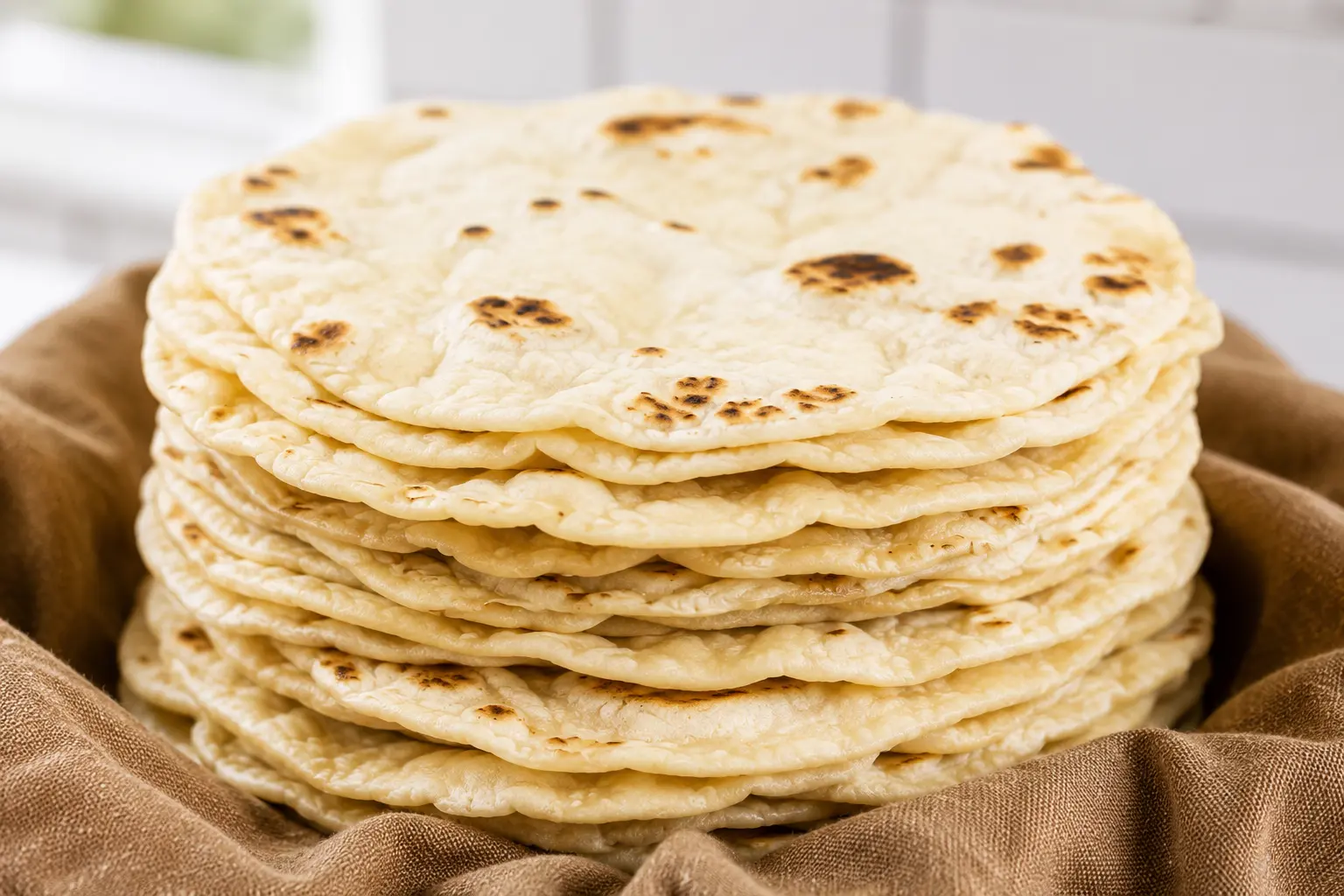
If you have a jar of sourdough discard sitting in your refrigerator, don’t throw it away just yet. These sourdough discard tortillas turn that extra starter into soft, homemade flatbreads with a subtle tang and beautifully flexible texture.
This recipe uses just five basic ingredients: bread flour, water, sourdough discard, olive oil, and salt. The dough is easy to handle, and once the tortillas hit a hot skillet, they cook quickly and develop those lovely golden-brown spots you want to see.
The result is a stack of soft homemade tortillas: lightly browned, thin, tender, and perfect for tacos, wraps, quesadillas, breakfast rolls, and more.
Table of Contents
Why You’ll Love These Sourdough Discard Tortillas
- No-eggs, No-milk, No-yeast – A few pantry staples are all it takes.
- A Great Way to Use Extra Starter
- Soft, Flexible, and Homemade
- Only Five Main Ingredients
- The ingredient list is refreshingly simple:
- Bread flour
- Sourdough discard
- Water
- Olive oil
- Salt
Ingredients You’ll Need
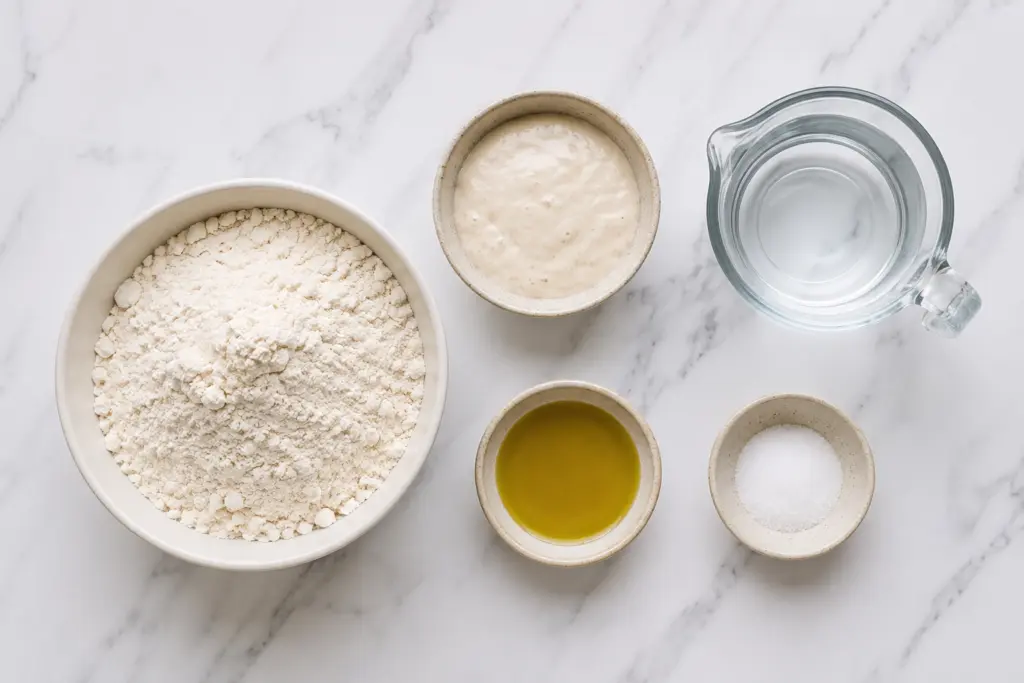
For about 12 medium homemade tortillas, gather the following:
- Bread Flour – Bread flour gives the tortillas a slightly chewy structure and helps the dough remain elastic when rolled.
- Sourdough Discard – It doesn’t need to be bubbly or recently fed. Cold discard from the refrigerator can work, although bringing it closer to room temperature can make mixing easier.
- Water – Water controls the dough’s hydration.
- Olive Oil – Olive oil helps make the dough more supple and easier to roll.
- Salt – Salt balances the sourdough flavor and gives the tortillas a much better overall taste.
Ingredient Substitutions and Tips
You don’t have to panic if your pantry isn’t perfectly stocked.
| Ingredient | Possible Substitute |
| Bread flour | All-purpose flour |
| Olive oil | Avocado oil or another neutral oil |
| Sourdough discard | Active sourdough starter |
| Fine salt | Sea salt |
| Water | Warm water |
If you substitute flour, pay attention to the dough rather than blindly following the measurement. Different flours absorb water differently.
The finished dough should be soft and elastic, not soupy or extremely sticky.
How to Make Sourdough Discard Tortillas
The process is straightforward, but each stage matters. Take your time, especially when kneading and resting the dough.
Combine the Ingredients
Place the bread flour, sourdough discard, water, olive oil, and salt in a large mixing bowl.
Mix everything together until there are no large areas of dry flour remaining.
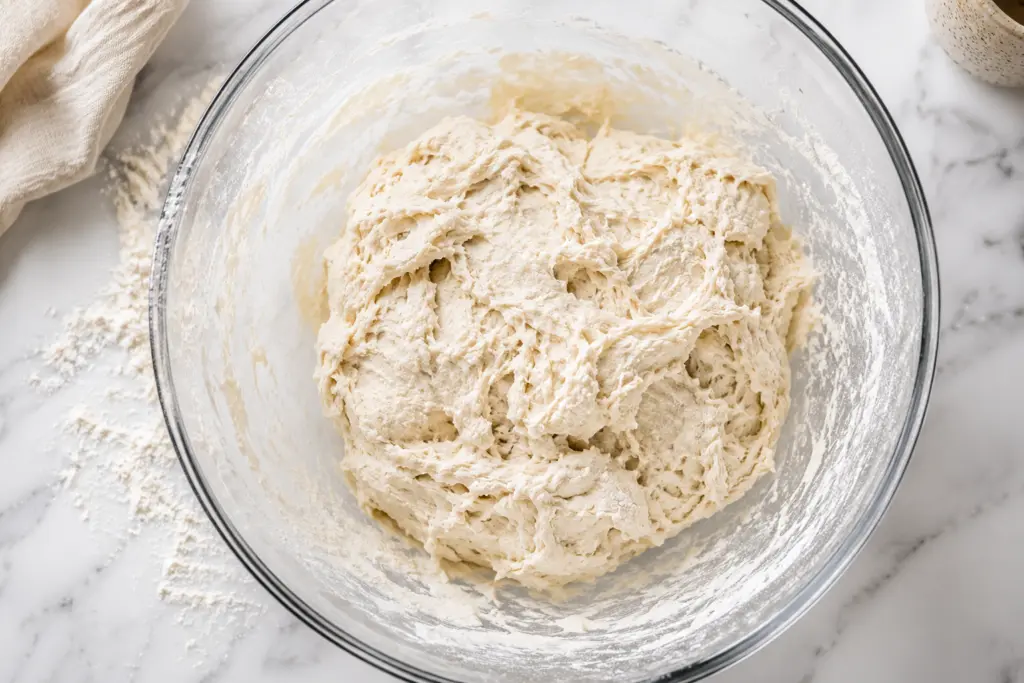
At first, the dough may look rough and shaggy. That’s completely normal.
Cover the bowl and let the dough rest for about 30 minutes. This short rest gives the flour time to absorb the water and makes kneading easier.
Knead Until Smooth
After the initial rest, knead the dough.
If you’re working by hand, knead for approximately 8-10 minutes. Push the dough forward with the heel of your hand, fold it back, rotate it slightly, and repeat.
If you’re using a stand mixer, knead with a dough hook until the dough becomes smooth and elastic.
You’re looking for a dough that feels soft, cohesive, and silky rather than rough.
Let the Dough Ferment
Cover the bowl again and leave it at room temperature.
The exact time can vary significantly depending on your starter and kitchen temperature. With discard, the dough can take longer to show obvious fermentation activity than dough made with vigorous active starter.
Don’t worry if it doesn’t dramatically double in size.
Look instead for signs such as:
- A slightly puffier appearance
- Small bubbles
- A smoother surface
- A lighter, more relaxed texture
Sourdough tortilla recipes commonly rely on visual cues rather than an exact fermentation clock because starter strength and room temperature can change the timing considerably.
Divide the Dough
Once the dough looks ready, transfer it to a lightly floured work surface.
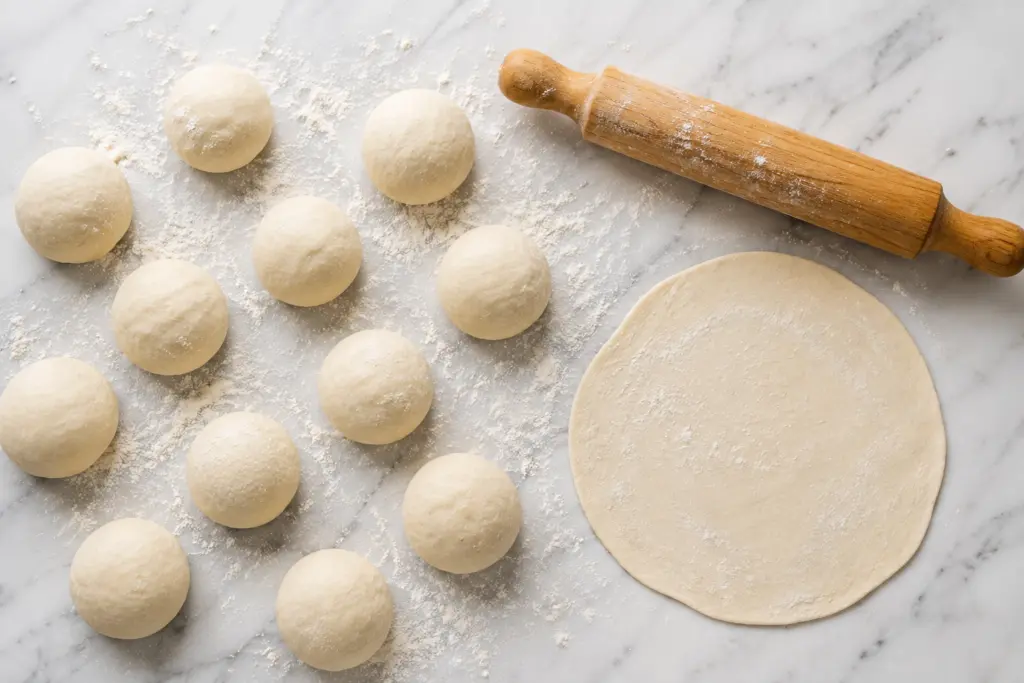
Divide it into approximately 12 equal pieces, around 80-85 g each.
Shape each portion into a smooth ball.
Keep the dough balls covered with a clean kitchen towel while you work. This prevents the surface from drying out.
Let the Dough Balls Relax
This step is easy to skip, but it’s one of the most important.
Allow the dough balls to rest for around 30 minutes.
Resting relaxes the gluten. If the dough keeps shrinking while you’re rolling it, give it another 10-15 minutes.
Patience pays off here.
Roll Each Tortilla Thin
Take one dough ball and flatten it gently with your hand.
Using a rolling pin, roll it into a thin circle.
Lightly dust the work surface with flour if necessary, but don’t use excessive flour. Too much flour can create a dry tortilla and may burn in the skillet.
Aim for a thin but manageable tortilla. It should be flexible enough to lift without tearing.
The tortillas don’t have to be perfectly round. Homemade tortillas have character, and a slightly rustic edge is part of the charm.
Cook on a Very Hot Skillet
Preheat a dry cast-iron skillet, griddle, or heavy frying pan over medium-high to high heat.
You don’t need to add oil.
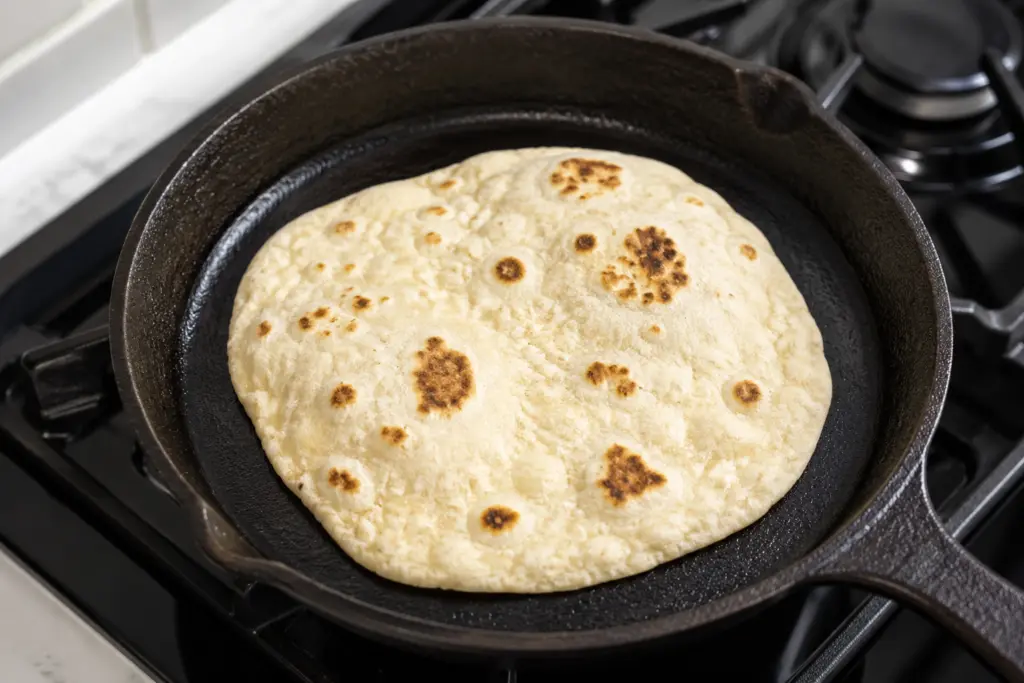
Place one tortilla onto the hot surface and cook for roughly 45-60 seconds, or until bubbles begin forming and brown spots appear.
Flip it and cook the second side for another 30-60 seconds.
Don’t walk away. These cook quickly.
The goal is a tortilla with small bubbles, light golden-brown spots, and a soft center.
Commercial and tested sourdough tortilla recipes also use a hot, dry cooking surface and short cooking times to achieve a flexible texture.
How to Keep Homemade Tortillas Soft
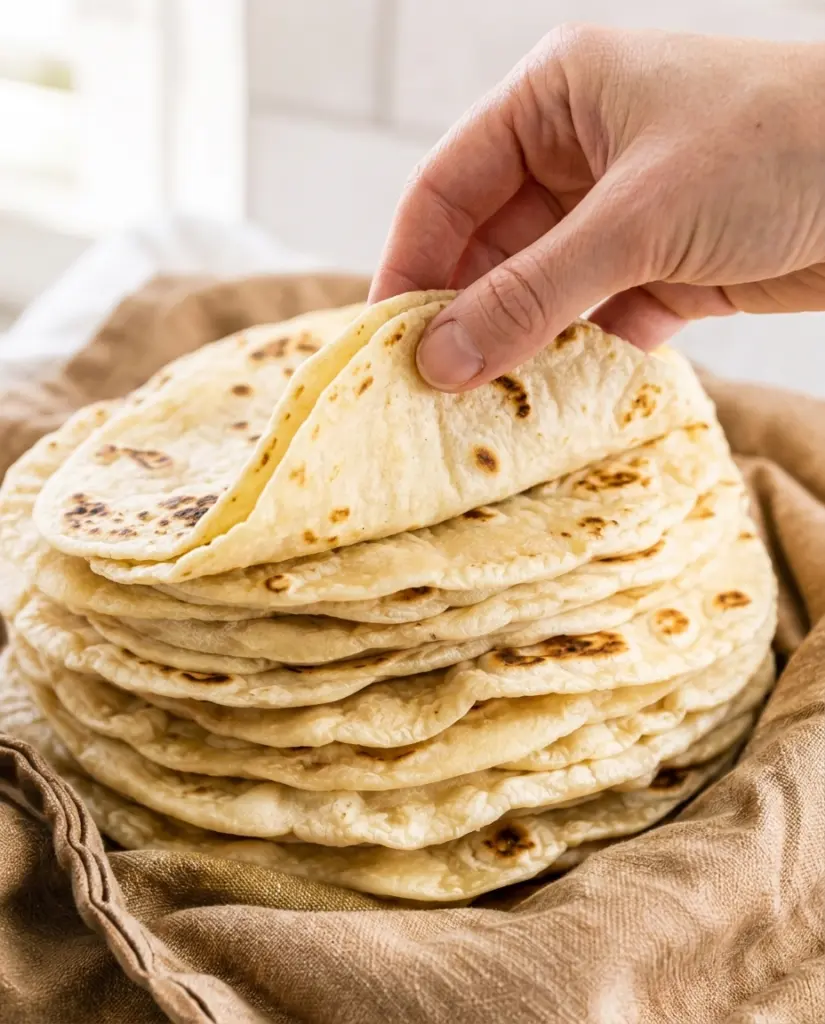
As soon as each tortilla comes off the skillet, place it on a clean kitchen towel.
Stack the tortillas and cover them with the towel.
This simple trick traps some of the steam and keeps the tortillas warm and flexible instead of allowing them to dry out.
Don’t leave freshly cooked tortillas uncovered on a plate for a long time.
If you’re making a large batch, keep stacking them as they finish cooking. By the time you’re done, you’ll have a beautiful pile of soft homemade flatbreads.
Common Problems and How to Fix Them
Why Is My Dough Too Sticky?
Your discard may be more liquid than expected, or you may have added slightly too much water.
Knead the dough first. If it’s still genuinely difficult to handle, add flour one tablespoon at a time.
Why Do My Tortillas Shrink?
Usually, the gluten hasn’t relaxed enough.
Let the dough balls rest for another 10-15 minutes before rolling.
Why Are My Tortillas Hard?
They’re probably overcooked.
Try increasing the pan temperature slightly and reducing the cooking time. A tortilla generally needs only a short time on each side.
Why Aren’t My Tortillas Bubbling?
The skillet may not be hot enough, or the tortilla may be too thick.
Preheat the skillet thoroughly and roll the dough thinner.
Why Are My Tortillas Cracking?
The dough may be too dry, the tortillas may have been overcooked, or they may have cooled uncovered.
Keep the cooked tortillas wrapped in a clean towel.
Delicious Ways to Serve Sourdough Discard Tortillas
The beauty of sourdough discard tortillas is that they can become almost anything.
Try them with:
- 🌮 Chicken tacos with lettuce and salsa
- 🥑 Avocado and scrambled eggs
- 🧀 Crispy cheese quesadillas
- 🌯 Chicken and rice burritos
- 🥬 Fresh vegetable wraps
- 🫘 Black beans and roasted vegetables
- 🍳 Breakfast wraps with eggs and cheese
- 🥩 Beef fajitas
- 🥙 Hummus and grilled vegetables
- 🍕 Mini tortilla pizzas
- For more fun serving ideas try our Baked Pizza Wraps Recipe, Hot Honey Chicken Caesar Wrap, or Cheesy Taco Bell Beefy Melt Burrito Copycat.
You can also cut leftover tortillas into triangles and toast them until crisp for homemade tortilla chips.
How to Store Sourdough Discard Tortillas
Fresh tortillas are best when served warm, but you can easily save extras.
Once completely cool, place them in an airtight bag or container.
Keep them in the refrigerator for approximately 2-3 days for best quality.
For longer storage, freeze them.
Place parchment paper between individual tortillas so they don’t stick together. Put the stack into a freezer-safe bag and remove as much excess air as possible.
When you’re ready to eat them, warm the tortillas in a dry skillet for a few seconds on each side.
Freezing tortillas with parchment between them is also a commonly recommended method for maintaining easy separation when reheating later.
Can You Make the Dough Ahead?
Yes.
One advantage of sourdough dough is that you can work it around your schedule.
You can prepare the dough earlier in the day and allow it to ferment before rolling and cooking. If your kitchen is cool, fermentation may take considerably longer.
For the best results, watch the dough rather than relying only on the clock.
Easy Sourdough Discard Tortillas

Equipment
- Large mixing bowl
- Kitchen scale
- Rolling Pin
- Cast-iron skillet, griddle, or heavy frying pan
- Clean kitchen towel
- Dough scraper
- Measuring spoons
Ingredients
- 500 g bread flour
- 200 g sourdough discard
- 280 g water
- 15 g olive oil
- 15 g salt
Instructions
- Add the bread flour, sourdough discard, water, olive oil, and salt to a large mixing bowl.
- Mix until a rough, shaggy dough forms and no large areas of dry flour remain.
- Cover the bowl and let the dough rest for 30 minutes.
- Knead the dough for 8-10 minutes by hand, or until smooth and elastic.
- Cover the dough and let it ferment at room temperature for about 4 hours, or until it looks slightly puffy and relaxed.
- Transfer the dough to a lightly floured surface and divide it into 12 equal portions.
- Shape each portion into a smooth ball and cover with a clean kitchen towel.
- Let the dough balls rest for 30 minutes so the gluten can relax.
- Flatten one dough ball and roll it into a thin, round tortilla.
- Heat a dry skillet or griddle over medium-high to high heat.
- Place the tortilla on the hot skillet and cook for 45-60 seconds, until bubbles and golden-brown spots appear.
- Flip and cook for another 30-60 seconds.
- Remove the tortilla and immediately place it under a clean kitchen towel to keep it soft.
- Repeat with the remaining dough balls, stacking the cooked tortillas under the towel.
Notes
- Calories: 235 kcal
- Carbohydrates: 43 g
- Protein: 7 g
- Fat: 3 g
- Saturated Fat: 0.4 g
- Fiber: 2 g
- Sodium: 1,000 mg
FAQs
Can I use sourdough discard straight from the refrigerator?
Yes. Cold discard can be used, although room-temperature discard may mix into the dough more easily. The strength and age of your discard can affect fermentation time and flavor.
Do sourdough discard tortillas need yeast?
No. This recipe doesn’t require commercial yeast. The discard provides sourdough flavor, while the dough’s gluten structure gives the tortilla its flexibility.
Can I freeze sourdough discard tortillas?
Yes. Cool them completely, separate them with parchment paper, and store them in a freezer-safe bag. Reheat individual tortillas directly in a dry skillet.
How do I make tortillas softer?
Avoid overcooking them and keep the finished tortillas stacked under a clean towel. The trapped warmth and moisture help them remain pliable.
These sourdough discard tortillas prove that your extra starter doesn’t have to end up in the trash.
With just bread flour, water, discard, olive oil, and salt, you can make a stack of soft, flexible tortillas with beautiful toasted spots and a subtle sourdough tang.
Once you’ve made them once, you’ll probably start finding excuses to make another batch. Taco night, breakfast wraps, quesadillas, quick lunches, and homemade tortilla chips all become easier when you have a stack of sourdough discard tortillas ready to go.
And that’s the real beauty of this recipe: it’s simple, practical, delicious, and a clever way to turn sourdough discard into something your whole family can enjoy.