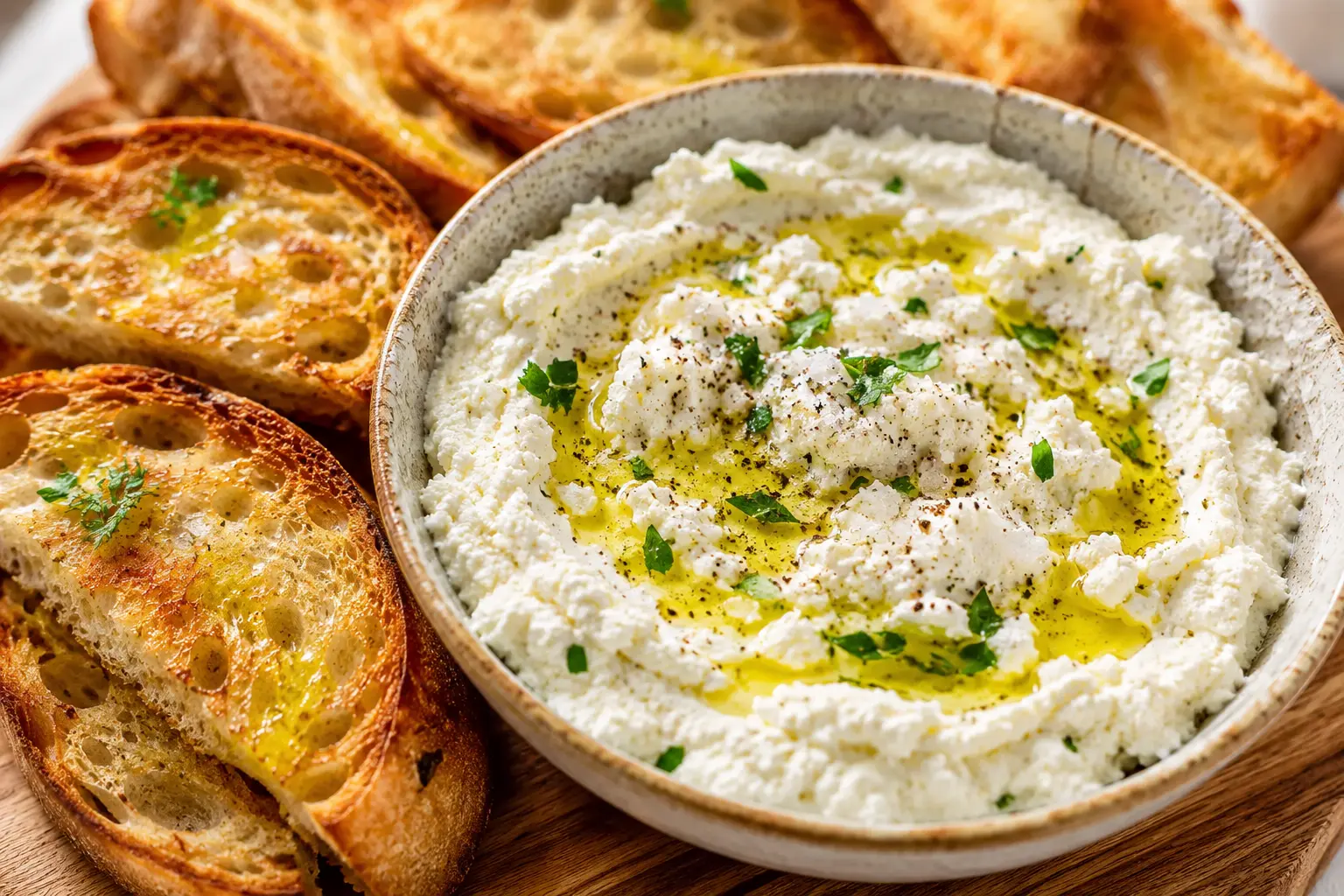
There’s something incredibly satisfying about making homemade ricotta cheese from scratch. With only two simple ingredients and less than an hour of your time, you can create fresh, creamy ricotta that’s far better than most store-bought varieties.
This recipe produces soft, fluffy ricotta with a delicate, slightly sweet flavor that’s perfect for spreading on toast, filling pasta, topping pizza, baking desserts, or simply enjoying with a drizzle of olive oil and fresh herbs.
Whether you’re an experienced home cook or trying cheesemaking for the first time, this beginner-friendly guide will walk you through every step.
Table of Contents
Why You’ll Love This Homemade Ricotta Cheese
This recipe stands out because it’s:
- Made with only 2 ingredients
- Ready in about 45 minutes
- Rich, creamy, and fresh
- Budget-friendly
- Naturally gluten-free
- Easy enough for beginners
- Free from preservatives
- Versatile for sweet and savory dishes
Fresh ricotta has a delicate texture that’s impossible to match with commercially processed versions.
Ingredients You’ll Need
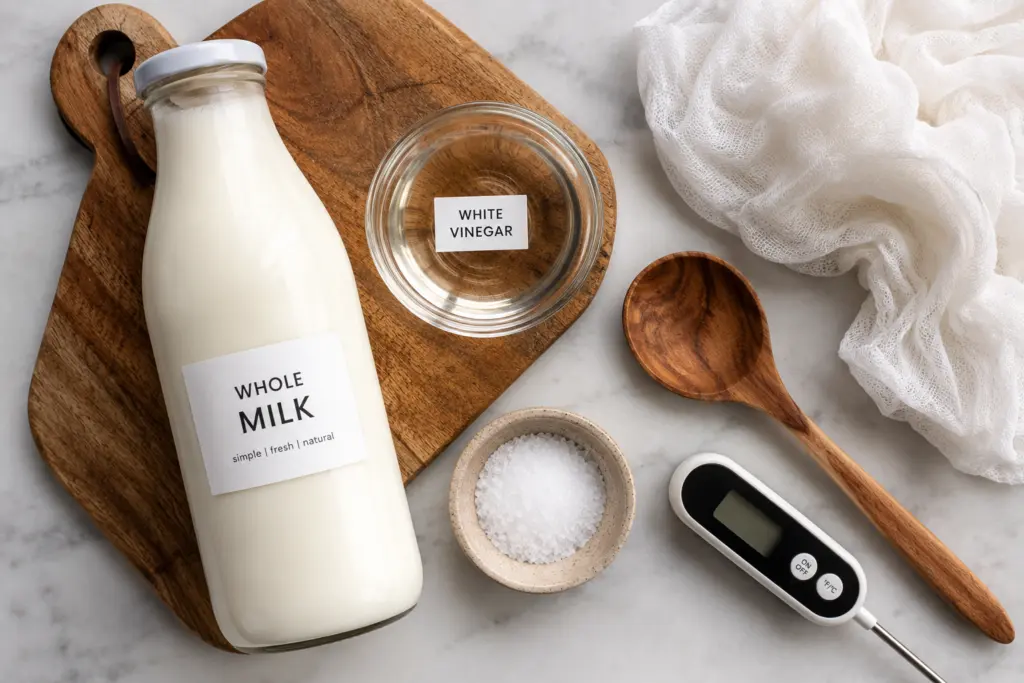
The beauty of this recipe is its simplicity.
| Ingredient | Amount |
|---|---|
| Whole milk | 8 cups |
| White vinegar (or fresh lemon juice) | ¼ cup |
Optional:
- Sea salt
- Olive oil
- Fresh parsley
- Black pepper
Choosing the Best Milk
Whole milk produces the richest and creamiest ricotta.
For best results:
- Use whole milk.
- Avoid ultra-pasteurized milk if possible.
- Fresh local milk often gives superior flavor.
- Organic milk is an excellent option.
Why Vinegar or Lemon Juice Works
The acid changes the milk proteins, causing them to separate into curds and whey.
You can use either:
- White vinegar
- Fresh lemon juice
Both work beautifully.
Step-by-Step Homemade Ricotta Cheese Recipe
Making homemade ricotta cheese is surprisingly simple.
Step 1: Heat the Milk
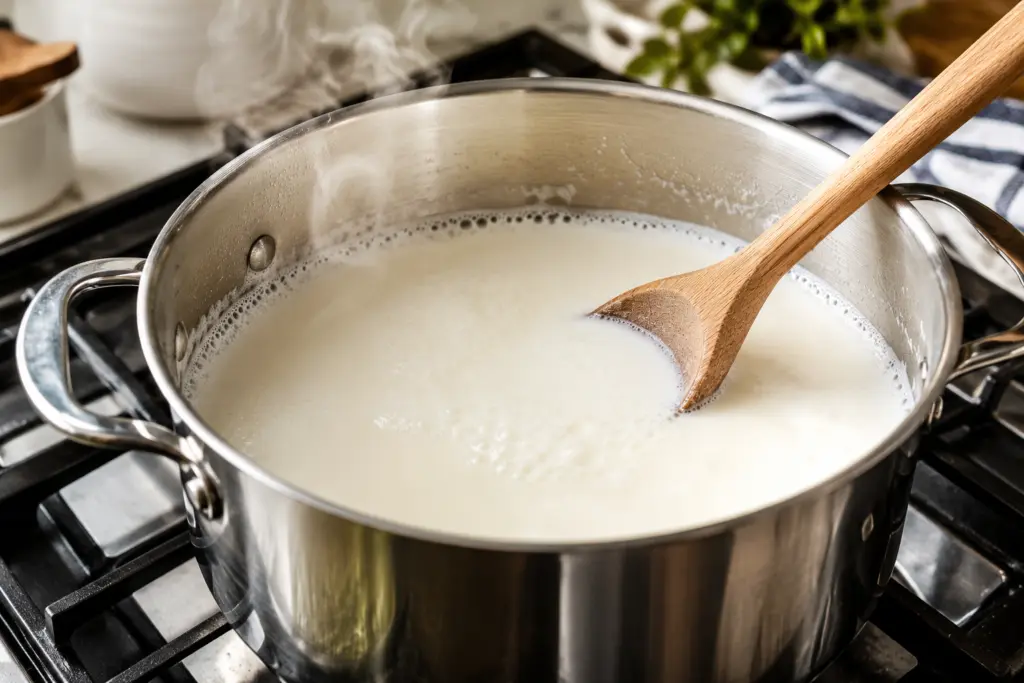
- Pour the milk into a heavy pot.
- Warm slowly over medium heat while stirring occasionally.
- Heat until the milk reaches 190°F (88°C).
- Do not allow it to boil vigorously.
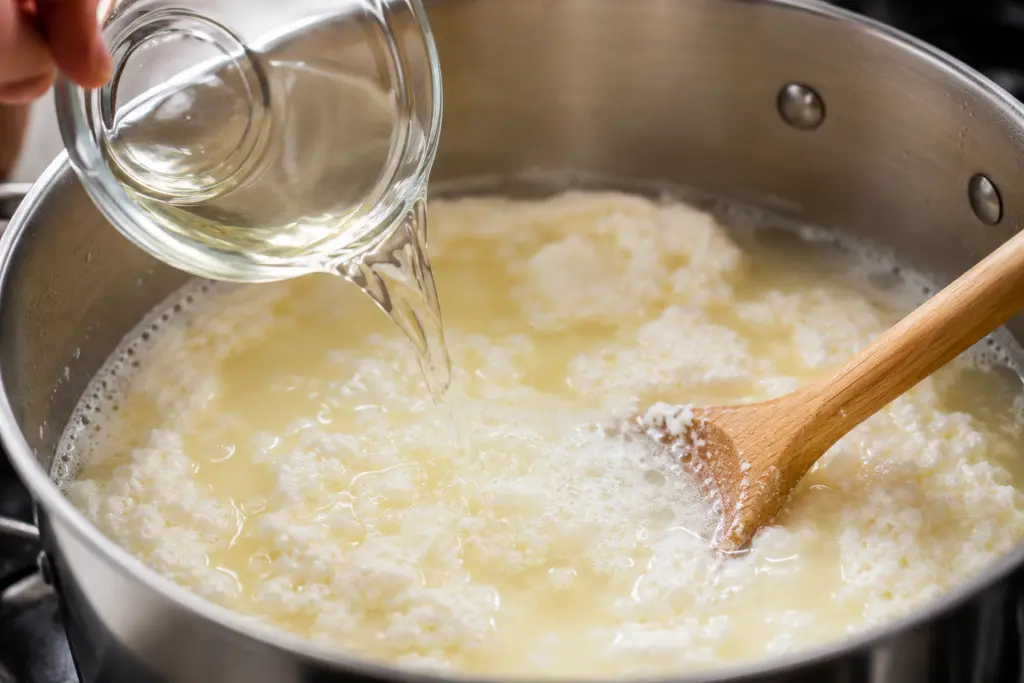
Step 2: Add the Acid
- Remove from the heat.
- Slowly stir in the vinegar or lemon juice.
- Only stir a few times.
- Within a minute, you’ll begin seeing curds forming.
Step 3: Let the Curds Develop
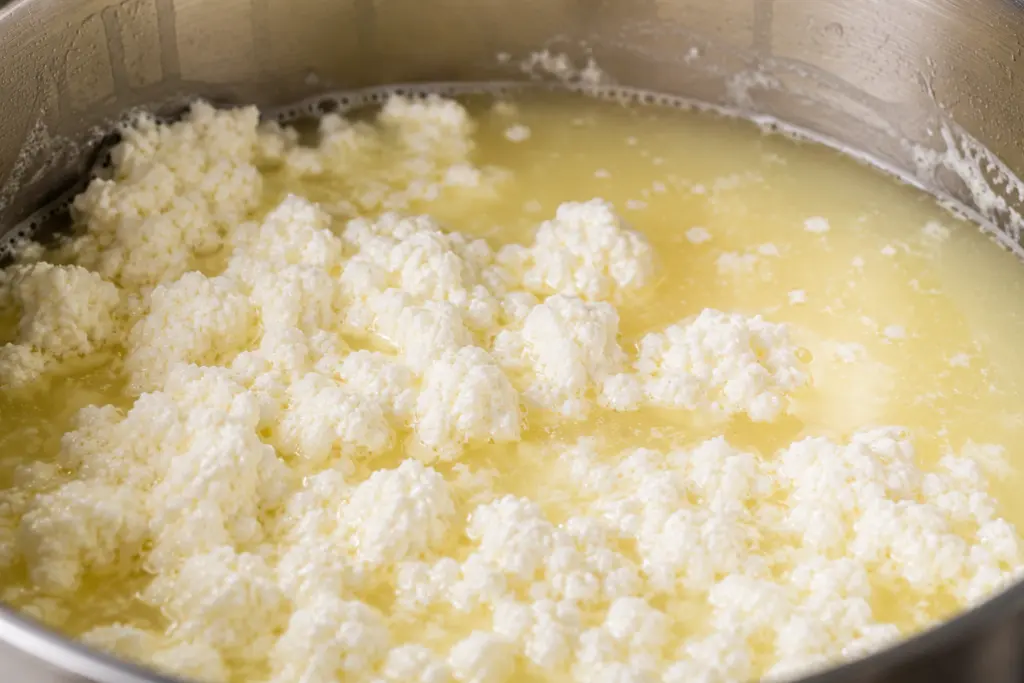
Allow the pot to sit undisturbed for 10-15 minutes.
During this time:
- Large white curds appear.
- Yellowish whey separates.
- The cheese continues developing.
Avoid stirring.
Step 4: Strain the Ricotta
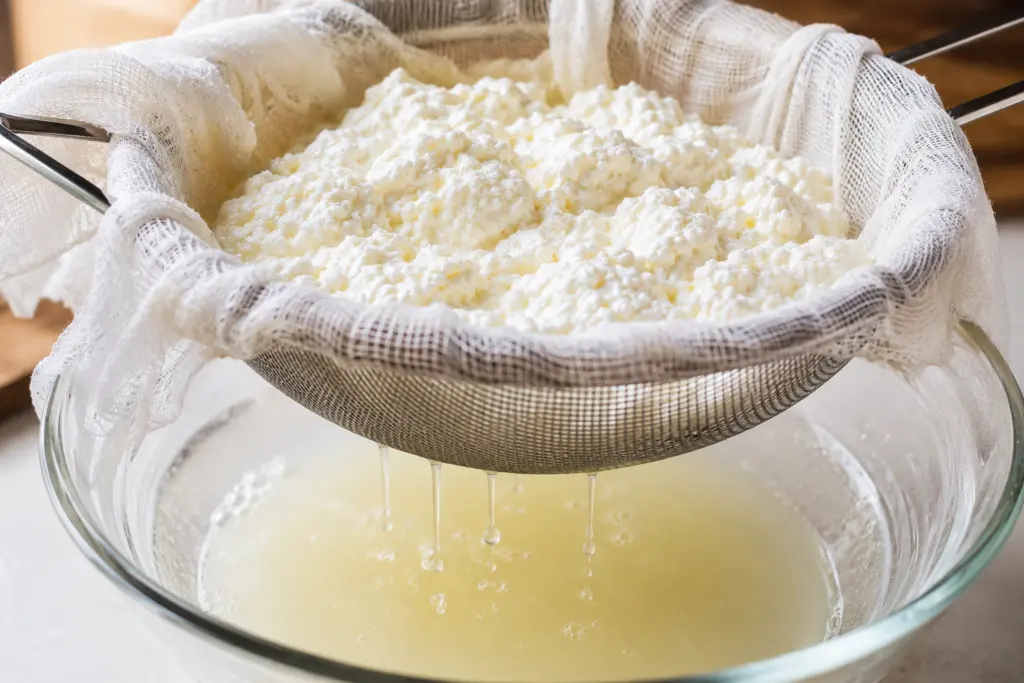
Place cheesecloth inside a sieve over a large bowl.
Carefully ladle the curds into the cheesecloth.
Drain:
- 5 minutes for creamy ricotta
- 10 minutes for classic texture
- 20-30 minutes for firmer cheese
The longer it drains, the thicker it becomes.
Step 5: Season
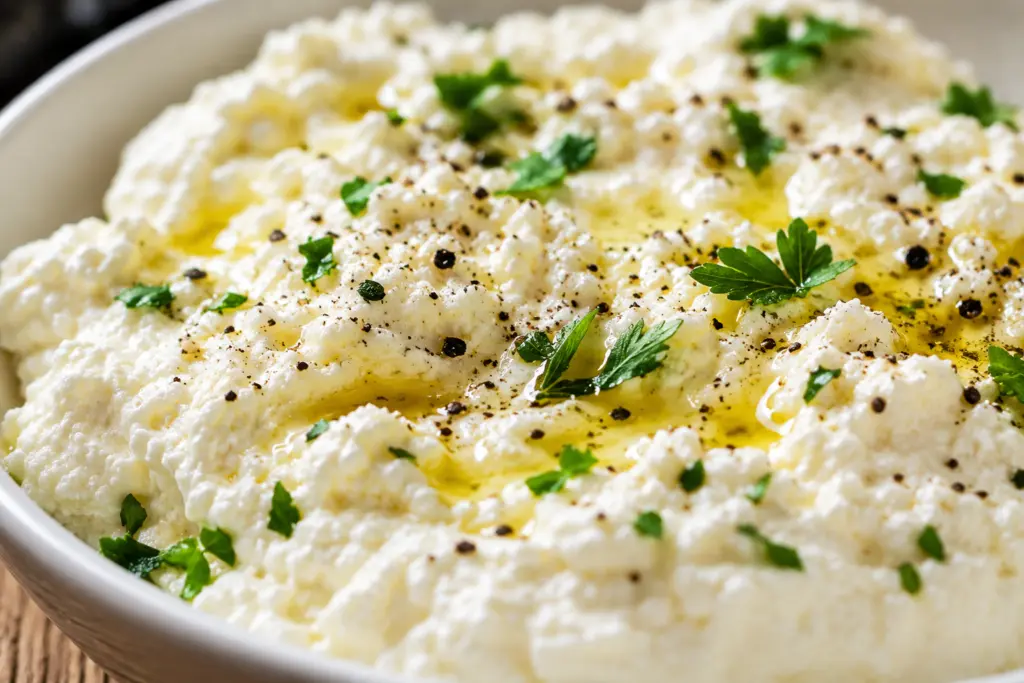
Transfer the ricotta to a serving bowl.
Mix in:
- Salt
- Fresh herbs
- Black pepper
Finish with:
- Extra virgin olive oil
- Fresh parsley
Enjoy immediately.
Common Mistakes to Avoid
Avoid these common issues.
- Using Ultra-Pasteurized Milk
- Sometimes it doesn’t form curds properly.
- Heating Too Fast
- Rapid heating can scorch the milk.
- Over Mixing
- Curds become tiny and grainy.
- Draining Too Long
- Over-drained ricotta becomes dry.
- Skipping Cheesecloth
- A proper cheesecloth keeps the texture smooth.
Flavor Variations
One of the best things about homemade ricotta cheese is how customizable it is.
Try adding:
Herb Ricotta
- Basil
- Parsley
- Chives
- Dill
Garlic Ricotta
Fresh minced garlic with herbs.
Lemon Ricotta
Lemon zest and cracked pepper.
Honey Ricotta
Honey with cinnamon.
Sweet Ricotta
Vanilla and powdered sugar.
Spicy Ricotta
Red pepper flakes and herbs.
Delicious Ways to Serve Homemade Ricotta Cheese
Fresh ricotta is incredibly versatile.
Serve it:
- On toasted sourdough
- With roasted vegetables
- In lasagna
- Stuffed shells
- Ravioli filling to make amazing Creamy Garlic Butter Steak & Cheese Ravioli
- Pizza topping
- Pasta sauce
- Pancakes
- Cheesecake
- Cannoli filling
- Fruit bowls
- Bruschetta
- Crostini
- Breakfast toast
- Grain bowls or in our Viral Hot Honey Beef Bowl
It pairs wonderfully with:
- Honey
- Olive oil
- Fresh tomatoes
- Roasted garlic
- Herbs
- Fresh berries
- Jam

Storage and Shelf Life
Store ricotta in an airtight container.
Refrigerator:
- Up to 5 days
Do not freeze if possible.
Fresh ricotta tastes best within the first 2-3 days.
If liquid collects on top, simply stir before serving.
Discard immediately if:
- It smells sour.
- Mold develops.
- The texture becomes slimy.

2-Ingredient Homemade Ricotta Cheese

Equipment
- Large heavy-bottom saucepan or pot
- Wooden spoon or silicone spatula
- Instant-read thermometer
- Fine-mesh strainer
- Cheesecloth
- Large bowl
- Slotted spoon
Ingredients
- 8 cups whole milk
- ¼ cup white vinegar
- ½ teaspoon sea salt optional
Instructions
- Pour the whole milk into a large heavy-bottom saucepan.
- Heat the milk over medium heat, stirring occasionally to prevent scorching.
- Continue heating until the milk reaches 190°F (88°C).
- Remove the saucepan from the heat.
- Slowly pour in the white vinegar and gently stir 2 to 3 times.
- Let the mixture sit undisturbed for 15 minutes while the curds separate from the whey.
- Line a fine-mesh strainer with cheesecloth and place it over a large bowl.
- Carefully spoon the curds into the cheesecloth.
- Allow the ricotta to drain for 5 to 15 minutes, depending on your preferred consistency.
- Transfer the ricotta to a serving bowl or airtight container.
- Stir in the sea salt if desired. Serve immediately or refrigerate until ready to use.
Notes
- Calories: 160
- Protein: 11g
- Carbohydrates: 7g
- Fat: 10g
- Saturated Fat: 6g
- Cholesterol: 35mg
- Sodium: 90mg
- Sugar: 7g
- Fiber: 0g
- Calcium: 28% DV
- Iron: 0% DV
FAQs
Can I use 2% milk for ricotta cheese?
Yes, but whole milk creates creamier ricotta.
Can I use lemon juice instead of vinegar for homemade cheese?
Absolutely. Fresh lemon juice produces excellent results.
Why didn’t my milk curdle?
Possible reasons include:
Ultra-pasteurized milk
Milk wasn’t hot enough
Too little acid
Can I freeze homemade ricotta cheese?
Yes, although freezing may slightly alter the texture. It’s best enjoyed fresh.
What can I do with leftover whey?
Use whey in:
Bread
Pizza dough
Pancakes
Smoothies
Soups
How long does homemade ricotta cheese last?
Typically 3-5 days when refrigerated in an airtight container.
Making homemade ricotta cheese at home is one of the easiest and most rewarding kitchen projects. With only two ingredients, minimal equipment, and a little patience, you’ll enjoy fresh, creamy cheese that’s far superior to most store-bought options.
Whether spread on warm toast, folded into pasta, layered in lasagna, or sweetened for desserts, this versatile cheese brings rich flavor and homemade goodness to countless recipes. Once you try this foolproof method, you’ll likely find yourself making fresh ricotta again and again.