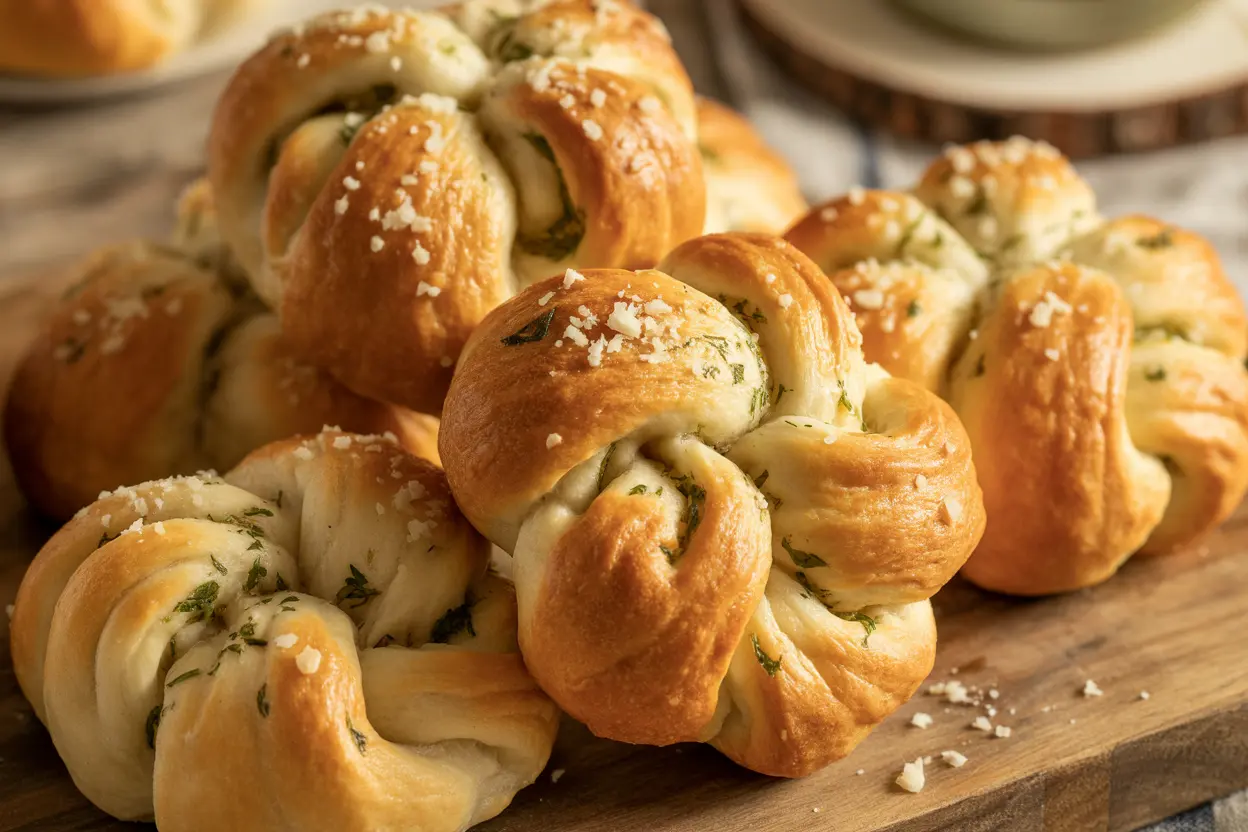
There’s something magical about pulling apart a warm garlic knot. Soft on the inside, golden on the outside, and dripping with buttery garlic goodness. Now imagine that comfort food classic made with sourdough garlic knots (no yeast). No shortcuts. No commercial yeast. Just slow fermentation, deep flavor, and bakery-style results right from your home kitchen.
Table of Contents
What Makes These Garlic Knots Special
These sourdough garlic knots are chewy yet tender, rich but not heavy, and packed with real depth of flavor. The natural fermentation brings a subtle tang that balances beautifully with garlic and butter.
Why No Commercial Yeast Is Needed
Your sourdough starter does all the work. It’s like having a tiny team of bakers living in a jar, wild yeast and bacteria teaming up to leaven your dough naturally.
These sourdough garlic knots have become my signature comfort bake, right up there with my Italian Herbs and Cheese Sourdough Bread for Sunday dinners or my Honey Oat Sourdough Bread for brunch.
Understanding Sourdough Basics
What Is Sourdough Starter
A sourdough starter is a living culture made from flour and water. Over time, it captures wild yeast and beneficial bacteria from the environment.
How Natural Fermentation Works
Instead of fast-rising commercial yeast, sourdough ferments slowly. This long process improves flavor, texture, and digestibility.
Flavor Development in Long Fermentation
Think of fermentation like aging cheese or wine. Time equals complexity. The longer the dough ferments, the more nuanced the flavor becomes.
Ingredients Breakdown
Core Dough Ingredients
- Active sourdough starter
- Bread flour or all-purpose flour
- Water
- Salt
- Olive oil or butter
Garlic Butter Topping Ingredients
- Butter
- Fresh garlic
- Salt
Optional Flavor Enhancements
- Parsley
- Italian herbs
- Grated Parmesan
- Chili flakes
You’ll also want a mixing bowl, a kitchen scale, and a clean surface for shaping. If you’ve never worked with sourdough before, think of this recipe as the gateway to mastering it, gentle kneading, long fermentation, and simple handling. Once you get the hang of this, you’ll find yourself trying everything from Brown Sugar Cinnamon Swirl Sourdough Bread to savory sourdough biscuits.
Preparing the Sourdough Dough
Mixing the Dough
Combine flour, water, starter, and salt until a shaggy dough forms. No kneading marathon needed here.
Resting and Hydration
Let the dough rest. This autolyse phase allows the flour to fully hydrate.
Stretch and Fold Method
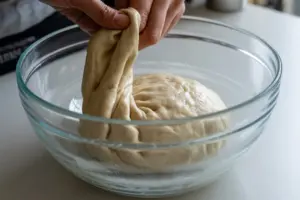
Instead of kneading, gently stretch and fold the dough every 30 minutes to build strength.
Bulk Fermentation Explained
Timing and Temperature
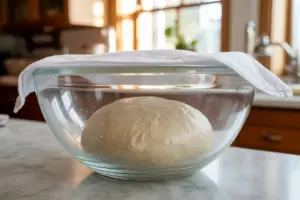
Bulk fermentation usually takes 4-6 hours at room temperature, depending on your starter’s strength.
Signs Your Dough Is Ready
Look for a dough that has risen about 50%, feels airy, and jiggles slightly when you shake the bowl.
Shaping Sourdough Garlic Knots
Rolling the Dough Ropes
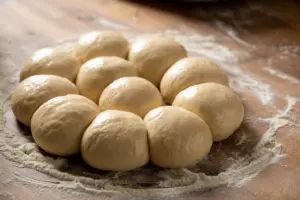
Divide the dough into equal pieces and roll each into a rope.
Classic Garlic Knot Shape
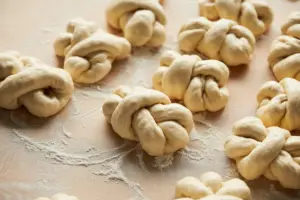
Tie each rope into a loose knot, tucking the ends underneath.
Tips for Uniform Knots
Keep your ropes even in thickness and avoid over-flouring the surface.

Proofing the Knots
- Room Temperature Proofing: Let the shaped knots rest until slightly puffy.
- Overnight Cold Proof Option: For deeper flavor, refrigerate the knots overnight and bake the next day.
Garlic Butter Preparation
- Infusing Garlic Flavor: Melt butter gently and add minced garlic. Let it steep without browning.
- Herb and Cheese Variations: Mix in parsley, oregano, or Parmesan for extra flair.
Baking the Garlic Knots
- Oven Temperature and Timing: Bake in a hot oven until golden brown and fragrant.
- Achieving a Golden Crust: Steam or brushing with butter before baking helps develop color.
Finishing Touches
- Post-Bake Garlic Butter Brush: Brush generously with warm garlic butter right after baking.
- Adding Parmesan and Herbs: Finish with grated cheese and fresh herbs while still warm.
The beauty of sourdough is its flexibility, if you’ve ever made my Sourdough Buttermilk Bread, you already know how forgiving and flavorful a naturally fermented dough can be.
Serving Suggestions, and Delicious Variations
Perfect Pairings
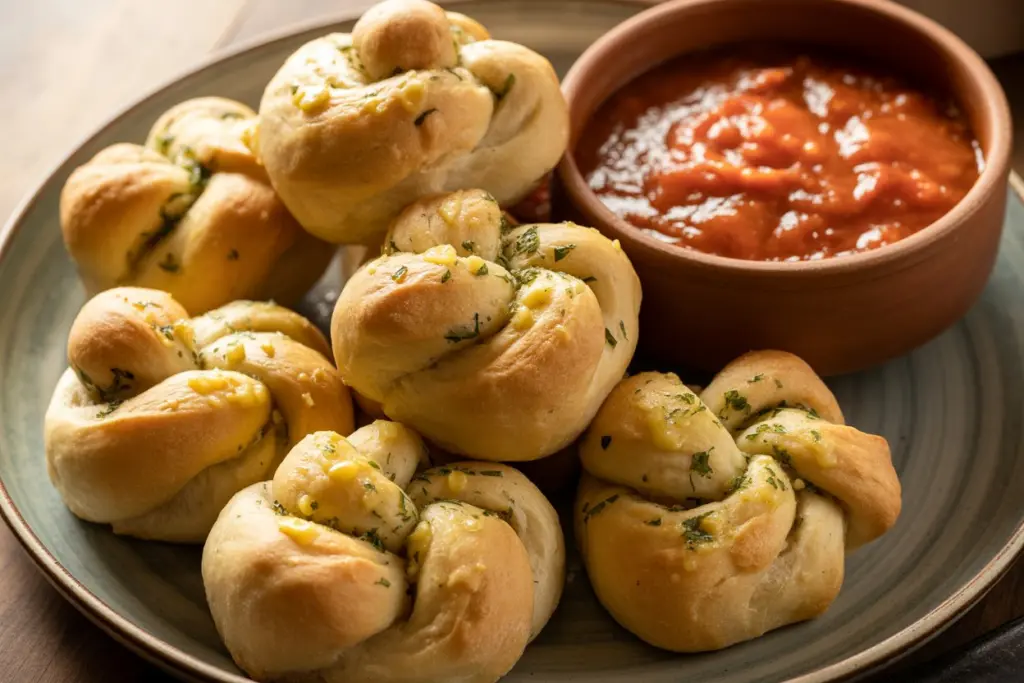
Serve with marinara, soups, pasta, or as a standalone snack.
When and How to Serve
Best enjoyed warm, straight from the oven, because who can resist that aroma?
Try serving them with Sourdough Cornbread Muffins for a rustic bread basket. Or pair theme with a warm bowl of Creamy Roasted Garlic Tomato Soup or a Ricotta Chicken Pasta with Tomatoes, a match made for cold evenings or lazy weekend dinners.
Creative Variations to Try
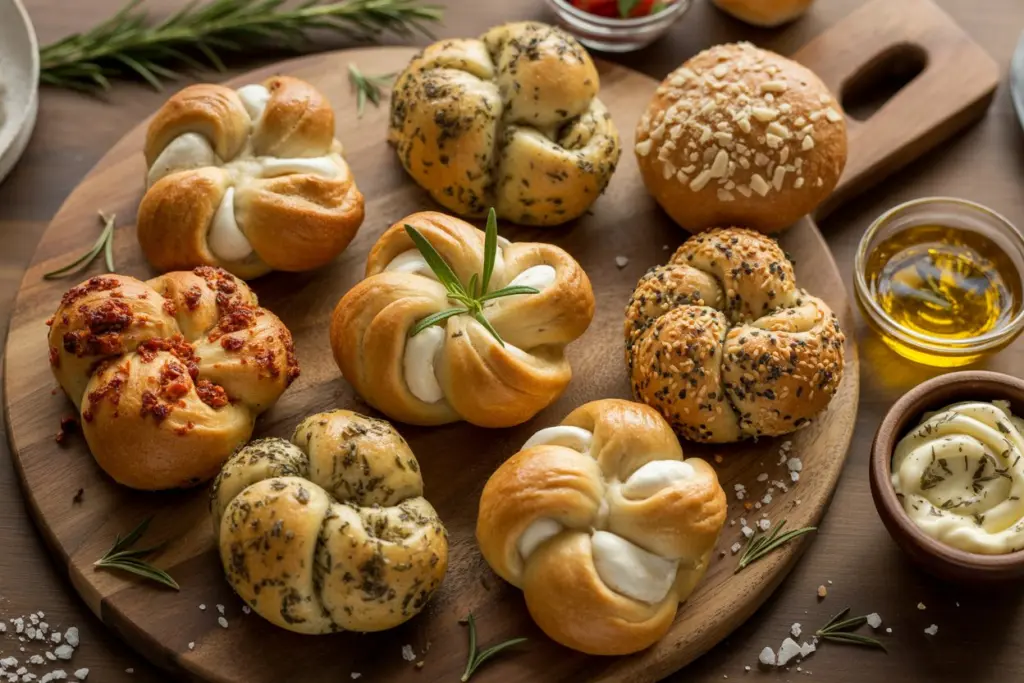
Once you’ve mastered the classic sourdough garlic knots, there’s no limit to how creative you can get. Here are a few irresistible variations to try:
- Cheesy Sourdough Knots – Stuff each knot with a cube of mozzarella before baking for a melty, savory center.
- Herb-Infused Knots – Add rosemary, thyme, or Italian seasoning directly into the dough for a fragrant twist.
- Everything Bagel Knots – Brush with olive oil, then sprinkle everything bagel seasoning before baking for crunch and flavor.
- Spicy Garlic Knots – Mix red pepper flakes into your garlic butter for a subtle heat that balances the sourdough tang.
- Parmesan Crusted Knots – Roll the shaped knots in grated Parmesan before baking for a golden, cheesy crust.
- Sweet Cinnamon Sugar Knots – Skip the garlic and brush the baked knots with melted butter and cinnamon sugar, similar to my Sourdough Chocolate Knots.
- Garlic Herb Butter Dip – Serve with a side of melted butter blended with roasted garlic and parsley for dipping.
- Mini Knots for Appetizers – Divide the dough into smaller pieces to create bite-sized garlic knots perfect for parties.
Each variation keeps that signature sourdough flavor while letting you play with texture, aroma, and personality. Cooking is all about discovery, and with sourdough, every experiment is delicious.
Storage and Reheating Tips
- Short-Term Storage: Store in an airtight container for up to two days.
- Freezing Garlic Knots: Freeze baked knots and reheat in the oven for fresh-baked taste.
Common Mistakes to Avoid
- Overproofing: Too much fermentation leads to flat, weak knots.
- Dense or Dry Knots: Usually caused by underproofing or too much flour.
Sourdough Garlic Knots (No Yeast)

Equipment
- Large mixing bowl
- Dough scraper or knife
- Baking sheet
- Parchment paper
- Small saucepan or microwave-safe bowl
- Pastry brush
Ingredients
- 3 cups bread flour
- ¾ cup water
- ½ cup active sourdough starter
- 1½ teaspoons salt
- 2 tablespoons olive oil
- Garlic Butter
- 4 tablespoons butter
- 3 cloves garlic finely minced
- 1 tablespoon fresh parsley finely chopped
- 2 tablespoons grated Parmesan cheese
Instructions
- In a large bowl, mix flour, water, sourdough starter, olive oil, and salt until a shaggy dough forms.
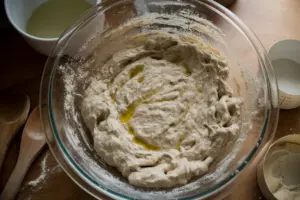
- Cover and rest the dough for 30 minutes to allow hydration.
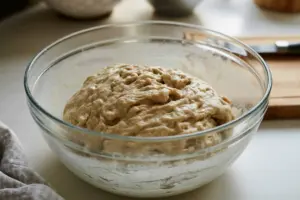
- Perform stretch-and-folds by pulling one side of the dough up and folding it over itself, rotating the bowl and repeating 4 times.
- Cover and let the dough ferment at room temperature for 4-6 hours, until slightly puffy and airy.
- Turn the dough onto a lightly floured surface and divide into 10-12 equal pieces.
- Roll each piece into a rope about 8 inches long and tie into a loose knot.
- Place knots on a parchment-lined baking sheet and cover lightly. Let proof at room temperature for 1-2 hours, until slightly risen.
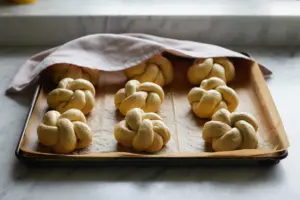
- Preheat oven to 375°F (190°C). Bake the knots for 18-22 minutes, until lightly golden.
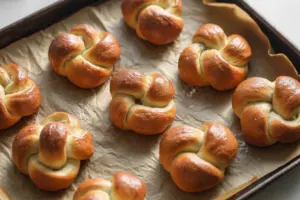
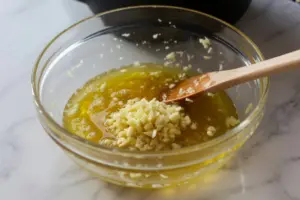
- While baking, melt butter and mix in garlic.
- Brush hot knots generously with garlic butter immediately after baking.
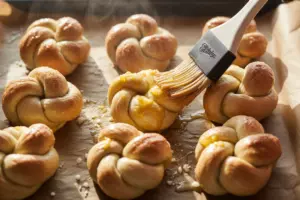
- Sprinkle with parsley and Parmesan before serving.
Notes
- Calories: 190
- Carbohydrates: 28g
- Protein: 6g
- Fat: 6g
- Fiber: 1g
FAQs
Can I use sourdough discard for garlic knots?
Yes, but the texture will be denser and less airy. If you’re using discard, try pairing it with baking soda for a lighter lift.
How long should sourdough garlic knots rise?
Your sourdough garlic knots should bulk ferment for about 4-6 hours at room temperature or overnight in the refrigerator. The cold fermentation adds more flavor and a slightly tangier taste. The dough should double in size and feel airy before shaping.
What’s the best flour for sourdough garlic knots?
Bread flour gives the best chew and structure. If you prefer a softer, tender crumb, mix equal parts all-purpose and bread flour.
Can I make sourdough garlic knots vegan?
Absolutely! Replace the butter with olive oil and skip the Parmesan. You’ll still get that rich garlicky flavor with a glossy finish.
Why are my knots not fluffy?
Your starter may be weak or the dough underproofed.
Sourdough garlic knots (no yeast) are proof that simple ingredients and patience can create incredible results. They’re cozy, flavorful, and endlessly satisfying. Whether you’re baking for family, friends, or just yourself, these knots turn any meal into something special. Once you try them, there’s no going back.