Before we dive into the recipe, let me tell you why this cake means so much to me. Red velvet cake with cream cheese frosting isn’t just dessert, it’s nostalgia baked into every layer. The deep red crumb, the tang of buttermilk, and the smooth swirl of frosting are the essence of celebration in my kitchen. Whether it’s Christmas, Valentine’s Day, or a cozy Sunday dinner, this cake always finds a reason to shine.
Table of Contents
What Makes Red Velvet Cake So Special
Red velvet cake has always stood apart from the rest. It’s not quite chocolate, not quite vanilla, it’s a perfect harmony between the two. The secret lies in the chemistry: buttermilk and vinegar react with cocoa to give the cake its signature hue and tender texture. It’s science that tastes like art.
This iconic dessert first gained fame in the early 1900s, long before food coloring was even a thing. Bakers used natural cocoa’s reddish tint, and over time, that blush deepened into the vivid red we know today. But beyond its color, what makes red velvet cake with cream cheese frosting truly special is the contrast, the tangy cream cheese frosting against the smooth, buttery crumb.
And while I’m a fan of the classic, modern bakers have kept the tradition alive with creative twists. Try the festive Red Velvet Snowball Cookies for bite-sized holiday magic or the cozy Hot Cocoa Cookies with Marshmallow Frosting when you crave something comforting and sweet. Each dessert pays tribute to red velvet’s irresistible balance of flavor and beauty.
For me, this cake isn’t just a recipe, it’s a reminder of home, holidays, and the simple joy of baking something unforgettable.

Red Velvet Cake with Cream Cheese Frosting

Equipment
- Two 9-inch round cake pans
- Electric hand mixer or stand mixer
- Mixing bowls (large and medium)
- Rubber Spatula
- Wire cooling rack
- Measuring cups and spoons
- Offset spatula or icing knife
Ingredients
For the Cake
- 2 ½ cups cake flour
- 2 tablespoons unsweetened cocoa powder
- 1 teaspoon baking soda
- 1 teaspoon salt
- 1 ½ cups granulated sugar
- 1 cup vegetable oil
- 3 large eggs room temperature
- 1 cup buttermilk
- 1 teaspoon distilled white vinegar
- 1 teaspoon vanilla extract
- 1 tablespoon red gel food coloring
For the Cream Cheese Frosting
- 8 oz 225g full-fat cream cheese, softened
- ½ cup 1 stick unsalted butter, softened
- 2-3 cups powdered sugar sifted
- 1 teaspoon pure vanilla extract
Instructions
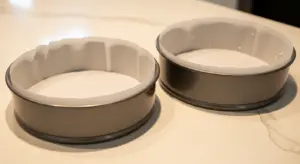
- Preheat oven to 350°F (175°C). Grease and line two 9-inch round cake pans with parchment paper.
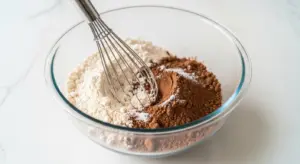
- In a medium bowl, whisk together cake flour, cocoa powder, baking soda, and salt. Set aside.
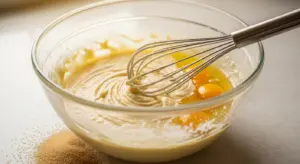
- In a large mixing bowl, beat together sugar, oil, and eggs until smooth and slightly fluffy.
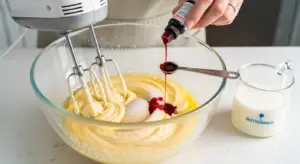
- Mix in buttermilk, vanilla, and red food coloring until evenly combined.
- Gradually add the dry ingredients to the wet mixture in three parts, mixing gently after each addition.
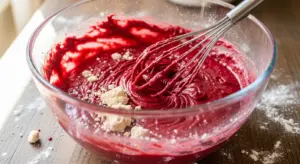
- Stir in vinegar just before baking for a lighter texture.
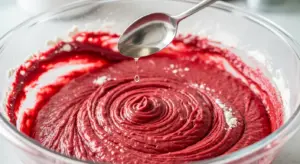
- Divide the batter evenly between pans and bake for 30-35 minutes, or until a toothpick inserted in the center comes out clean.
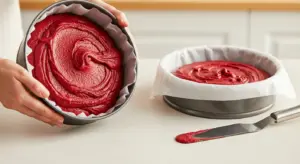
- Let the cakes cool in the pans for 10 minutes, then transfer to wire racks to cool completely.
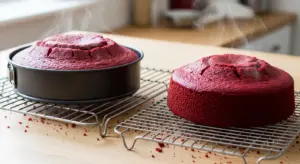
- For the frosting, beat softened butter and cream cheese together until creamy and smooth.
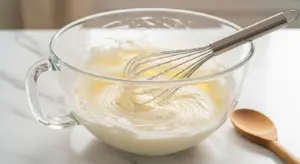
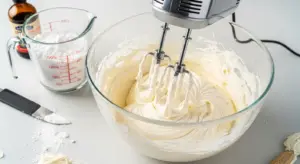
- Add powdered sugar gradually while beating on medium speed, then mix in vanilla extract until fluffy.
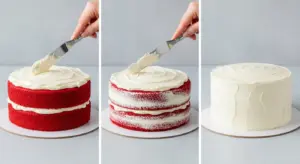
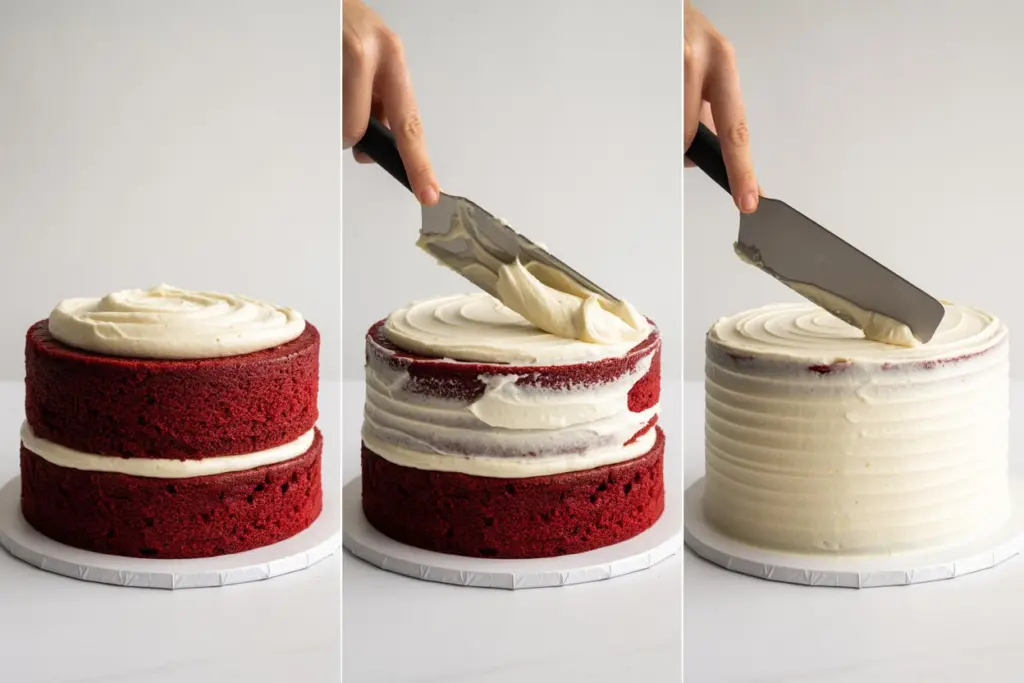
- Spread a thin layer of frosting between the cake layers. Apply a crumb coat and chill for 15 minutes, then finish frosting the top and sides.
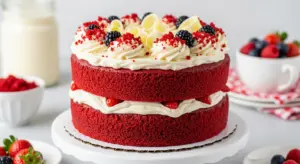
- Decorate as desired with red velvet crumbs, white chocolate curls, or fresh berries.
Notes
- Calories: 420
- Total Fat: 20g
- Saturated Fat: 8g
- Cholesterol: 60mg
- Carbohydrates: 56g
- Sugars: 40g
- Protein: 5g
Ingredients & Preparation
Essential Ingredients for Perfect Texture
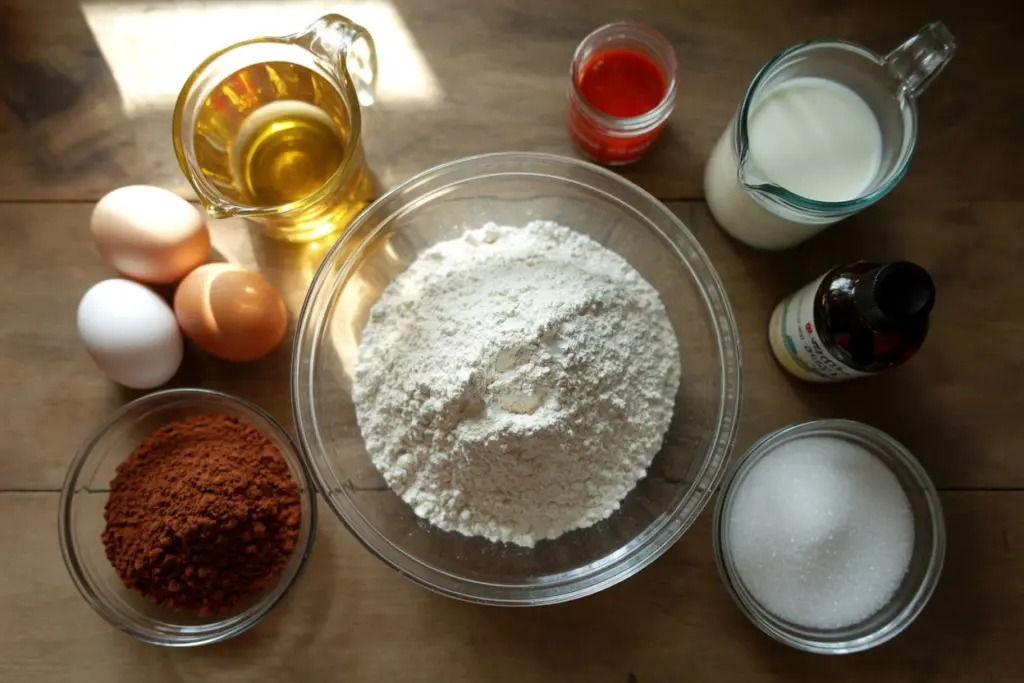
Every unforgettable red velvet cake with cream cheese frosting begins with balance, the lightness of cake flour, the tang of buttermilk, and the smooth depth of cocoa. Unlike most chocolate cakes, this recipe relies on just enough cocoa for flavor without overpowering that subtle vanilla undertone.
Here’s what you’ll need to bring the magic together:
- 2 ½ cups cake flour (for that delicate, soft crumb)
- 2 tablespoons unsweetened cocoa powder
- 1 teaspoon baking soda
- 1 teaspoon salt
- 1 ½ cups sugar
- 1 cup buttermilk
- 1 cup vegetable oil
- 3 large eggs, room temperature
- 1 teaspoon distilled white vinegar
- 1 teaspoon vanilla extract
- 1 tablespoon red food coloring
The real secret to achieving that velvety texture lies in the interaction between acidic ingredients and cocoa. The buttermilk and vinegar not only tenderize the crumb but also help maintain that striking red hue. If you’ve ever baked the Overnight Sourdough Chocolate Cake Recipe, you’ll know how fermentation enhances flavor and softness, similar principles apply here.
Each ingredient has its role: cocoa brings depth, vinegar sharpens flavor, and oil keeps every slice irresistibly moist. And if you’re feeling creative, using tangy cultured buttermilk from scratch adds a flavor complexity found in recipes like the Cream Cheese Spritz Cookies, where the right balance of fat and acid makes all the difference.
All About Food Coloring
That iconic red color isn’t just for looks, it’s part of what makes red velvet cake with cream cheese frosting so visually irresistible. Traditionally, the reddish hue came from the natural reaction between cocoa and acidic ingredients like vinegar and buttermilk. However, modern bakers rely on red food coloring to intensify the tone and create that deep, luxurious shade we all love.
Liquid, gel, or powder coloring all work, but gel food coloring provides the most vibrant results without thinning the batter. For a classic look, one tablespoon of red gel color is enough, but you can adjust to achieve anything from a soft crimson to a bold scarlet. For a more natural option, beetroot powder can add color while giving a subtle earthy undertone that complements the cocoa beautifully.
A little goes a long way here. Mix the color in after combining your wet ingredients to ensure even distribution without streaks. This small step turns a simple cake into a showstopper, a centerpiece worthy of any celebration.
Mixing Techniques for Moist Layers
Technique matters just as much as ingredients when baking a red velvet cake with cream cheese frosting. Start by whisking the dry ingredients in one bowl and beating sugar with oil and eggs in another. Blend in the buttermilk and vanilla, then slowly incorporate the dry mix, alternating with red food coloring. Always finish by stirring in vinegar last, this quick reaction ensures that light, airy texture red velvet is famous for.
When mixing, resist the urge to overbeat. Gentle folding keeps the batter fluffy and prevents the crumb from becoming dense. Bake at 350°F (175°C) for 25-30 minutes or until a toothpick comes out clean. Cool completely before frosting, otherwise, the cream cheese will melt and slide.
If you love experimenting with soft and rich cakes, you’ll enjoy the subtle bitterness in the Easy Sourdough Discard Chocolate Coffee Cake or the luscious crumb of the Sourdough Double Chocolate Bread Recipe. Both showcase how moisture and texture elevate desserts beyond ordinary.
The joy of red velvet lies in this process, the rhythm of measuring, folding, and waiting patiently as your kitchen fills with that unmistakable aroma of cocoa and vanilla. Each step brings you closer to slicing into a masterpiece that’s as beautiful as it is delicious.
Cream Cheese Frosting Magic
The Perfect Cream Cheese Frosting Ratio
Every red velvet cake with cream cheese frosting deserves a topping that’s rich, smooth, and slightly tangy, the kind of frosting that melts on your tongue and balances the sweetness of the cake. The secret? Ratios. Too much sugar and you lose that signature tang; too little and it becomes flat.
Here’s the ideal frosting ratio that guarantees creamy perfection every time:
| Ingredient | Recommended Amount | Purpose |
|---|---|---|
| Cream Cheese | 8 oz (full-fat) | Creates smooth, tangy base |
| Butter | ½ cup (unsalted, softened) | Adds richness and stability |
| Powdered Sugar | 2-3 cups | Sweetens and thickens |
| Vanilla Extract | 1 teaspoon | Enhances flavor depth |
To make it, beat the softened butter and cream cheese together for at least 3 minutes until light and fluffy. Gradually add powdered sugar one cup at a time, followed by vanilla extract. If you prefer a less sweet, tangier flavor, reduce the sugar and let the cream cheese shine.
For a holiday spin, try blending in subtle flavors inspired by the Easy Christmas Sugar Cookie Bars or the gentle spice from the Festive Red and Green Crinkle Cookies Recipe. Both offer flavor inspiration that pairs beautifully with this frosting base.
Decorating and Storing Your Cake
Once your red velvet cake layers have cooled completely, it’s time for the fun part, frosting and decorating. Begin with a thin “crumb coat,” a light layer of frosting that seals in loose crumbs. Chill the cake for 15-20 minutes, then apply the final thick coat, using a spatula to create smooth edges or rustic swirls.
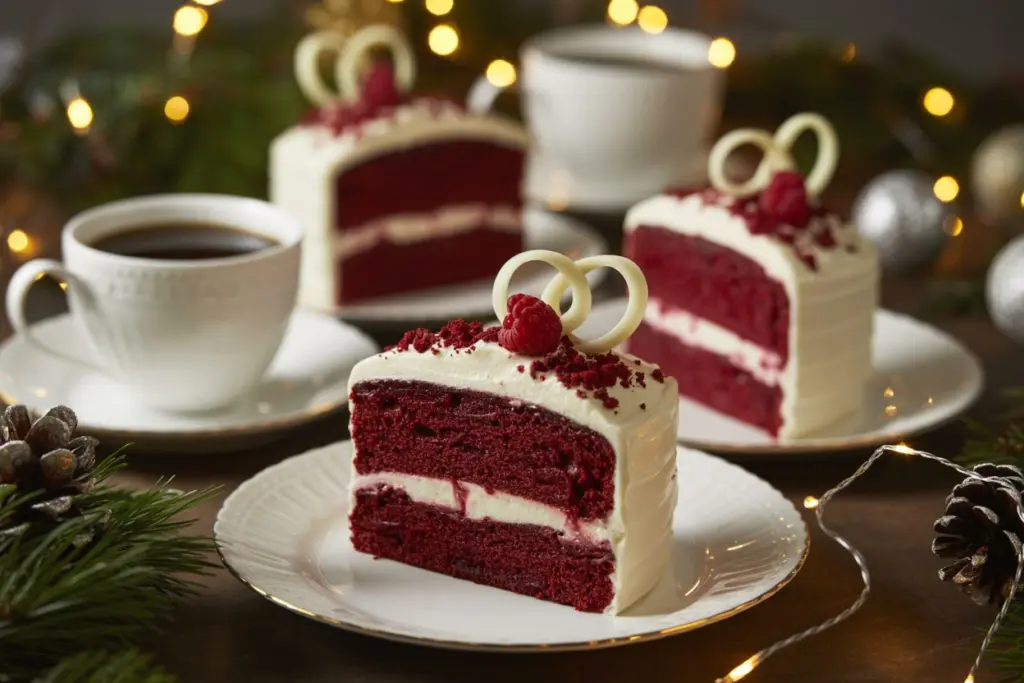
For a picture-perfect finish, sprinkle crushed red velvet crumbs on top or garnish with white chocolate curls for contrast. During the holidays, fresh berries or edible flowers turn this cake into a stunning centerpiece.
If you plan to serve it later, refrigerate the frosted cake in an airtight container for up to 4 days. Before serving, let it sit at room temperature for about 30 minutes to regain its soft, creamy texture. For longer storage, freeze unfrosted layers wrapped tightly in plastic, this preserves the crumb and flavor beautifully.
The cream cheese frosting also doubles as a delightful dip for cookies or brownies. Try it with the chewy edges of the Chocolate Pumpkin Cheesecake Bars or a drizzle over Peppermint Bark Cookies for an extra touch of sweetness.
Making frosting from scratch may feel indulgent, but once you taste that creamy balance of tang and sweetness, you’ll never reach for store-bought again. It’s the crowning glory that transforms a simple red velvet cake into something absolutely irresistible.
Serving & Variations
Serving Suggestions for Every Occasion
The beauty of a red velvet cake with cream cheese frosting lies in its versatility, it’s elegant enough for a wedding, festive enough for Christmas, and romantic enough for Valentine’s Day. Whether it’s the centerpiece of your dessert table or a treat for quiet Sunday afternoons, it never fails to impress.
I love serving it chilled, with the frosting just firm enough to slice cleanly but soft enough to melt on the tongue. Pair each slice with a cup of hot coffee or a glass of cold milk to balance the richness. For a holiday spread, a slice of this cake sits beautifully next to cookies or breads, like the soft Valentine’s Sourdough Discard Sugar Cookies or the comforting Chocolate Peanut Butter Pie.
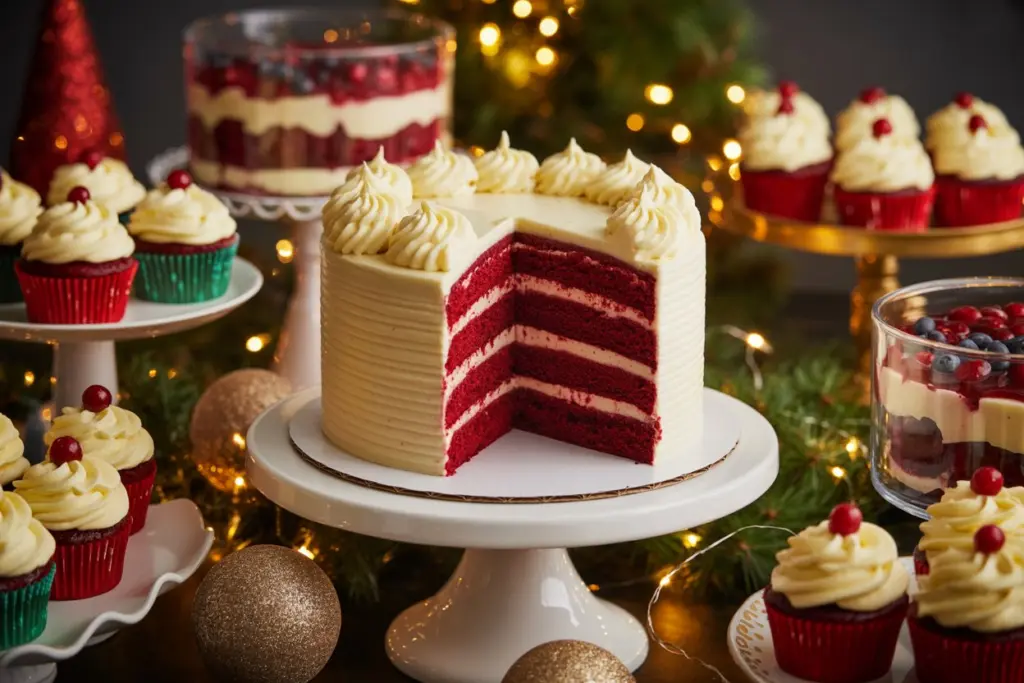
If you’re serving a crowd, transform your red velvet cake with cream cheese frosting into cupcakes for easier portioning. Pipe the frosting in tall swirls and top with mini chocolate curls or fresh raspberries for color contrast. For more formal occasions, layer the cake with thin spreads of frosting for a neater look, and finish with a glossy ganache drizzle.
Presentation matters, use a white cake stand or vintage platter to make the deep red crumb and white frosting pop. Even a dusting of powdered sugar can turn a simple slice into something breathtaking. The aroma, the texture, the look, it’s a dessert that commands attention without needing perfection.
Fun Variations and Baker’s Tips
If you’ve mastered the classic version, it’s time to play. You can easily turn this red velvet cake with cream cheese frosting into cupcakes, trifles, or even cake pops. Layer cubes of cake with frosting and fruit in a glass for a stunning trifle, or roll leftover crumbs with frosting into bite-sized red velvet truffles, an irresistible treat for parties.
For something different, try swapping part of the cocoa with espresso powder for deeper flavor, or add a tablespoon of orange zest to the frosting for a fresh twist. And if you love experimenting with other bakes, explore cozy, seasonal recipes like the Pumpkin Coffee Cake with Crumb Topping or indulgent The Best Chocolate Cheesecake Recipe. Both are perfect companions for red velvet’s richness, offering variation and depth to your dessert repertoire.
Here are a few of my tried-and-true baking tips for consistently perfect results:
- Always use room temperature ingredients, cold eggs or butter can make the batter curdle.
- Don’t skip the vinegar; it reacts with baking soda to keep your cake light.
- Let the cake cool completely before frosting to prevent sliding layers.
- Store in the refrigerator but serve at room temperature for best flavor.
Baking should feel joyful, not stressful. Whether it’s your first red velvet cake or your fiftieth, it’s the care, not the perfection, that makes it unforgettable. Each slice tells a story of time spent, laughter shared, and a love for the craft of baking.
FAQs
What makes red velvet cake taste different from chocolate cake?
Red velvet cake with cream cheese frosting isn’t just a chocolate cake in disguise, it’s its own experience. The small amount of cocoa adds depth without dominating the flavor, while buttermilk and vinegar give the cake a tangy undertone. The result is a delicate balance of sweetness, acidity, and creaminess that chocolate cake simply doesn’t have.
How do I make cream cheese frosting smooth and fluffy?
For a silky, spreadable frosting, ensure both butter and cream cheese are softened to room temperature before mixing. Beat them together for several minutes until fully combined and fluffy before adding powdered sugar gradually. Overbeating can make frosting too loose, so stop when it’s light and creamy.
Can I use buttermilk substitutes in red velvet cake?
Yes! If you don’t have buttermilk, combine 1 cup of whole milk with 1 tablespoon of white vinegar or lemon juice. Let it sit for 5 minutes before using. The acidity is essential, it reacts with baking soda to create the cake’s light, tender crumb and rich flavor.
How do I keep my red velvet cake moist for days?
The secret to maintaining a moist texture lies in proper storage. Wrap the cake tightly in plastic wrap or store it in an airtight container in the refrigerator. Before serving, bring it to room temperature to restore its soft crumb and creamy frosting texture. Freezing unfrosted layers also helps preserve freshness for future celebrations.
Every time I bake a red velvet cake with cream cheese frosting, I’m reminded why I fell in love with baking. It’s not just the striking red color or the indulgent frosting, it’s the feeling of comfort that fills the room, the warmth of the oven, and the joy of sharing a slice with someone you love.
This cake embodies everything homemade baking stands for: flavor, nostalgia, and a touch of magic. Whether it’s your first attempt or your signature dessert, embrace the process. Mix with care, frost with love, and let that first slice remind you that perfection in baking isn’t about precision, it’s about heart.
If this recipe inspired you, try exploring other cozy desserts like the Moist Spiced Gingerbread Cake Recipe or the Festive Christmas Bread Recipe. Both capture the same warmth and homemade joy that makes red velvet truly timeless.