There are some dishes that feel like a warm hug, and loaded potato soup is absolutely one of them. Creamy, rich, hearty, and unapologetically comforting, this soup takes everything you love about a loaded baked potato and turns it into a spoonable masterpiece. One bowl in, and suddenly the world feels quieter, softer, and a lot more delicious.
Whether you’re cooking for your family, meal-prepping for the week, or just craving something indulgent after a long day, loaded potato soup never disappoints.
Table of Contents
What Makes Loaded Potato Soup So Special?
A Comfort Food Classic
Loaded potato soup sits right at the crossroads of nostalgia and indulgence. It’s the kind of dish that reminds you of cold evenings, oversized sweaters, and steam rising from a bowl on the table. Unlike light broths or delicate soups, this one is bold, creamy, and filling.
Why Everyone Loves It
It checks all the boxes:
- Creamy without being boring
- Savory without being heavy
- Customizable for every taste
Plus, let’s be honest, bacon, cheese, and potatoes are a legendary trio. Together, they create a flavor that’s hard to beat.
The History Behind Potato Soup
Humble Beginnings
Potato soup has been around for centuries, especially in regions where potatoes were a staple food. It was affordable, filling, and easy to make with simple ingredients. Back then, it was more about survival than indulgence.
How “Loaded” Became a Thing
The idea of “loading” foods became popular when baked potatoes started getting topped with butter, cheese, sour cream, and bacon. It was only a matter of time before someone thought, “Why not put all of this into a soup?” And thank goodness they did.
What Is Loaded Potato Soup?
Traditional Potato Soup vs Loaded Version
Traditional potato soup is usually mild, simple, and smooth. Loaded potato soup, on the other hand, is richer, chunkier, and packed with toppings that add texture and punch.
Key Flavor Differences
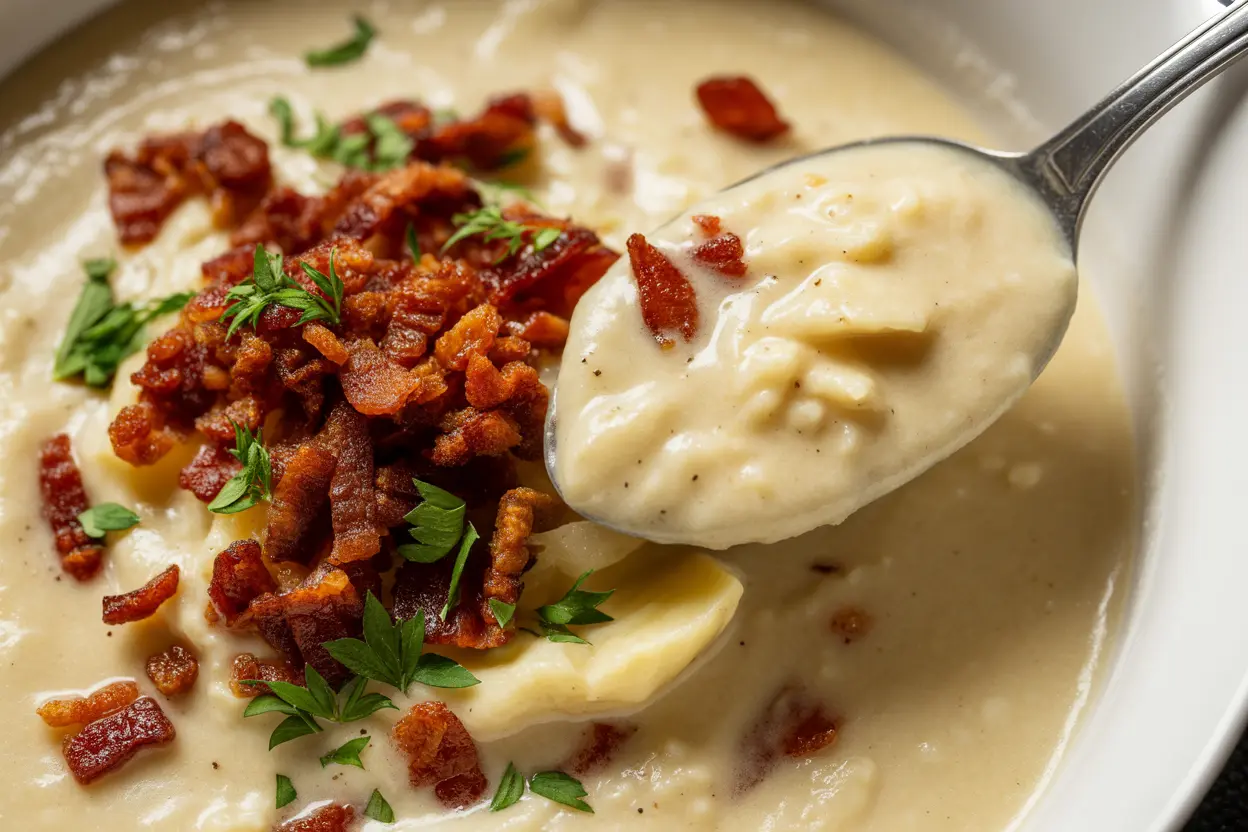
Loaded versions are saltier, creamier, and more layered in flavor. Every spoonful offers something different, soft potatoes, smoky bacon, melted cheese, and a cool hint of sour cream.
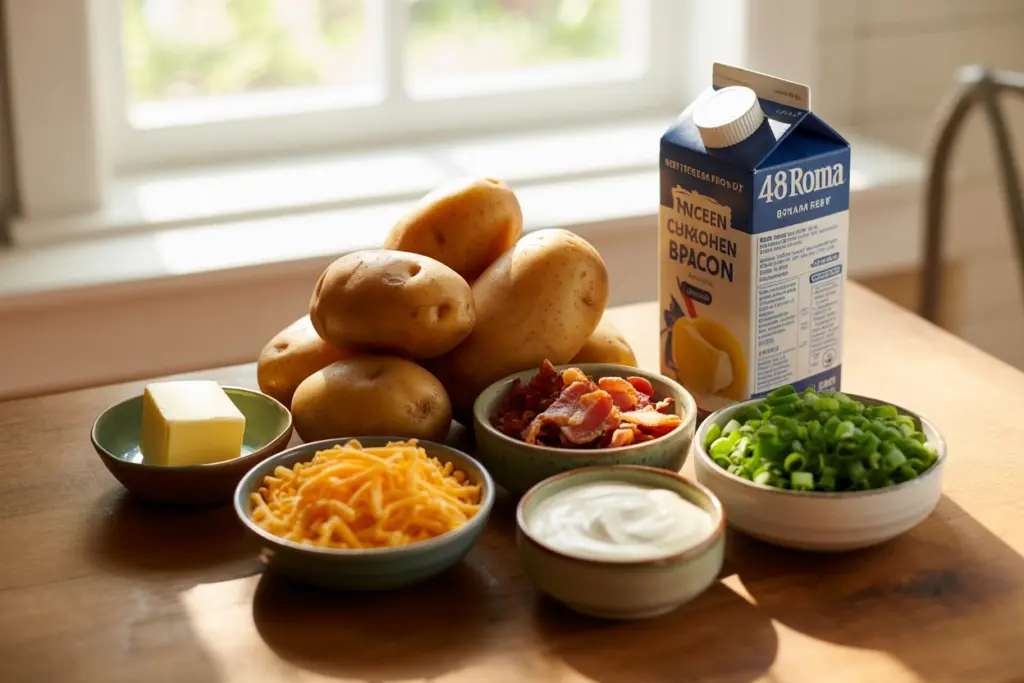
Essential Ingredients for Loaded Potato Soup
The Potato Base
Potatoes are the backbone of this soup. They provide body, thickness, and that unmistakable comfort-food flavor.
Creamy Elements
Cream, milk, butter, or sour cream give the soup its luxurious texture. This is what transforms it from “just soup” into something unforgettable.
Savory Toppings That Make It “Loaded”
Think crispy bacon, shredded cheese, and chopped green onions. These aren’t optional extras, they’re the soul of the dish.
You can check out how I prepare potatoes for creamy soups like my Cheesy Broccoli Soup, the same principles apply here for the perfect base.
Choosing the Right Potatoes
Russet vs Yukon Gold
Russet potatoes are starchy and break down easily, making the soup thick and hearty. Yukon Gold potatoes are creamier and hold their shape better, offering a smoother texture.
Texture Matters
Want a thicker soup? Go russet. Prefer a silky, buttery finish? Yukon Gold is your best friend. Some cooks even mix both for balance.

How to Build Deep Flavor
The Role of Bacon
Bacon isn’t just a topping, it’s a flavor base. Cooking onions or garlic in bacon fat adds a smoky depth that plain butter just can’t replicate.
Seasoning Like a Pro
Salt early, taste often, and don’t forget black pepper. A pinch of paprika or garlic powder can quietly elevate the entire pot without stealing the spotlight.
Want a little extra depth? Try adding a splash of chicken stock instead of just water, it gives the soup a rounded, savory backbone. And if you’re a flavor fanatic, you’ll love my Broccoli Cheddar Soup.
Step-by-Step Cooking Process (Overview)
Preparing the Ingredients
Everything starts with peeling, chopping, and prepping. Uniform potato pieces cook evenly, which means better texture in the end.
Simmering to Perfection
Slow simmering allows flavors to meld. This isn’t a rush job, good soup takes patience.
Finishing Touches
Cream and cheese should be added gently at the end. Too much heat here can cause curdling, and nobody wants that.
If you’ve ever tried my Creamy Chessy Mashed Potatoes, you’ll notice the same principle applies here, gentle heat and patience create magic.
Texture Secrets – Thick, Creamy, or Chunky
Blending Options
You can blend part of the soup for creaminess while leaving chunks for texture. It’s the best of both worlds.
How to Fix Thin Soup
If it’s too thin, mash some potatoes directly in the pot or simmer uncovered a little longer. Thick soup is happy soup.
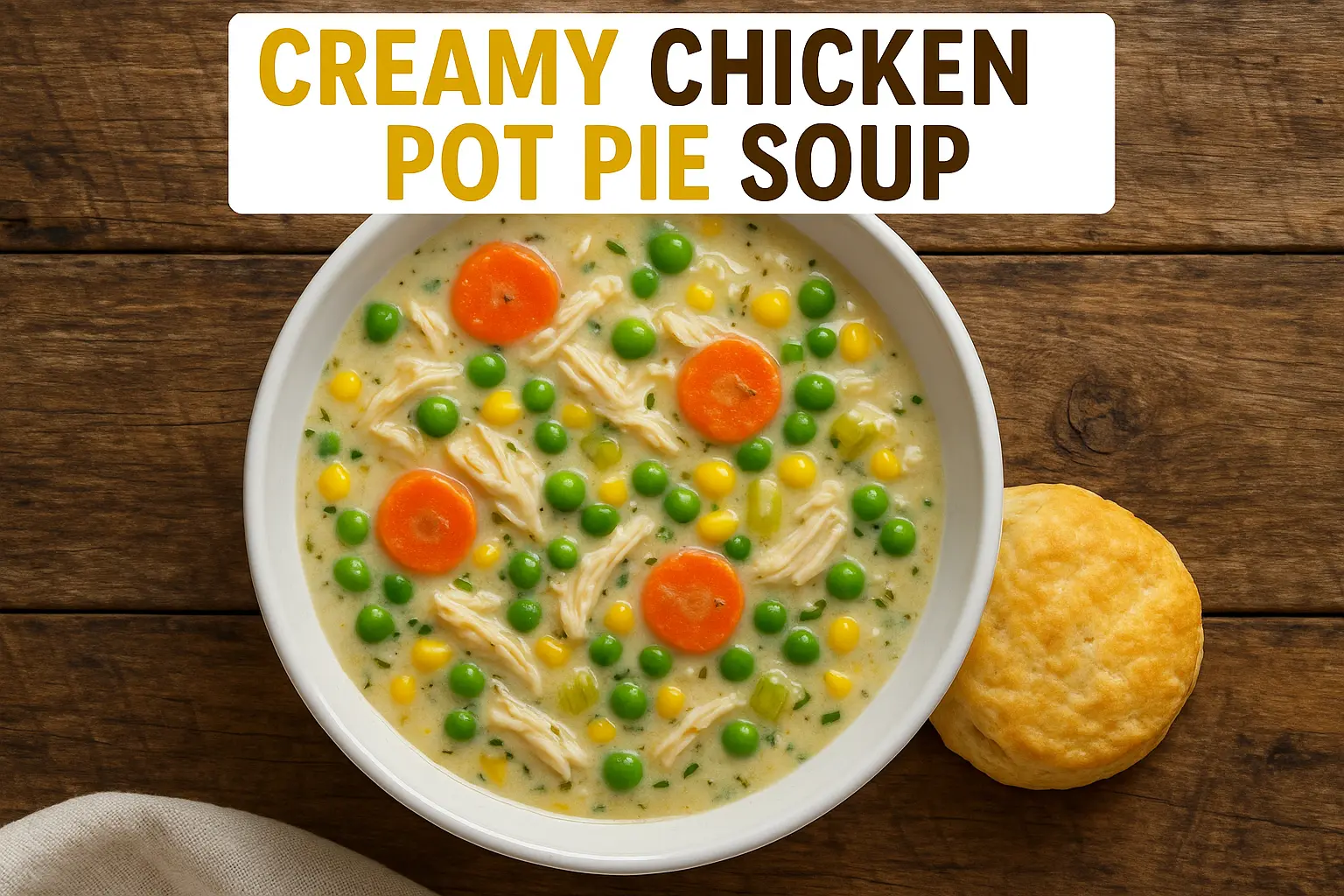
For extra creaminess, a splash of half-and-half can elevate texture without overpowering flavor. This little trick also works wonders in my Creamy Chicken Pot Pie Soup, where a gentle finish gives it that same dreamy consistency.
Customizing Loaded Potato Soup
Vegetarian Variations
Skip the bacon and use vegetable broth. Smoked paprika can mimic that smoky flavor surprisingly well.
Protein Add-Ins
Shredded chicken, or sausage can turn this soup into a full meal.
Dairy-Free Swaps
Coconut milk or cashew cream works beautifully if you’re avoiding dairy, though the flavor will shift slightly.
For dairy-free or vegetarian versions, unsweetened almond milk or oat milk make excellent swaps. Add a bit of nutritional yeast for that signature cheesy flavor. I use this trick for vegetarian soup in my Broccoli Soup, it’s proof that creamy doesn’t have to mean heavy.
Common Mistakes to Avoid
Overcooking Potatoes
Mushy potatoes can ruin texture. Cook until just tender, not falling apart.
Overseasoning
Cheese and bacon are salty already. Season gradually and taste as you go.
Best Toppings for Loaded Potato Soup
Classic Toppings
Cheddar cheese, crispy bacon bits, sour cream, and green onions are timeless for a reason.
Creative Extras
Try roasted corn, jalapeños, caramelized onions, or even a drizzle of hot sauce for a twist.
How to Serve Loaded Potato Soup
Perfect Pairings
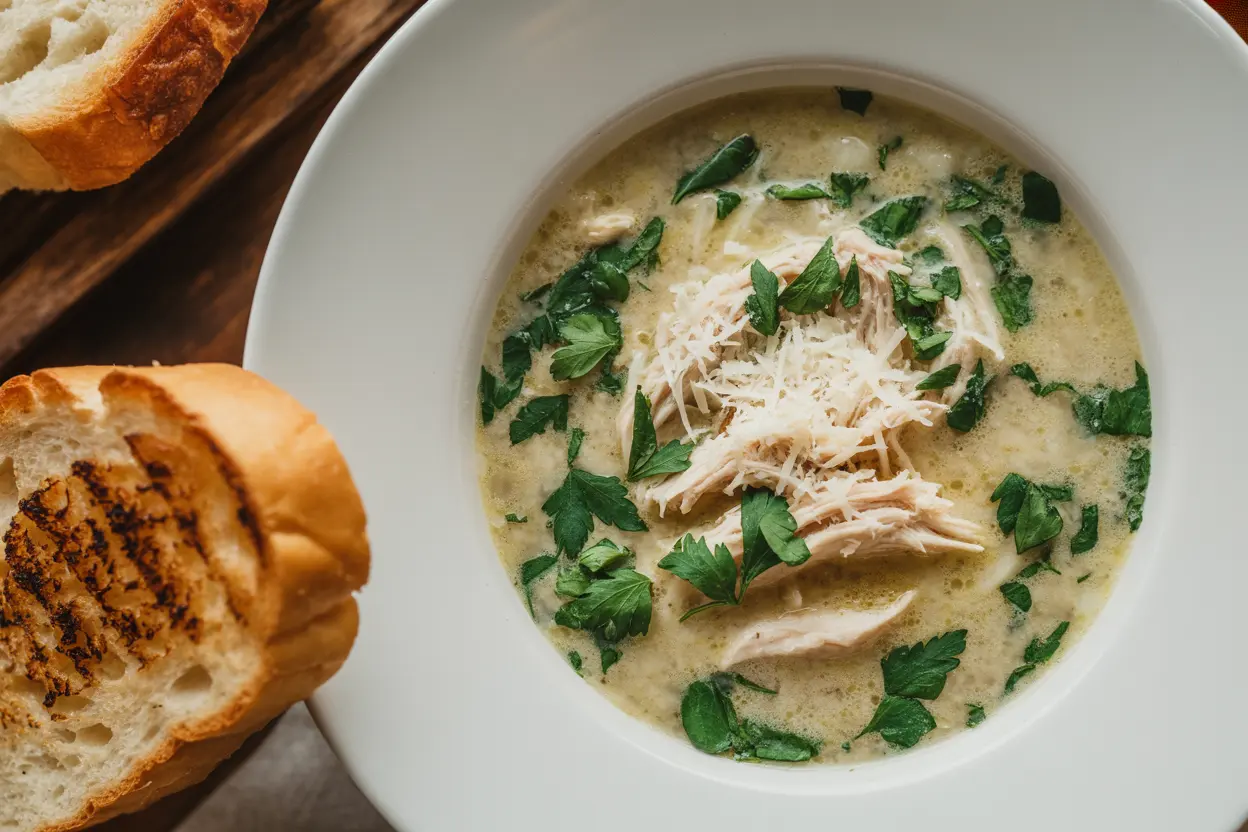
This soup loves crusty bread, garlic toast, or warm rolls.
Bread, Salads, and Sides
A crisp green salad balances the richness perfectly. Think fresh, light, and crunchy.

Storing and Reheating Tips
Refrigeration
Store in an airtight container for up to four days. The flavors actually deepen overnight.
Freezing Advice
Freeze without dairy if possible. Add cream and cheese after reheating for best texture.
Is Loaded Potato Soup Healthy?
Nutritional Overview
It’s rich and calorie-dense, but also filling. A small bowl goes a long way.
Lightened-Up Options
Use milk instead of cream, reduce cheese, and load up on green onions for flavor without excess calories.
Why Loaded Potato Soup Is Perfect for Any Season
Cozy Winter Meals
On cold days, nothing beats a hot bowl of creamy soup.
Year-Round Comfort
Even in warmer months, it works beautifully as a comforting dinner with lighter toppings.

Loaded Potato Soup

Equipment
- Large pot or Dutch oven
- Cutting board
- Chef’s knife
- Wooden spoon
- Potato masher
Ingredients
- 6 medium russet potatoes peeled and diced
- 6 slices bacon chopped
- 1 medium onion finely chopped
- 3 garlic cloves minced
- 4 cups chicken broth
- 1 cup heavy cream
- 1 cup whole milk
- 2 cups shredded cheddar cheese
- 1/2 cup sour cream
- 2 tablespoons butter
- 1 teaspoon salt
- 1/2 teaspoon black pepper
- 1/2 teaspoon paprika
- 2 green onions sliced
Instructions
- Cook the chopped bacon in a large pot over medium heat until crispy. Remove the bacon and set aside, leaving the fat in the pot.
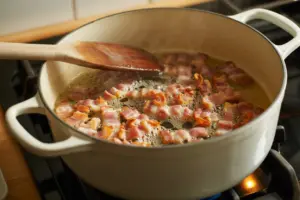
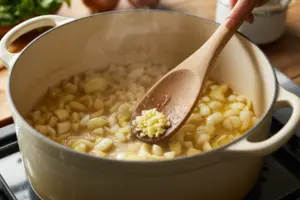
- Add butter and chopped onion to the pot and cook until soft and translucent. Stir in the garlic and cook for about 30 seconds.
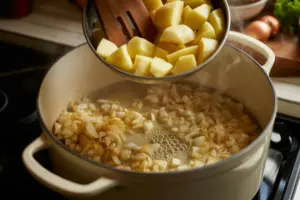
- Add the diced potatoes and chicken broth. Bring to a boil, then reduce the heat and simmer until the potatoes are tender.
- Mash some of the potatoes directly in the pot to thicken the soup while leaving chunks for texture.
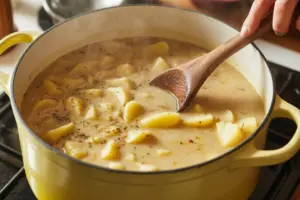
- Stir in the milk, heavy cream, salt, black pepper, and paprika. Cook gently over low heat.

- Add the shredded cheddar cheese and stir until fully melted. Remove from heat and stir in the sour cream.

- Serve hot and top with crispy bacon and sliced green onions.
FAQs
Can I make loaded potato soup ahead of time?
Yes, it tastes even better the next day as the flavors meld together.
Why did my potato soup turn grainy?
The dairy was likely overheated. Always add cream and cheese on low heat.
Can I use leftover baked potatoes for potato soup?
Absolutely. They add extra depth and save prep time.
How do I thicken the potato soup?
Let the potatoes naturally thicken the soup as they cook. If it’s too thin, mash some potatoes directly in the pot or mix in a cornstarch slurry. Avoid overblending to maintain texture.
What potatoes are best for a soup?
Russet and Yukon Gold potatoes are best for Loaded Potato Soup. Russets give you that creamy, thick texture, while Yukon Golds add buttery richness and hold their shape better.
Loaded potato soup isn’t just food, it’s an experience. It’s cozy, indulgent, customizable, and deeply satisfying. Whether you enjoy it chunky or smooth, heavily topped or simply seasoned, one thing is certain: this soup earns its place in any comfort-food lineup. Once you make it, it’s hard not to come back for more.