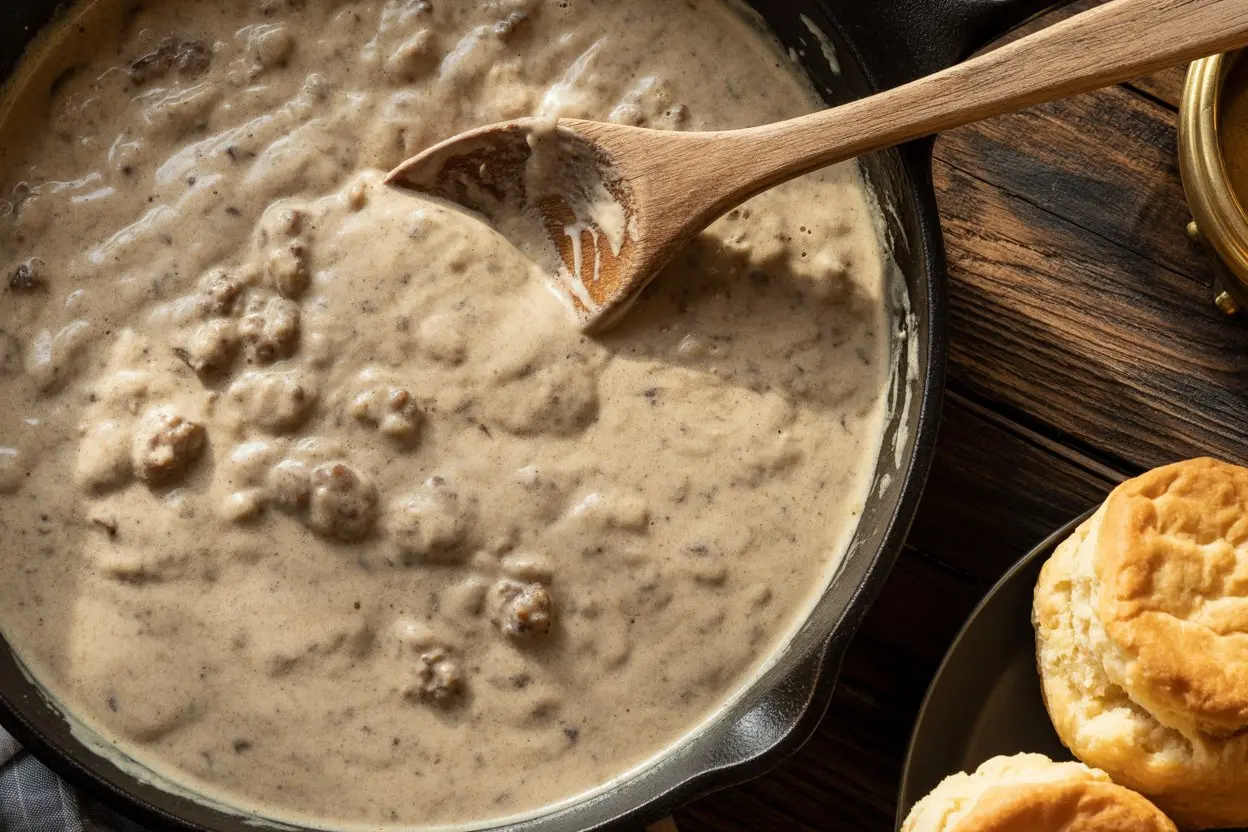
There’s something magical about a steaming plate of homemade sausage gravy piled high over soft, buttery biscuits. It’s not just a breakfast, it’s comfort food, nostalgia, and a hint of Southern sunshine all in one forkful. This rich, creamy gravy has been a beloved staple in Southern kitchens for generations, and once you learn how to make it from scratch, you’ll never want the canned stuff again.
Table of Contents

Homemade Sausage Gravy

Equipment
- Large skillet or frying pan
- Wooden spoon or spatula
- Whisk
- Measuring cups and spoons
Ingredients
- 1 pound ground breakfast sausage
- 1/4 cup all-purpose flour
- 2 1/2 cups whole milk
- 1/2 teaspoon salt
- 1 teaspoon freshly ground black pepper
Instructions
- Place a large skillet over medium heat and add the ground sausage.
- Cook the sausage, breaking it apart with a spoon, until fully browned and no longer pink.
- Do not drain the fat; it will help create the gravy base.
- Sprinkle the flour evenly over the cooked sausage.
- Stir well to combine and cook for about 1-2 minutes to remove the raw flour taste.
- Slowly pour in the milk while stirring continuously to prevent lumps.
- Continue stirring as the mixture begins to thicken.
- Simmer for 5-8 minutes until the gravy reaches your desired consistency.
- Add salt and freshly ground black pepper.
- Stir well and taste, adjusting seasoning if needed.
- Remove from heat and let rest for a few minutes before serving.
- Serve warm over freshly baked biscuits.
Notes
- Calories: 380 kcal
- Protein: 15 g
- Fat: 28 g
- Carbohydrates: 10 g
- Sodium: 900 mg
Why It’s a Southern Staple
In the South, breakfast wasn’t just a quick bite before work, it was a ritual. Biscuits and sausage gravy became a go-to because it was inexpensive, made with accessible ingredients, and provided a hearty start to a long day. What began as a frugal favorite quickly became comfort food royalty.
When you spoon homemade sausage gravy over fluffy sourdough biscuits, it melts into every layer. And if you want a slightly spicy Southern twist, try serving it with moist jalapeño cornbread for bold flavor contrast.
That’s the beauty of homemade sausage gravy. It feels rustic. It tastes rich. And it brings everyone to the table fast.
Ingredients You’ll Need
Perfect homemade sausage gravy requires just a handful of ingredients, but quality matters.
Choosing the Best Sausage
Use ground breakfast sausage for the most authentic, flavorful gravy. Mild or hot sausage both work beautifully, hot for a spicy kick, mild for a classic creamy flavor. Some cooks even recommend sage-flavored sausage for deeper, savory notes.
The Milk and Thickening Essentials
To thicken the gravy, you’ll need all-purpose flour paired with milk. Whole milk gives a richer, creamier texture, while some recipes even add a splash of heavy cream for extra luxury.
If you enjoy hearty sausage-based comfort meals, try this bold and cozy One Pot Sausage Spinach Tortellini Soup for another rich skillet favorite.

Equipment and Prep Tips
Best Pan for Perfect Gravy
A heavy skillet or sauté pan with deep sides is ideal because it allows the sausage to brown evenly and gives plenty of room to whisk in milk without splashing.
Prep Tips Before You Start
Before you begin, have all ingredients measured and ready. This makes the process smoother and helps prevent lumps in your gravy, a common challenge in homemade versions.
Step-by-Step Sausage Gravy Instructions
Now we get to the heart of the matter, making the gravy itself.
Browning the Sausage Right
Add the sausage to a preheated skillet and crumble it as it cooks. Browning the meat deeply not only cooks it through but adds layers of flavor to the gravy. Some cooks even leave a bit of the sausage fat in the pan to heighten richness.
Making a Smooth Roux
Once browned, sprinkle flour over the meat and stir it in. This forms a roux, the base that thickens your gravy. Let it cook for a minute to eliminate that raw flour taste.
Adding Milk Without Lumps
Add the milk gradually, a little at a time, whisking constantly. This slow addition ensures your gravy becomes silky smooth rather than clumpy. Once all milk is added, keep whisking until it thickens to the consistency you love. Season with salt, plenty of freshly cracked black pepper, and optional spices like red pepper flakes for heat.

How to Serve the Gravy
Classic Southern Biscuits
Homemade biscuits, fluffy, flaky, and warm, are the traditional partner to sausage gravy. Tear open a biscuit and let that warm gravy seep into every nook.
Alternative Serving Ideas
While biscuits are classic, you can also pour this gravy over toast, breakfast bowls of scrambled eggs, or even grits for a Southern brunch twist. Its versatility brings comfort to any plate.

Flavor Variations You’ll Love
Spicy Sausage Gravy
If you like bold flavor, swap in hot sausage or add cayenne pepper and red pepper flakes. This variation transforms the gravy into a lively breakfast adventure.
Herb-Infused Gravy
Fresh herbs like thyme or rosemary can add unexpected depth to your gravy, leaving a standard dish tasting gourmet.
Common Mistakes to Avoid
Too Thin or Too Thick?
If your gravy is too thin, keep simmering, it will naturally thicken. If it gets too thick, add a splash of milk and whisk until it loosens to your preferred texture.
Lumpy Gravy Fixes
Lumps are usually caused by adding milk too fast or not whisking enough. Always add liquid slowly and whisk constantly. If lumps do appear, strain your gravy or use an immersion blender for smoothness.
Storage and Reheating Tips
Let leftover gravy cool completely, then store it in an airtight container in the fridge for up to 4 days. To reheat, warm it gently on the stove or in the microwave, stirring occasionally so it stays creamy.
FAQs
Can I use turkey sausage gravy?
Yes! But turkey sausage is leaner, so consider adding a bit of butter to help form the roux.
How do I prevent gravy from getting lumpy?
Add milk slowly while whisking constantly to keep it smooth.
Can I freeze homemade sausage gravy?
Absolutely, freeze in airtight containers for up to 3 months and thaw overnight.
How long does homemade sausage gravy last in the fridge?
Homemade sausage gravy lasts 3 to 4 days when stored in an airtight container in the refrigerator. Reheat it gently on the stove over low heat and add a splash of milk to restore its creamy texture. Stir continuously to prevent separation.
Can you make homemade sausage gravy without milk?
Yes, you can substitute milk in homemade sausage gravy with half-and-half, evaporated milk, or unsweetened almond milk. However, whole milk provides the creamiest texture. If using alternatives, add them slowly and adjust thickness carefully to maintain a smooth consistency.
There’s a reason everyone loves homemade sausage gravy: it’s simple, comforting, and full-flavored. Whether you’re feeding a crowd for brunch or just craving a cozy weekend breakfast, this classic Southern favorite never disappoints. With just a few pantry staples and a bit of care, you’ll have gravy that’s creamy, savory, and perfectly paired with warm biscuits every time.