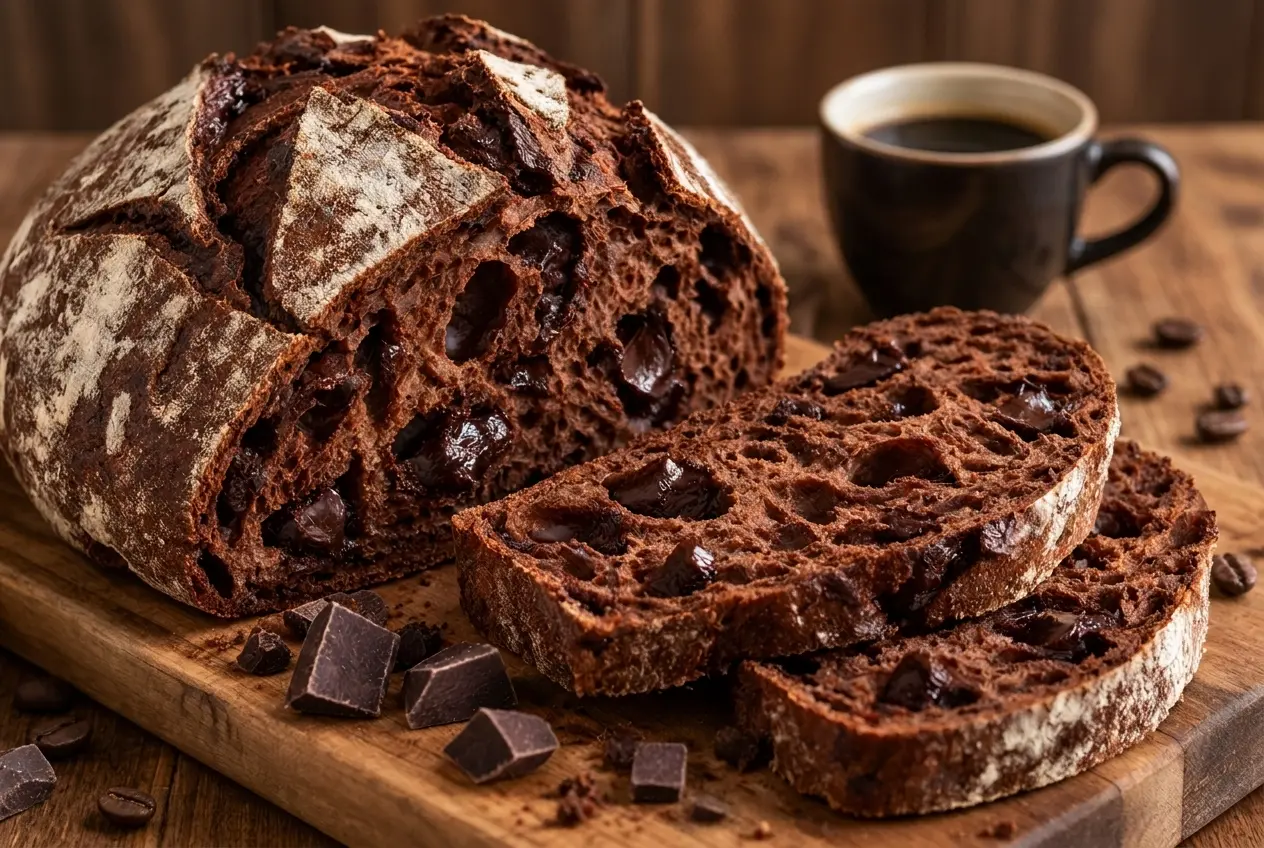
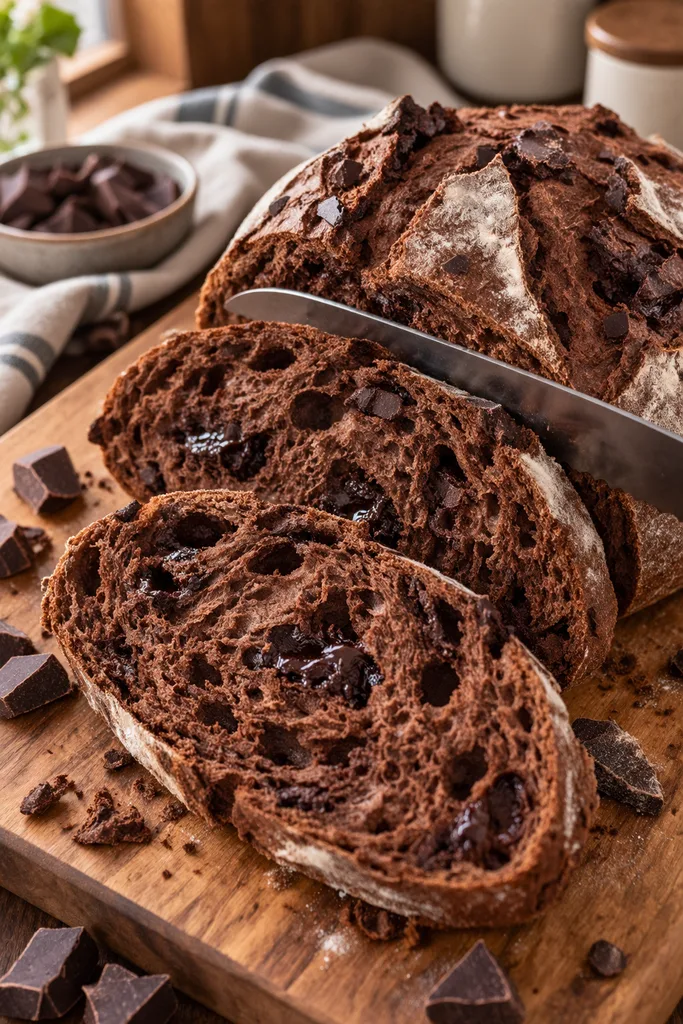
There is something especially satisfying about combining the deep flavor of dark chocolate, freshly brewed coffee, and naturally fermented sourdough in one loaf. This sourdough chocolate bread has a crisp, rustic crust, a tender chocolate-colored crumb, and generous pockets of melted chocolate throughout. The coffee does not make the bread taste strongly like coffee; instead, it intensifies the cocoa and gives the loaf a richer, more complex flavor.
The loaf is especially delicious when served slightly warm, toasted for breakfast, or paired with a cup of coffee.
Table of Contents
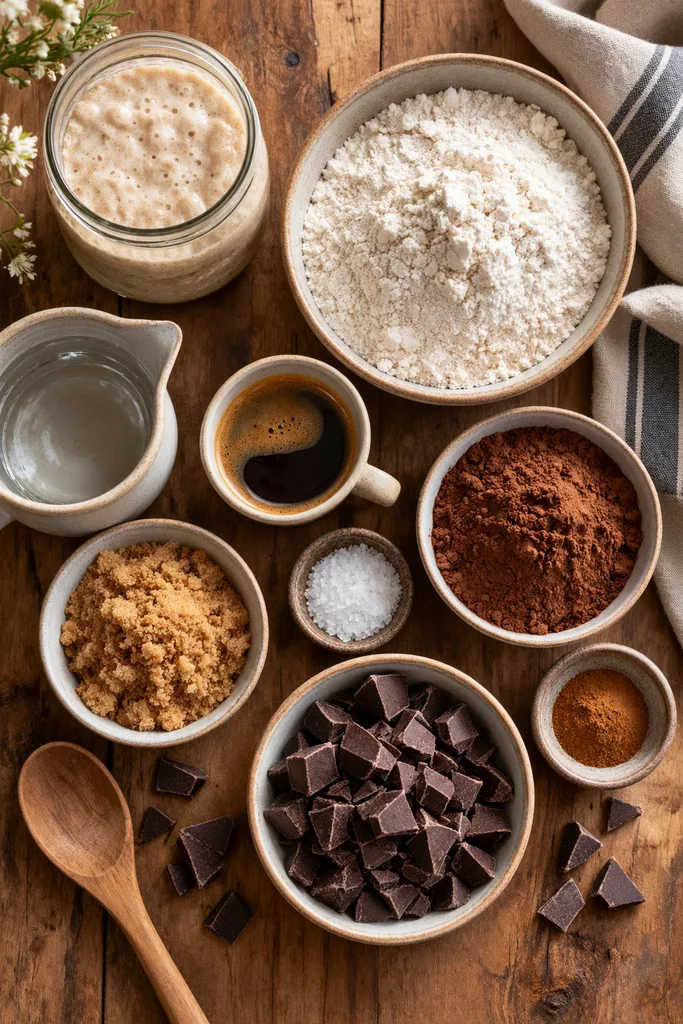
Simple Ingredients You Need
- 🍞 100g active sourdough starter, fed and bubbly
- ☕ 325g warm water
- ☕ 4 tablespoons freshly brewed strong espresso or black coffee, about 50g
- 🌾 470g strong bread flour
- 🍫 30g Dutch-processed cocoa powder
- 🍯 50g brown sugar
- 🧂 11g salt
- 🍫 180g dark or semi-sweet chocolate chunks or chocolate chips
- ✨ 1 teaspoon ground cinnamon, optional
How to Make Double Sourdough Chocolate Bread
1. Prepare the Coffee and Cocoa
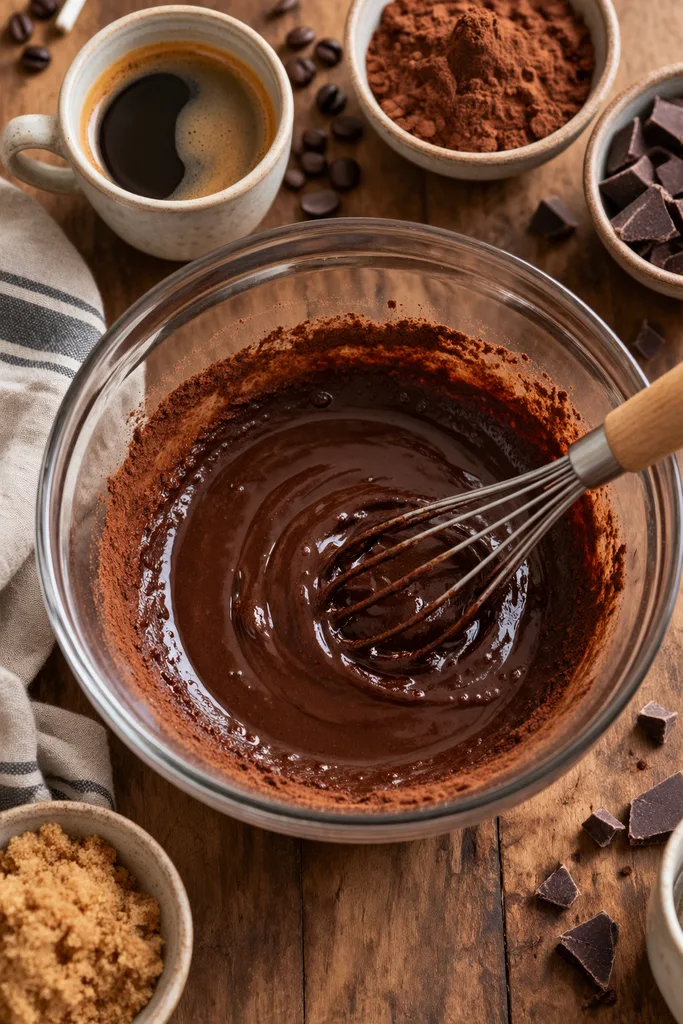
Begin by brewing strong espresso or black coffee. Measure approximately 50g and combine it with the cocoa powder.
Whisk the coffee and cocoa together until the mixture becomes smooth and free of dry cocoa pockets. Allow it to cool slightly before incorporating it into the dough.
Using warm rather than very hot coffee is important. Excessively hot liquid can make dough handling more difficult and may negatively affect the activity of the sourdough starter.
2. Mix the Sourdough Dough
Add the warm water, active sourdough starter, and brown sugar to a large mixing bowl. Stir thoroughly until the starter is distributed throughout the water.
Add the cooled coffee and cocoa mixture and mix until the liquid base has an even chocolate color.
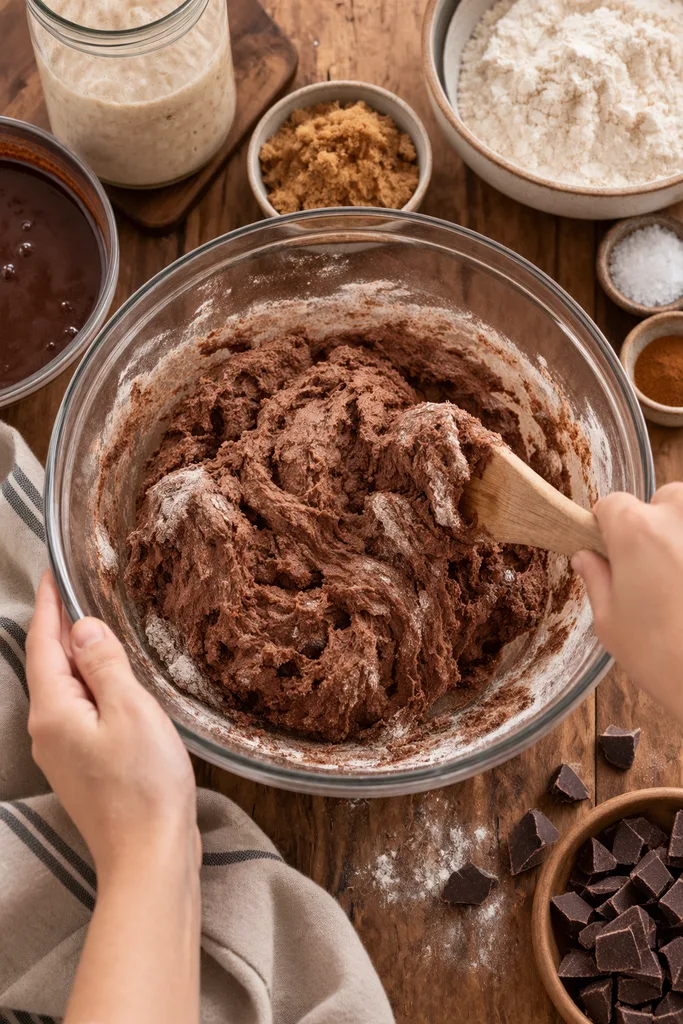
Next, add the bread flour and salt. If using cinnamon, add it at this stage as well. Mix with a sturdy spoon or your hands until all of the flour has been hydrated.
The dough will initially look rough and shaggy. There should not be obvious pockets of dry flour remaining.
Cover the bowl and allow the dough to rest for approximately 1 hour. This resting period gives the flour time to absorb the water and makes the dough easier to develop through subsequent folds.
3. Build Strength With Stretch and Folds
After the initial rest, begin the stretch-and-fold process.
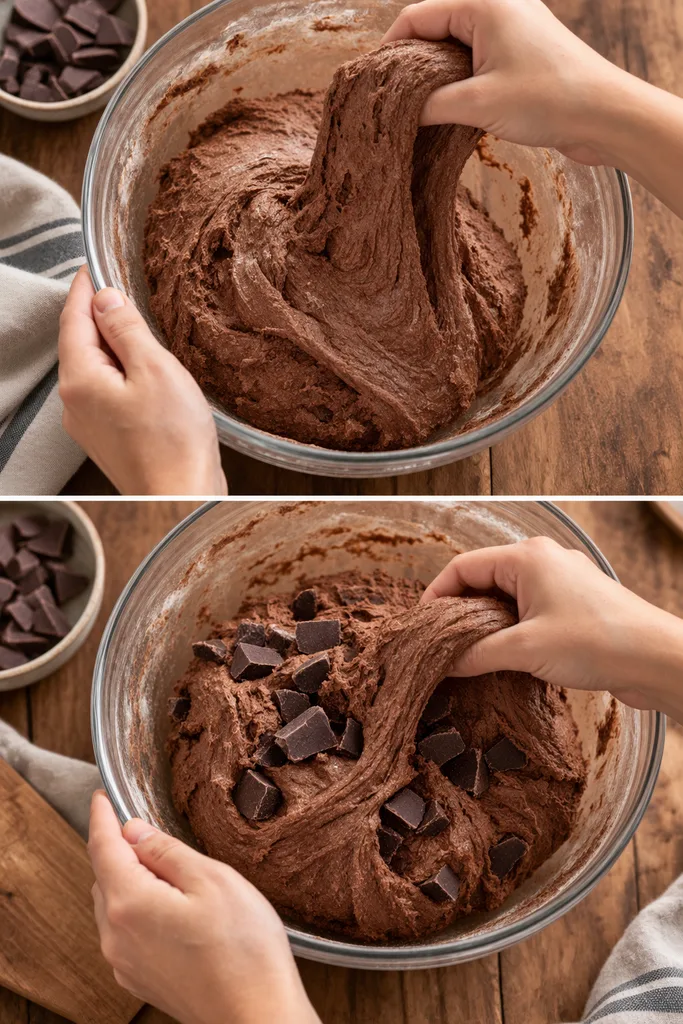
With slightly damp hands, gently lift one side of the dough, stretch it upward without tearing it, and fold it over the center. Rotate the bowl and repeat around the dough.
Complete four sets of stretch-and-folds, approximately 30 minutes apart.
During the second or third set, incorporate about half of the chocolate chunks. Rather than pressing the chocolate aggressively into the dough, gently spread it over the surface and fold the dough around it.
This technique distributes the chocolate while preserving the structure that has already developed.
4. Allow the Dough to Bulk Ferment
After the stretch-and-folds are complete, cover the bowl and allow the dough to continue fermenting at room temperature.
Because cocoa can make visual fermentation cues somewhat harder to judge, avoid relying exclusively on a specific number of hours. Instead, observe the dough.
A properly fermented dough should become noticeably puffier and lighter, with bubbles developing throughout. The surface may appear slightly domed, and the dough should have a gentle jiggle when the bowl is moved.
The fermentation time will depend heavily on the strength of the starter and the temperature of the kitchen. A warm environment generally speeds fermentation, while a cool kitchen can make the process considerably longer.
Avoid allowing the dough to become extremely inflated or collapse before shaping.
5. Laminate the Chocolate Into the Dough
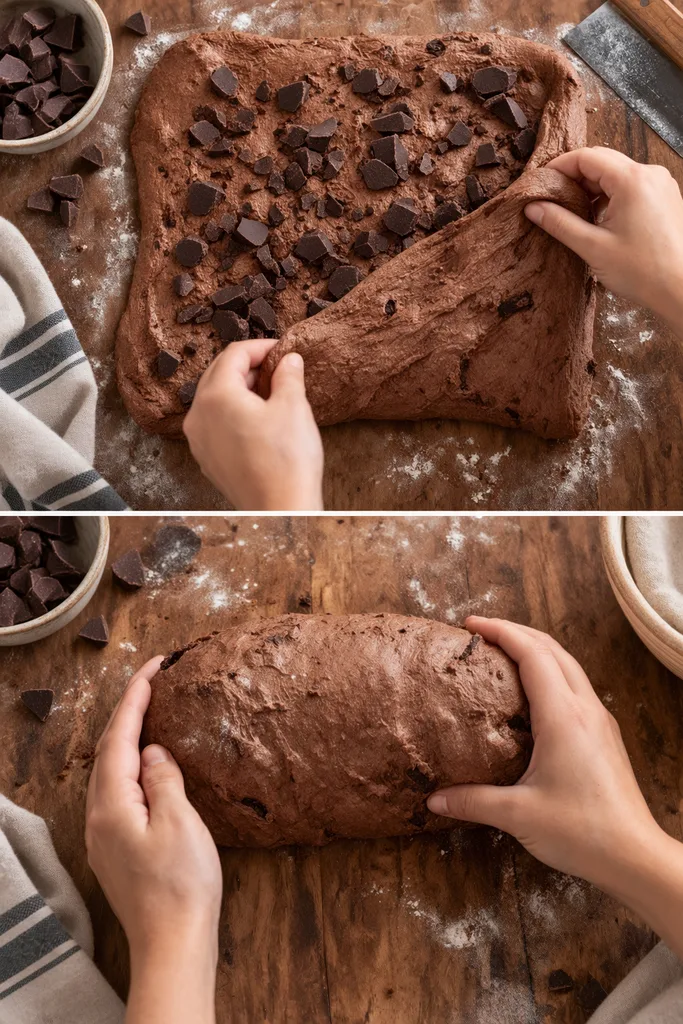
Once bulk fermentation has progressed sufficiently, gently transfer the dough onto a lightly wet or lightly floured work surface.
Carefully stretch the dough into a rectangle. Try to preserve as much of the air developed during fermentation as possible.
Scatter the remaining chocolate chunks evenly across the surface. Fold the dough into thirds, then roll it into a compact shape.
Continue shaping until the loaf has a smooth, taut exterior. The goal is to create enough surface tension to help the bread maintain its shape during the final proof and baking.
6. Cold Proof Overnight
Place the shaped dough smooth-side down into a generously floured banneton or a bowl lined with a floured kitchen towel.
Cover the dough and place it in the refrigerator for approximately 8 to 14 hours.
The overnight cold proof is particularly convenient because it allows the bread to develop flavor while making the baking schedule easier. Cold dough is also generally easier to score cleanly before baking.
7. Score the Chocolate Sourdough
When ready to bake, preheat the oven to 450°F (232°C) with a Dutch oven inside.
Keep the dough refrigerated until the oven is fully heated.
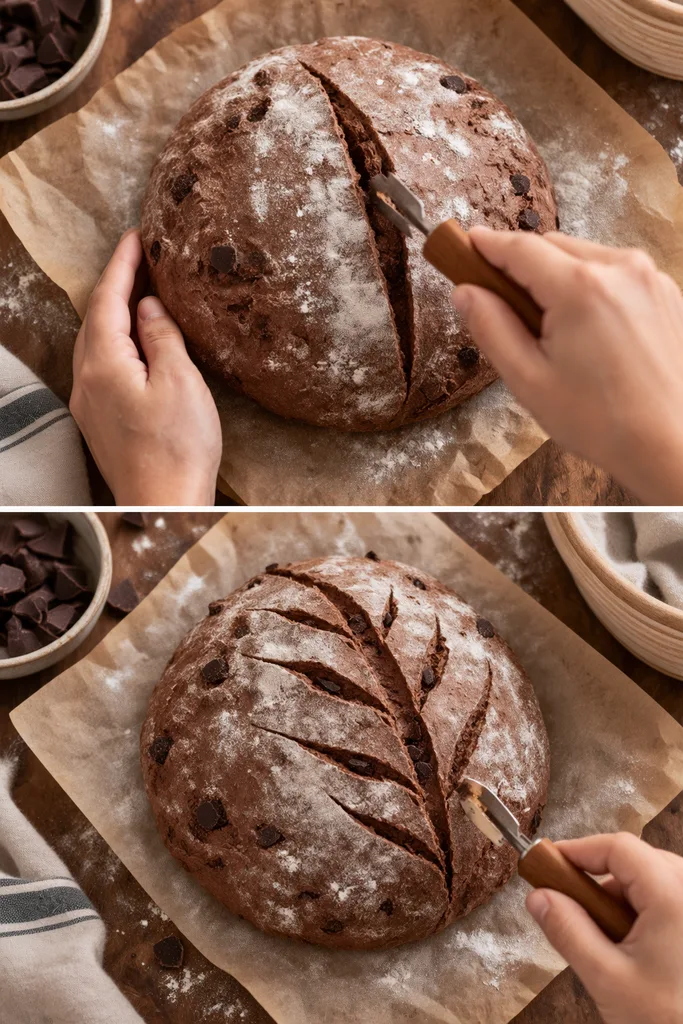
Turn the cold dough onto parchment paper. Dust the surface lightly with flour if desired, then use a sharp bread lame or razor blade to make the desired score.
A confident, clean cut allows the loaf to expand in a controlled direction during oven spring.
The powdered surface shown on a rustic chocolate loaf can also create a beautiful contrast with the dark crust after baking.
8. Bake Until Deeply Chocolate Brown
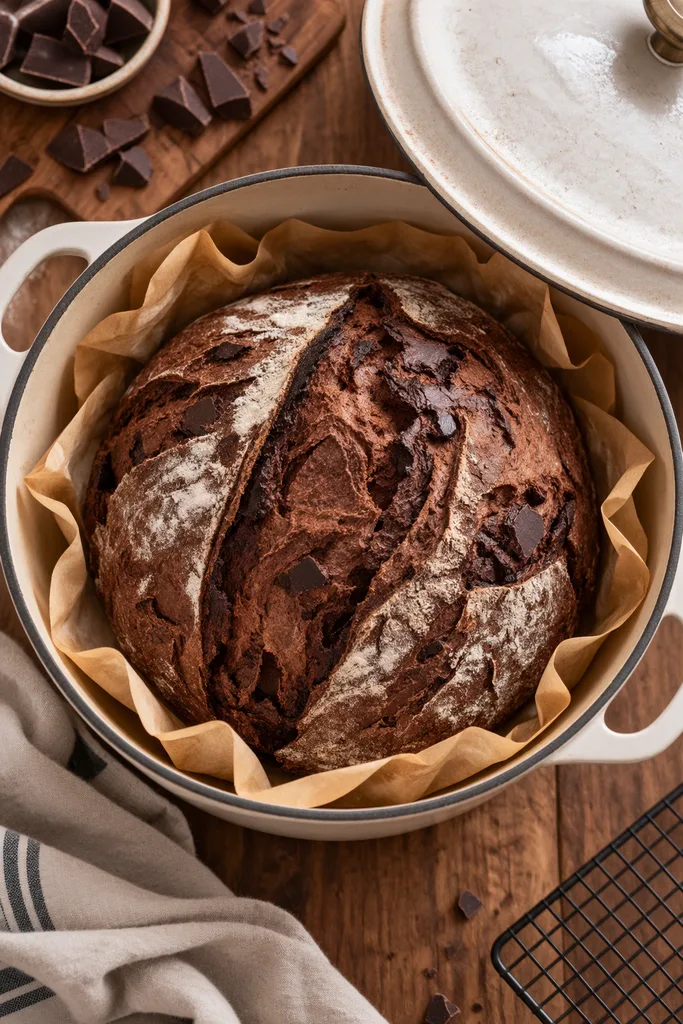
Carefully transfer the scored dough into the preheated Dutch oven.
Cover and bake for approximately 35 to 40 minutes. The covered environment traps steam, helping the loaf expand while encouraging a beautifully crisp crust.
Remove the Dutch oven lid and continue baking for another 10 to 15 minutes.
The finished loaf should have a deeply browned exterior and a firm, crisp crust. Because chocolate dough is naturally dark, visual color alone can be slightly misleading, so avoid removing the bread too early.
Transfer the finished loaf to a wire rack and allow it to cool completely before slicing.
How to Serve Chocolate Sourdough Bread
Fresh slices are excellent on their own, but this loaf can be served in several ways.
Toast a thick slice until the edges become crisp and spread it with butter. For a sweeter breakfast, add a little honey or your favorite nut butter.
The bread also works beautifully as an afternoon snack alongside coffee, espresso, or tea. Slightly warmed slices allow the chocolate pieces to soften again, creating an especially indulgent texture.
For dessert, serve toasted chocolate sourdough with fresh berries, whipped cream, or a scoop of vanilla ice cream.
Double Sourdough Chocolate Bread with Coffee

Equipment
- Large mixing bowl
- Kitchen scale
- Whisk
- Dough scraper
- Banneton or proofing basket
- Kitchen towel
- Parchment paper
- Sharp bread lame or razor blade
- Dutch oven with lid
- Wire cooling rack
- Oven
Ingredients
- 100 g active sourdough starter
- 325 g warm water
- 50 g freshly brewed strong espresso or black coffee
- 470 g strong bread flour
- 30 g Dutch-processed cocoa powder
- 50 g brown sugar
- 11 g salt
- 180 g dark or semi-sweet chocolate chunks or chips
Instructions
- Whisk the brewed coffee and cocoa powder together until smooth. Let it cool slightly.
- Add the warm water, active sourdough starter, and brown sugar to a large bowl. Mix until well combined.
- Stir in the coffee and cocoa mixture.
- Add the bread flour, salt, and cinnamon. Mix until a shaggy dough forms and no dry flour remains.
- Cover the bowl and let the dough rest for 1 hour.
- Perform 4 sets of stretch-and-folds, spacing each set about 30 minutes apart.
- During the second or third fold, gently add half of the chocolate chunks and fold them into the dough.
- Cover the dough and allow it to bulk ferment at room temperature until puffy, bubbly, and slightly jiggly.
- Transfer the dough to a lightly wet or floured work surface and gently stretch it into a rectangle.
- Scatter the remaining chocolate chunks over the dough.
- Fold the dough into thirds, roll it up, and shape it into a smooth, tight ball.
- Place the dough smooth-side down into a well-floured banneton or lined bowl.
- Cover and refrigerate for 8-14 hours, preferably overnight.
- Preheat the oven to 450°F (232°C) with a Dutch oven inside.
- Turn the cold dough onto parchment paper and score the top with a sharp blade.
- Carefully transfer the dough into the hot Dutch oven.
- Bake covered for 35-40 minutes.
- Remove the lid and bake for another 10-15 minutes, until the crust is deep brown and crisp.
- Transfer the bread to a wire rack and cool completely before slicing.
Notes
- Calories: 285 kcal
- Carbohydrates: 46g
- Protein: 7g
- Fat: 9g
- Saturated Fat: 5g
- Fiber: 4g
- Sugar: 13g
- Sodium: 370mg
FAQs
Why is the dough taking so long to rise?
Sourdough fermentation depends on starter activity and temperature. Cocoa can also affect the way fermentation appears visually. A cool room or less-active starter can make bulk fermentation take longer.
Does the bread taste strongly like coffee?
No. The coffee primarily enhances the chocolate flavor. Using espresso or strong black coffee gives the cocoa a richer roasted character.
Can we use regular cocoa powder?
Yes. Dutch-processed cocoa is recommended for a smoother, deeper chocolate profile, but regular unsweetened cocoa powder can also be used.
How to Store the Chocolate Sourdough Bread
Once completely cool, store the loaf at room temperature in a bread bag, paper bag, or another container that allows the crust to breathe.
Avoid storing rustic sourdough bread in the refrigerator unless necessary, as refrigeration can accelerate the perception of staleness.
For longer storage, slice the loaf and freeze the slices in an airtight freezer-safe bag. Individual slices can then be toasted directly from frozen.
This Double Sourdough Chocolate Bread with Coffee brings together everything that makes naturally fermented bread exciting: a crisp crust, an airy interior, complex fermentation flavor, and generous pieces of chocolate.
For anyone looking for a memorable sourdough chocolate bread, this version is rich without being excessively sweet, deeply chocolatey without tasting like cake, and especially satisfying when served warm with a fresh cup of coffee.
And for more amazing sourdough bread recipe try our Jam Swirl Sourdough Bread, Chocolate Cherry Sourdough Bread, or Oreo Cookies and Cream Sourdough Bread.