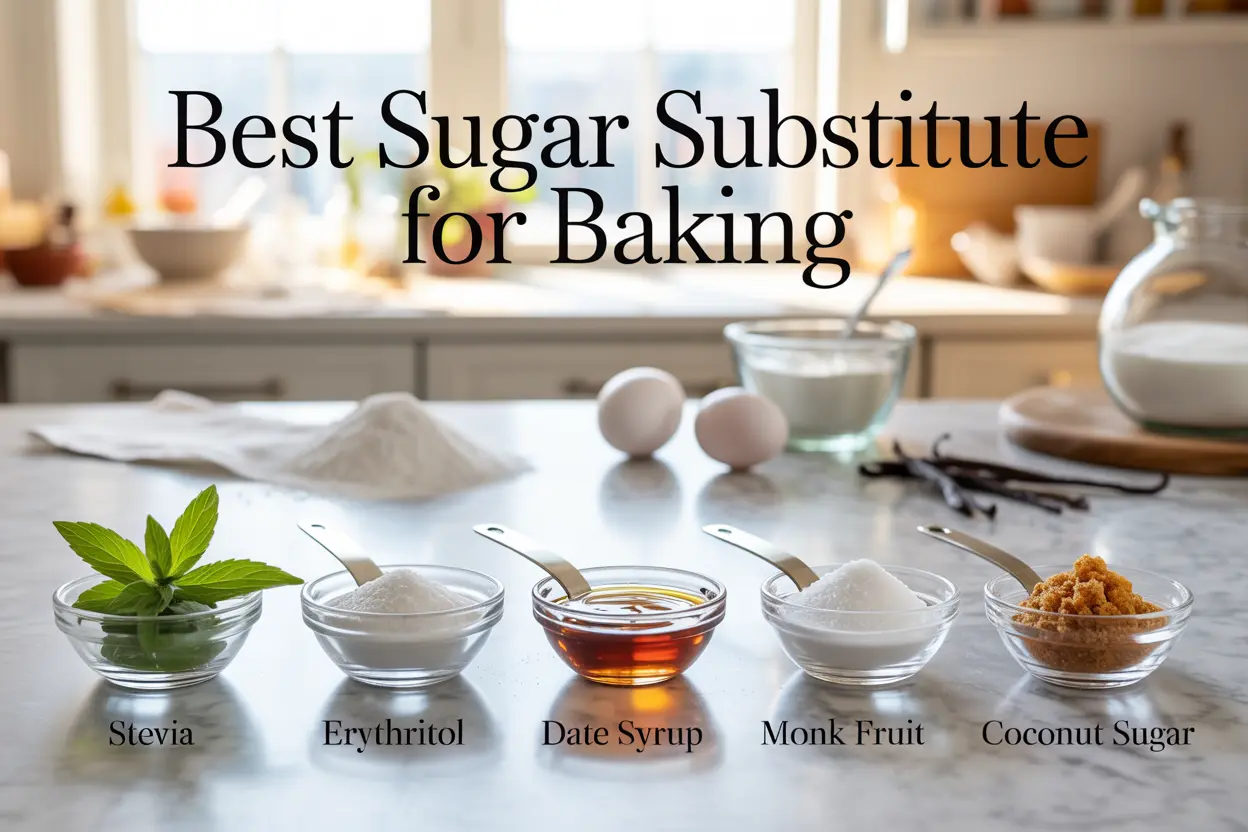
ng without sugar used to sound like a punishment. Dry cakes. Bitter cookies. That weird aftertaste no one talks about but everyone notices. Thankfully, those days are gone. Today, finding the best sugar substitute for baking is less about sacrifice and more about smart choices.
Whether you’re cutting back on sugar for health reasons, following a keto lifestyle, managing blood sugar, or simply curious, this guide will walk you through every option, honestly, practically, and without fluff.
Table of Contents
Why Bakers Are Looking for Sugar Alternatives
Sugar isn’t the villain it’s made out to be, but too much of it can cause problems. From blood sugar spikes to empty calories, modern bakers are rethinking how sweetness fits into everyday treats.
But here’s the twist: sugar isn’t just sweet. It adds moisture, helps with browning, creates structure, and even affects shelf life. That’s why replacing it isn’t as simple as swapping one spoon for another.
The goal isn’t sugar-free perfection. It’s balance.
What Makes a Good Sugar Substitute for Baking
Not all sweeteners are created equal, especially in the oven.
A great sugar substitute should:
- Taste clean and pleasant
- Handle heat without breaking down
- Support texture and moisture
- Brown (or at least not leave baked goods pale and sad)
Why One-to-One Swaps Don’t Always Work
Some substitutes are 200 times sweeter than sugar. Others don’t melt. Some absorb moisture like a sponge. Understanding this saves you from baking heartbreak.
Understanding Natural vs Artificial Sweeteners
Natural sweeteners often come from plants or fruits and usually offer better flavor complexity. Artificial sweeteners are highly processed, extremely sweet, and often better for beverages than baking.
For baking? Natural usually wins.
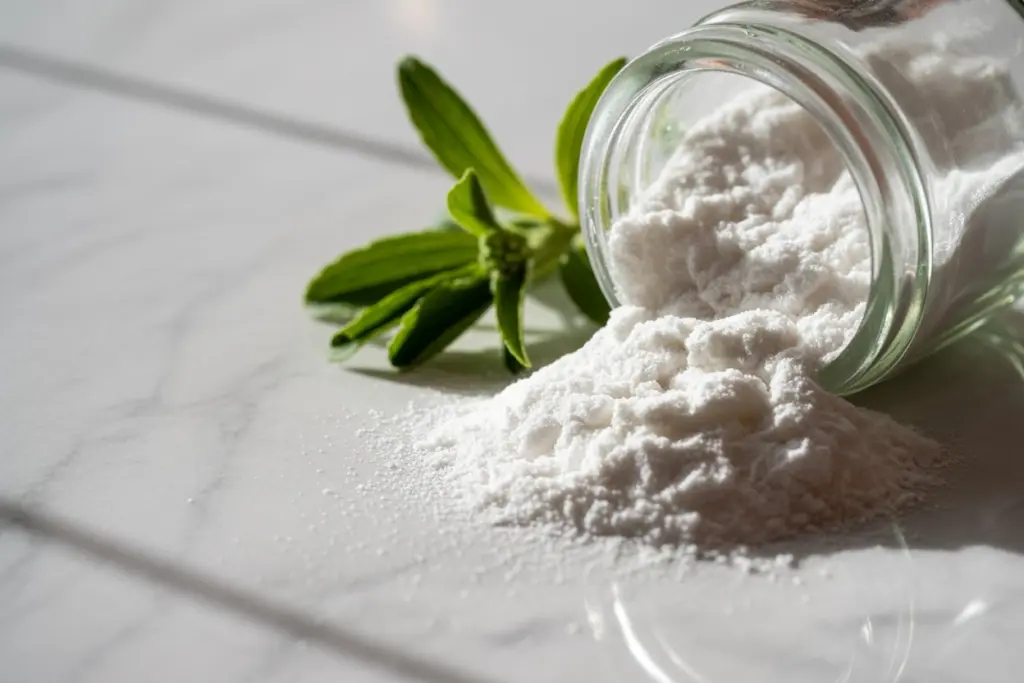
Stevia – Powerful Sweetness in Tiny Amounts
Stevia is intense. A little goes a long way, sometimes too far.
Best for:
- Brownies
- Chocolate cakes
- Muffins with strong flavors
Avoid:
- Delicate vanilla cakes
- Shortbread cookies
The trick is using baking blends, not pure stevia.
Monk Fruit Sweetener – Clean Taste, Zero Calories
Monk fruit is the quiet overachiever. No bitterness. No calories. No blood sugar spike.
Best choice for:
- Cookies
- Cakes
- Cheesecakes
Look for monk fruit blended with erythritol for a sugar-like texture.

Erythritol – The Sugar Alcohol Bakers Love
Erythritol behaves almost like sugar, but with a twist.
Pros:
- Zero calories
- Low glycemic
- Great for crisp cookies
Cons:
- Cooling sensation
- Can crystallize when cold
Best used in combination with monk fruit or stevia.
Xylitol – Sugar-Like Performance with Caution
Xylitol tastes almost identical to sugar and browns beautifully.
However: it’s toxic to pets. If you bake in a pet-friendly home, this matters.
Excellent for:
- Cakes
- Muffins
- Quick breads
Coconut Sugar – The Most Natural Swap
Coconut sugar feels like sugar’s calmer cousin.
- Same sweetness level
- Lower glycemic index
- Rich, caramel-like flavor
Perfect for:
- Cookies
- Banana bread
- Spice cakes
Honey – Nature’s Liquid Gold
Honey brings moisture and depth, but it’s a liquid, so adjustments are key.
Reduce other liquids by ¼ cup for every cup of honey used.
Best for:
- Quick breads
- Muffins
- Oat-based bakes
Maple Syrup – Warm, Rich, and Flavorful
Maple syrup adds personality to baked goods.
Use it when you want:
- Soft textures
- Cozy flavors
- Slight caramel notes
Works wonders in pancakes, cakes, and granola bars.

Date Sugar and Date Syrup – Whole-Fruit Sweetness
Date sugar doesn’t dissolve. Date syrup does.
- Date sugar: rustic, grainy, fiber-rich
- Date syrup: smooth, sweet, sticky
Great for energy bars, muffins, and hearty loaves.
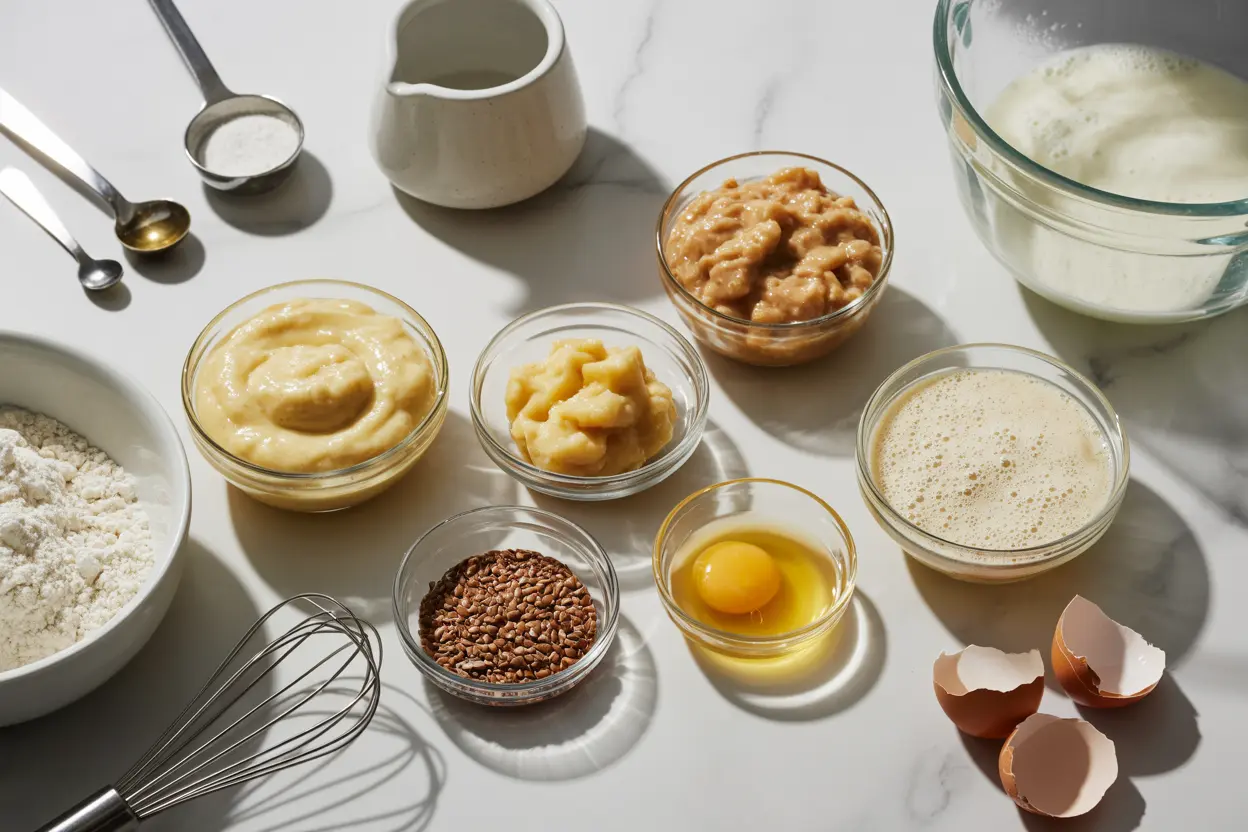
Applesauce and Fruit Purées as Sugar Replacers
Fruit-based sweetening works best when paired with another sweetener.
Best fruits:
- Apples
- Bananas
- Dates
They add moisture, not just sweetness, so reduce fats slightly.
Choosing the Best Sugar Substitute for Your Recipe
Cakes: Monk fruit + erythritol
Cookies: Coconut sugar or erythritol blends
Breads: Honey, maple syrup, or applesauce
Keto baking: Monk fruit, erythritol, stevia blends
There’s no universal winner, only smart matches.
Common Baking Problems with Sugar Substitutes (and Fixes)
- Dry texture? Add moisture (yogurt, applesauce).
- Bitter aftertaste? Blend sweeteners.
- No browning? Increase oven temp slightly or add molasses.
Expert Tips for Perfect Results Every Time
- Blend sweeteners for balance
- Don’t overbake, sugar substitutes dry faster
- Taste batter before baking
Think of sweeteners like spices. Layer them.
Is There One Best Sugar Substitute for Baking?
Honestly? No.
But monk fruit blends come closest for most home bakers. Clean taste. Easy ratios. Reliable results.
FAQs
What is the healthiest sugar substitute for baking?
Monk fruit and stevia blends are among the healthiest due to zero calories and no blood sugar impact.
Can I replace sugar 1:1 in baking?
Only with certain blends like monk fruit + erythritol. Pure sweeteners usually require adjustments.
Why do my baked goods taste bitter with sugar substitutes?
This often happens with stevia when overused. Blending sweeteners fixes this.
Do sugar substitutes affect texture?
Yes. Sugar impacts moisture and structure, so substitutes may need recipe tweaks.
What’s best for diabetic-friendly baking?
Monk fruit, erythritol, and stevia blends are excellent low-glycemic choices.
Final Verdict – Sweet Smarter, Not Harder
The best sugar substitute for baking isn’t about restriction, it’s about intention. Choose the right sweetener for the job, adjust thoughtfully, and bake with confidence.
Great baking isn’t about sugar. It’s about balance.