
There’s something almost magical about waking up to dough that’s ready to be cooked. No rush. No stress. Just pure anticipation. That’s exactly what this Soft & Puffy Sourdough English Muffins delivers. If you’ve ever dreamed of homemade Sourdough English Muffins with a cloud-like interior and a gently crisp, golden exterior, you’re in the right place.
Let’s slow things down, enjoy the process, and turn your kitchen into a cozy bakery, one muffin at a time.
If you’ve ever wondered what makes sourdough bakes stand out, it’s the balance between science and soul, the long fermentation develops flavor, texture, and digestibility that commercial yeast just can’t match. Below is a quick look at why Sourdough English Muffins win every time.
| Feature | Sourdough English Muffins | Regular Muffins |
|---|---|---|
| Rise | Natural fermentation | Commercial yeast |
| Flavor | Tangy, complex, rich | Mild, one-note |
| Texture | Soft, puffy, chewy | Dense or crumbly |
Table of Contents
What Makes Sourdough English Muffins So Special
Flavor Depth from Natural Fermentation
Unlike regular English muffins, Sourdough English Muffins rely on wild yeast and bacteria. That overnight fermentation develops layers of flavor, slightly tangy, subtly sweet, and deeply satisfying. It’s not sour in an overpowering way. Think of it as a gentle background note, like soft jazz playing while breakfast cooks.
Texture: Soft Inside, Golden Outside
The hallmark of a great English muffin is contrast. You want a tender, airy interior and a lightly crisp exterior. This sourdough version nails it. Each muffin cooks slowly on the stovetop, creating a golden crust while staying pillowy inside.
It’s a true example of how sourdough can make ordinary things taste extraordinary, much like my easy sourdough sandwich bread or the nutty, hearty honey oat sourdough bread.
Why You’ll Love This Easy Overnight Method
Minimal Effort, Maximum Flavor
Here’s the beauty of the overnight method: time does most of the work. You mix the dough in the evening, let it rest, and by morning, fermentation has transformed simple ingredients into something special.
Perfect for Busy Schedules
No kneading marathons. No early alarms. This method fits effortlessly into real life. You’ll shape and cook when it’s convenient, not when the clock demands it.
So, whether you’re new to sourdough or already baking your way through recipes like Sourdough Buttermilk Bread (Overnight Sponge Method), this muffin recipe will quickly become your favorite reason to wake up early.
Understanding Sourdough English Muffins
What Defines an English Muffin
English muffins aren’t baked like bread rolls. They’re cooked on a griddle or skillet, giving them their signature flat shape and toasted surface. They’re designed to be split open, not sliced, revealing those beloved nooks and crannies.
How Sourdough Changes the Game
Adding sourdough starter replaces commercial yeast and introduces slow fermentation. The result? Better flavor, improved texture, and a more digestible muffin.
Ingredients Breakdown for Perfect Results
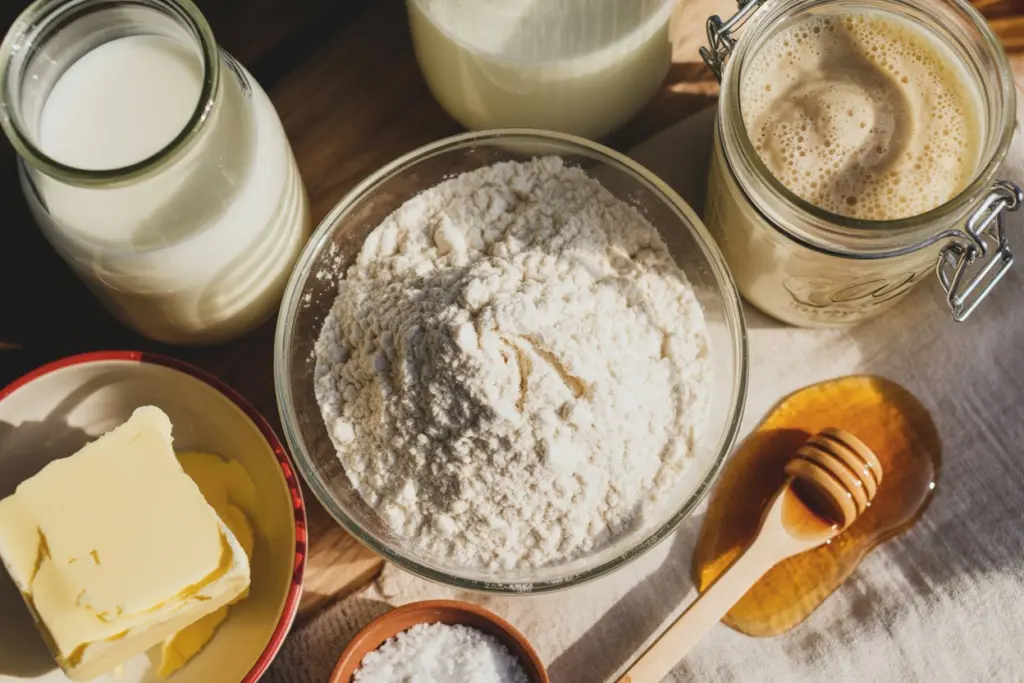
Core Ingredients You’ll Need
The beauty of Sourdough English Muffins lies in their simplicity. Flour, active sourdough starter, milk or water, a touch of sweetener, salt, and fat. That’s it.
Why Each Ingredient Matters
- Flour provides structure
- Sourdough starter drives fermentation
- Liquid hydrates and softens
- Sweetener balances tang and aids browning
- Fat adds tenderness
- Salt enhances flavor and controls fermentation
Every ingredient plays a role. Skip one, and the muffins lose their harmony.
The Science Behind Soft & Puffy Muffins
Fermentation and Gluten Development
Overnight fermentation allows gluten to develop gently without aggressive kneading. This slow process creates elasticity while trapping gas bubbles, key for soft, airy muffins.
Why Overnight Rest Works
Time equals flavor. It also equals structure. The dough relaxes, hydrates fully, and becomes easier to handle. It’s like letting a good story unfold instead of rushing to the ending.
If you’ve baked sourdough discard blueberry muffins or Lemon Blueberry Sourdough Bread before, you already know this process rewards patience. The natural yeast does all the heavy lifting while you sleep. When morning comes, your dough will be puffed, fragrant, and ready to shape.
The Science Behind Perfect Sourdough Muffins
Every batch of Sourdough English Muffins tells a little story of fermentation, how time, temperature, and natural yeast come together to create texture and taste you can’t fake. When people ask me what makes these muffins so good, I always point to the fermentation process. It’s like slow magic happening overnight.
Understanding the Sourdough Fermentation Process
The key to great Sourdough English Muffins starts with an active, bubbly starter. When your starter is thriving, it releases natural acids and wild yeast that slowly leaven the dough. This gentle fermentation breaks down gluten, enhances flavor, and creates that signature airy crumb we love. Your dough should feel soft, elastic, and slightly tacky, never dry. The longer fermentation (typically 8-12 hours) gives you the kind of depth you’ll never get from quick-rise yeast.
The Secret to Fluffiness
Getting that signature height and tenderness in your Sourdough English Muffins comes down to balance. Proofing too long can make your muffins sour and flat, while under-proofing leaves them dense. You want them to rise until just doubled in size before cooking. When it’s time to griddle, use medium-low heat, too hot and you’ll scorch the outside before the inside cooks through.
Here’s a quick troubleshooting chart for common muffin challenges:
| Problem | Likely Cause | Fix |
|---|---|---|
| Dense Muffins | Under-proofed dough | Allow longer fermentation |
| Too Sour | Over-fermentation | Shorten proofing time |
| Burnt Bottoms | Heat too high on griddle | Cook on medium-low and flip early |
You’ll notice that sourdough baking is part science, part intuition. Once you understand how the dough behaves, you’ll start trusting your senses, texture, aroma, even sound. And if you’re curious to push further, my sourdough discard apple bread dives deeper into handling active starter for perfect consistency every time.
Cooking Sourdough English Muffins Like a Pro
Stovetop vs Oven Finish
Most Sourdough English Muffins cook entirely on the stovetop. Low heat is crucial. Some bakers finish them briefly in the oven to ensure the centers cook through without over-browning.
Achieving the Signature Golden Crust
Patience is key. Slow cooking allows the crust to brown evenly while the inside cooks gently. Rushing equals burned outsides and gummy centers.
How to Get Those Iconic Nooks and Crannies
Dough Hydration Tips
A slightly wetter dough creates larger air pockets. Resist the urge to add too much flour during shaping.
Gentle Handling Secrets
Never roll the dough flat. Press lightly. Let gravity and fermentation do the work. When splitting, always use a fork, not a knife.

Common Mistakes and How to Avoid Them
Flat Muffins
Usually caused by inactive starter or under-fermentation. Make sure your starter is bubbly and strong.
Dense Interiors
This happens when dough is overworked or cooked too hot. Keep handling minimal and heat low.
Make-Ahead, Storage, and Freezing Tips
Short-Term Storage
Store cooled muffins in an airtight container for up to three days at room temperature.
Freezer-Friendly Instructions
Freeze split muffins for up to three months. Toast straight from frozen, no thawing needed.
Serving Ideas for Sourdough English Muffins
Sweet Toppings
Butter, honey, jam, nut butter, or a drizzle of maple syrup. Simple pleasures, perfected.
Savory Breakfast Ideas
Egg sandwiches, avocado mash, smoked salmon, or sausage and cheese. These muffins can handle it all.

Health Benefits of Sourdough English Muffins
Digestibility
Long fermentation breaks down gluten and phytic acid, making nutrients more accessible and digestion easier.
Nutritional Advantages
Sourdough fermentation can improve mineral absorption and lower the glycemic response compared to conventional bread.
Why Homemade Beats Store-Bought Every Time
Taste Comparison
Homemade Sourdough English Muffins taste alive. Store-bought versions often fall flat, literally and figuratively.
Ingredient Control
No preservatives. No mystery ingredients. Just real food you can feel good about.
Customizing the Recipe
Pumpkin Spice Sourdough English Muffins
How to Make It
When mixing your wet ingredients (starter, milk, honey, butter):
- Whisk pumpkin puree and spices directly into the liquid mixture
- Then add flour and salt as usual
- Continue resting, shaping, and cooking exactly like your base recipe
Changes to Base Recipe
Add:
- ½ cup pumpkin puree
- 1 teaspoon cinnamon
- ¼ teaspoon nutmeg
- ¼ teaspoon ginger
Adjust:
- Reduce milk by 2 tablespoons (pumpkin adds moisture)
Everything else stays the same.
Cinnamon Raisin Sourdough English Muffins
How to Make It
After your dough forms (once flour is added):
- Sprinkle cinnamon and raisins over the dough
- Gently fold them in until evenly distributed
- Proceed with overnight rest and cooking as usual
Changes to Base Recipe
Add:
- ¾ cup raisins
- 1½ teaspoons cinnamon
(No liquid or flour changes needed.)

Blueberry Sourdough English Muffins
How to Make It
After dough is mixed and soft:
- Gently fold blueberries into the dough (don’t crush)
- Lightly flour dough before shaping since berries add moisture
- Continue resting and cooking normally
Changes to Base Recipe
Add:
- ¾ cup fresh or frozen blueberries
Optional for balance:
- Add 1 tablespoon extra flour if dough feels too wet

Peach Cobbler Sourdough English Muffins
How to Make It
When dough is soft and formed:
- Fold diced peaches and cinnamon gently into the dough
- Dust lightly with flour before cutting rounds
- Rest and cook as usual
Changes to Base Recipe
Add:
- ½ cup finely diced peaches (fresh or canned drained)
- 1 teaspoon cinnamon
Optional sweetness boost:
- Add 1 tablespoon honey to wet ingredients

Cheddar Scallion Sourdough English Muffins
How to Make It
After dough forms:
- Fold shredded cheddar and sliced scallions into dough
- Continue overnight rest and skillet cooking normally
Changes to Base Recipe
Add:
- ¾ cup shredded cheddar cheese
- ¼ cup chopped scallions
(No other changes needed.)

Honey Whole Wheat English Muffins
How to Make It
Replace part of the flour when mixing dry ingredients:
- Use whole wheat flour for half the flour amount
- Increase honey slightly for softness
- Continue normally
Changes to Base Recipe
Replace:
- 1½ cups all-purpose flour → whole wheat flour
Add:
Extra 1 tablespoon honey

Troubleshooting Your Sourdough English Muffins
Dough Too Sticky
Lightly flour your hands, not the dough. Stickiness usually means better hydration.
Muffins Not Rising
Check starter strength and fermentation time. Temperature matters more than you think.

Soft & Puffy Sourdough English Muffins (Easy Overnight)

Equipment
- Mixing Bowl
- Measuring cups and spoons
- Wooden spoon or spatula
- Biscuit cutter
- Baking tray
- Non-stick skillet or griddle
- Wire cooling rack
Ingredients
- 3 cups all-purpose flour
- ¾ cup active sourdough starter
- ¾ cup milk room temperature
- 1 tablespoon honey or sugar
- 1 teaspoon salt
- 2 tablespoons unsalted butter melted
- Cornmeal for dusting
Instructions
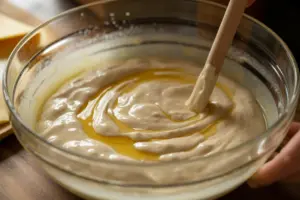
- In a large bowl, mix the sourdough starter, milk, honey, and melted butter until combined.
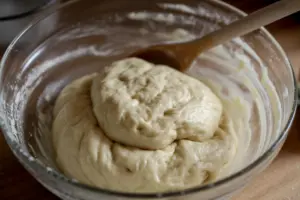
- Add the flour and salt and stir until a soft, slightly sticky dough forms.
- Cover the bowl and let the dough rest at room temperature overnight (about 10-12 hours).
- Turn the dough out onto a lightly floured surface and gently pat it to about ¾-inch thickness.

- Cut out rounds using a biscuit cutter and lightly dust both sides with cornmeal.

- Place the muffins on a lined tray, cover, and let rest for 30-45 minutes until slightly puffy.

- Heat a non-stick skillet or griddle over low heat and lightly grease it.

- Cook the muffins for 6-8 minutes per side, flipping once, until golden brown and cooked through.

- Transfer to a wire rack and cool completely before splitting with a fork.

Notes
- Calories: 190
- Carbohydrates: 34 g
- Protein: 6 g
- Fat: 3 g
- Fiber: 2 g
FAQs
Can I make sourdough English muffins without milk?
Yes, water works perfectly and produces equally soft muffins.
How long should I ferment the dough overnight?
Typically 8-12 hours, depending on room temperature and starter strength.
Do I need special equipment to cook English muffins?
No, a heavy skillet or griddle is enough.
Why should I split English muffins with a fork?
It preserves the nooks and crannies instead of cutting them smooth.
Can I bake sourdough English muffins instead of pan-cooking?
They can be baked, but traditional stovetop cooking gives the best texture.
Making Sourdough English Muffins at home isn’t just about breakfast, it’s about slowing down, trusting the process, and enjoying the reward. Once you master this easy overnight method, you’ll never look at store-bought muffins the same way again. Soft, puffy, flavorful, and deeply satisfying, these muffins earn a permanent place in your kitchen. If you’re ready to dive deeper, explore my best sourdough dessert recipes to try and discover how versatile sourdough can be beyond breakfast.