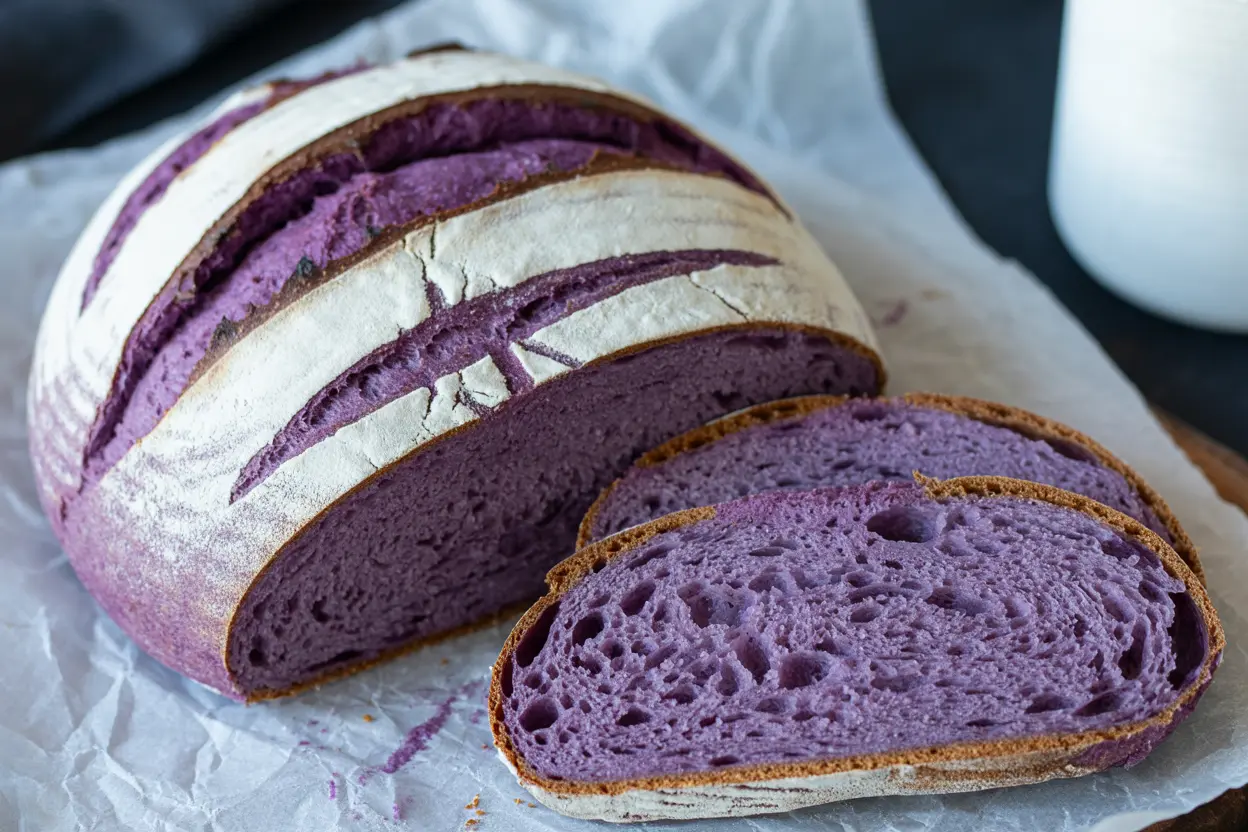
Have you ever sliced into a loaf of bread and been completely blown away by the color inside? That’s exactly what happens with sweet potato sourdough bread, especially when purple sweet potatoes are involved. It’s like nature decided to paint bread with a watercolor brush.
Even better? This gorgeous loaf needs only four simple ingredients. No fancy additives. No complicated steps. Just pure sourdough magic.
Table of Contents
What Makes Purple Sweet Potato Bread So Special
Natural Color Without Food Dyes
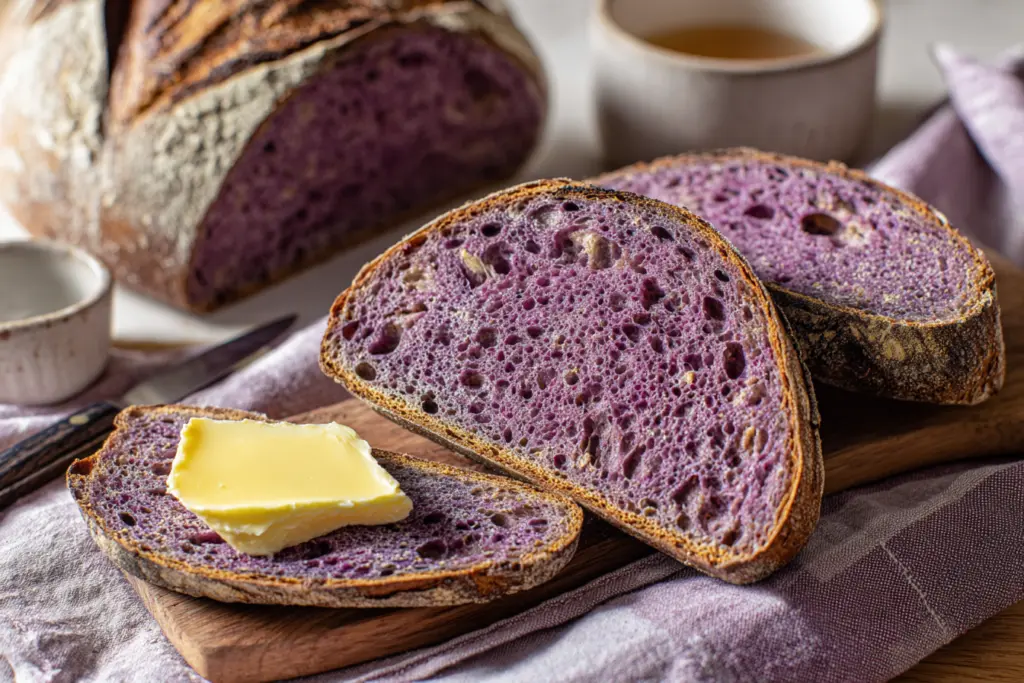
That bold purple crumb isn’t a filter or Photoshop trick, it’s real life. Every slice looks like edible art.
Flavor Profile and Texture
Think soft, fluffy crumb with subtle earthy sweetness balanced by sourdough tang. The crust? Crisp and golden with just the right chew.
The Beauty of Minimal-Ingredient Sourdough
There’s something incredibly satisfying about baking bread with just a few ingredients. It feels old-school. Rustic. Like you’re tapping into centuries of tradition.
It’s like your favorite artisan loaf went to art school.
Health Benefits of Sweet Potato Sourdough Bread
Antioxidants in Purple Sweet Potatoes
These vibrant tubers are loaded with compounds that help fight inflammation and oxidative stress.
Digestive Benefits of Sourdough Fermentation
Sourdough naturally breaks down gluten and phytic acid, making nutrients easier to absorb and bread easier to digest.
Your gut will thank you. I’ve baked plenty of naturally flavored sourdough loaves over the years, and each one teaches something new. Pumpkin-based loaves, like this pumpkin sourdough bread recipe, bring warmth and mild sweetness, but they lean more toward a classic autumn profile.
The Magic of Four Simple Ingredients
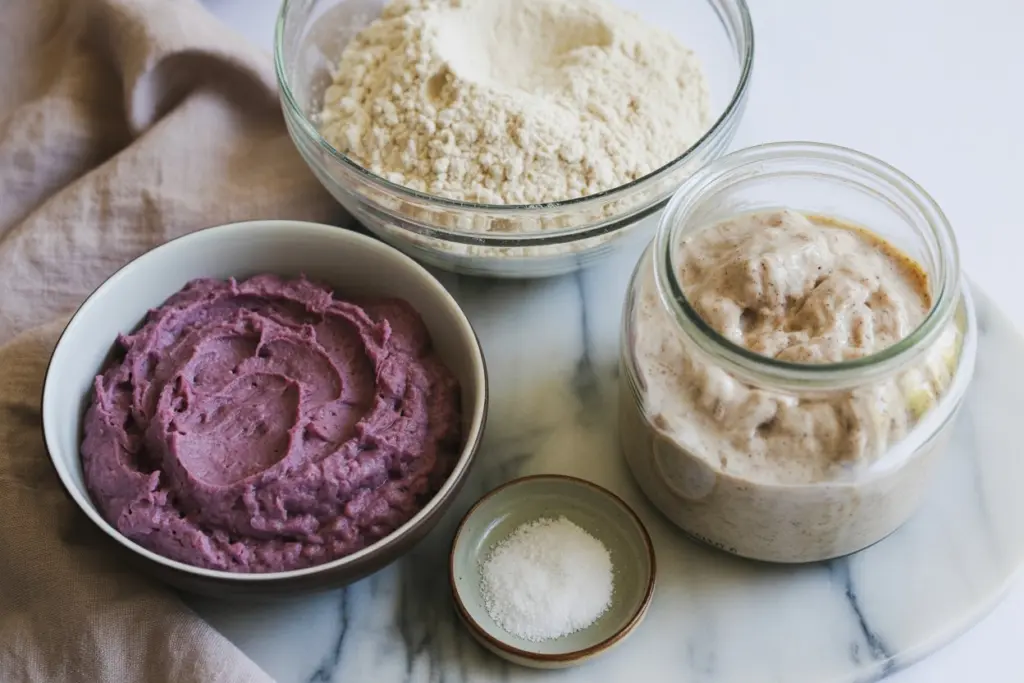
Here’s all you need:
- Purple sweet potato puree: These handle most of the hydration. I always roast them rather than boil them. Roasting concentrates flavor and removes excess moisture, which keeps the dough consistent.
- Active sourdough starter: The starter should double within four to six hours and smell mildly tangy, never sharp.
- Flour: Unbleached bread flour works best because it creates strong gluten strands that support the added weight of sweet potato. All-purpose flour works in a pinch, but the crumb turns slightly tighter.
- Salt: Salt strengthens gluten and controls fermentation speed.
Why Simplicity Works: Each ingredient has a clear purpose. No fillers. No fluff. Just balance.
Choosing the Right Sweet Potatoes
Fresh vs Cooked Puree
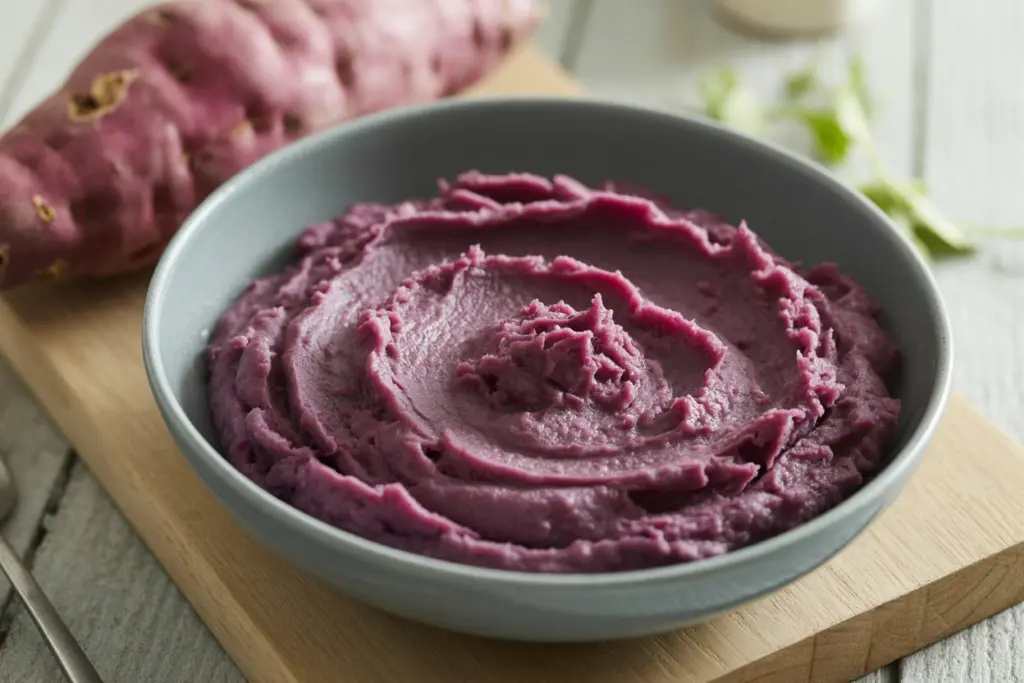
Roast or steam your sweet potatoes until soft, then mash until smooth. Roasting gives deeper flavor and richer color.
Tips for Vibrant Color
Avoid boiling too long, it can dull the purple shade. Gentle heat preserves brilliance.
Understanding Your Sourdough Starter
Signs of an Active Starter
- Bubbly
- Doubles in size in 4-6 hours
- Smells lightly tangy
Troubleshooting Weak Starter
Feed it consistently and keep it warm. Think of it like a pet, it thrives on routine.
The texture turns softer and silkier than classic sourdough, similar to what you’ll notice in Italian herbs and cheese sourdough bread, even though this recipe contains no added fats.
Step-by-Step Preparation Guide
Mixing the Dough
Combine puree, starter, flour, and salt until a shaggy dough forms. Let rest 30 minutes.
Bulk Fermentation
Over 4-6 hours, perform gentle stretch and folds every 30 minutes. Sweet potato dough behaves differently than standard flour-and-water loaves. The structure develops gradually, similar to enriched fruit-based breads like raspberry sourdough bread with cream cheese, where patience matters more than aggressive handling. I use gentle stretch-and-folds spaced evenly, allowing the dough to strengthen without tearing.
Stretch and Folds
This builds gluten without kneading. Easy and satisfying.
Shaping and Proofing
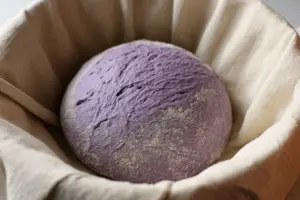
Shape into a tight boule and place in a floured basket.
Cold Proofing Benefits
Refrigerate overnight for better flavor and structure.
Baking for Perfect Crust and Crumb
- Oven Setup: Bake in a hot Dutch oven at 475°F (245°C).
- Steam Tricks: The lid traps moisture, giving that bakery-style crust.
The aroma during baking stays mild and clean, unlike sweeter loaves such as lemon blueberry sourdough bread, which release stronger caramelized notes early on. This bread finishes with a balanced crust, crisp but not tough, and a crumb that stays tender even after cooling.
Flavor Pairings and Serving Ideas
Sweet Toppings
- Honey
- Almond butter
- Greek yogurt
Savory Options
- Avocado
- Soft cheese
- Roasted veggies
Serving stays flexible. This bread works for breakfast toast, lunch sandwiches, or simple side slices with soups and stews. Because the flavor remains neutral, it adapts easily to sweet or savory pairings.
Common Mistakes and How to Avoid Them
- Dense Loaf Issues: Usually under-fermented dough. Be patient.
- Overproofing Signs: Dough collapses or feels too loose.
- Overhydration: causes most problems with Sweet Potato Sourdough Bread. Sweet potatoes already contain water, so resist the urge to add extra liquid. I add water slowly and stop as soon as the dough comes together. This approach prevents spreading during fermentation, which often happens in sweeter loaves such as brown sugar cinnamon swirl sourdough bread.
Storing Your Purple Sourdough Bread
- Short-Term Storage: Wrap in cloth at room temperature for 2 days.
- Freezing Tips: Slice and freeze for quick toasting later.
Variations You Can Try
- Seeded Crust: Roll dough in sesame or sunflower seeds before baking.
- Herb-Infused Loaf: Add rosemary or thyme for savory twist.
Flavor-wise, the loaf leans mild and earthy rather than sweet. The natural sugars in the sweet potato soften sourness instead of amplifying it. That balance sets this bread apart from more intense sourdough variations like chocolate sourdough bread, where bold flavors dominate each bite. Here, the sweetness stays subtle, letting fermentation remain the star.

Purple Sweet Potato Sourdough Bread (4 Ingredients)

Equipment
- Mixing Bowl
- Wooden spoon or dough scraper
- Kitchen scale or measuring cups
- Proofing basket or bowl with towel
- Parchment paper
- Dutch oven or heavy oven-safe pot with lid
- Sharp knife or bread lame
- Cooling rack
Ingredients
- 1 cup 240 g purple sweet potato puree smooth, cooked
- 1/2 cup 120 g active sourdough starter (100% hydration)
- 3 cups 360 g all-purpose or bread flour
- 1 teaspoon salt
Instructions
- Roast the purple sweet potatoes until fully tender, then mash until smooth and let cool completely.
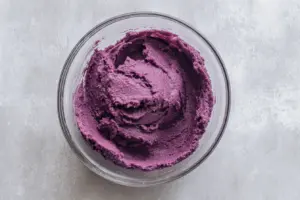
- In a large bowl, mix sweet potato puree and sourdough starter until smooth.

- Add flour and salt, stirring until a shaggy dough forms. If your puree is very thick or dry, you can add 1-3 tablespoons water (only if dough feels stiff). Let dough rest for 30 minutes covered.
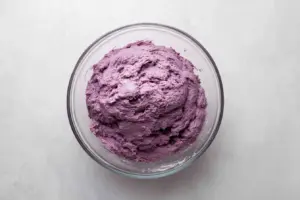
- Perform a series of gentle stretch-and-folds every 30 minutes for 2 hours, then cover and allow the dough to bulk ferment until it increases by about 50-60 percent.
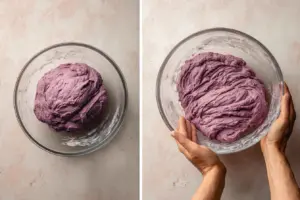
- Cover and allow dough to bulk ferment until doubled in size, about 4 to 6 hours.
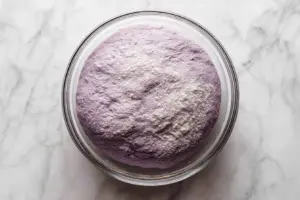
- Shape dough into a round loaf and place in a floured proofing basket. Cover and refrigerate overnight for slow fermentation.
- Preheat oven to 475°F (245°C) with Dutch oven inside.

- Transfer dough onto parchment, score the top, and place in hot pot.
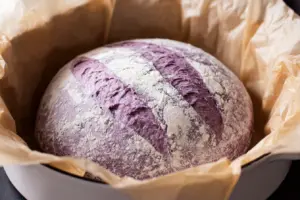
- Cover and bake for 30 minutes. Remove lid and bake another 12-15 minutes until golden.
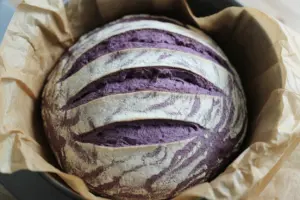
- Cool completely before slicing.
Notes
- Calories: 180
- Carbohydrates: 36g
- Protein: 5g
- Fat: 1g
- Fiber: 3g
- Sugar: 2g
FAQs
Can I use orange sweet potatoes instead?
Yes, you can use orange sweet potatoes in Sweet Potato Sourdough Bread, but the final color will shift to a warm golden tone instead of purple. The texture and fermentation stay similar, although orange varieties add slightly more sweetness.
Does sweet potato sourdough bread taste sweet?
Sweet Potato Sourdough Bread does not taste sugary. The sweet potato softens acidity and adds an earthy note, but fermentation keeps the flavor balanced and mild rather than dessert-like.
Why did my dough feel wetter than usual?
Sweet potatoes contain natural moisture, which changes dough hydration. Roasting instead of boiling and adding water slowly helps you avoid overhydration and keeps the dough manageable.
Can I cold-ferment sweet potato sourdough bread?
Yes, cold fermentation works well. After shaping, refrigerate the dough overnight. This step deepens flavor, improves structure, and helps the loaf hold its shape during baking.
Can I make it without a Dutch oven?
Yes, just add steam using a water tray.
Purple sweet potato sourdough bread isn’t just bread, it’s an experience. It’s stunning, nourishing, and shockingly simple.
Four ingredients. Endless wow factor.
Once you bake it, regular bread will feel boring.